Category Archives: Our Lady

Catholicism: Empowering Women for 2000 Years (Part I: The Blessed Virgin Mary)

This is a series that I’ve been thinking about for months, but have been hesitant to dive into. Women and Catholicism is a hot button issue in so many circles. Story after story comes up on my news feed about how the Church oppresses women, discourages women’s rights, and promotes inequality between the sexes. According to media portrayals, the Church is stuck in the dark ages. “If only this hierarchy of men could get with the times!” is the common outcry. And yet, to me, it all sounds so very strange because since embracing Catholic teaching, I have learned to celebrate my womanhood for the first time in my life, instead of treating it as a somewhat embarrassing obstacle to be overcome.  I think this has a lot to do with Catholic teaching on the Blessed Virgin Mary, vocations, the communion of saints, and fertility. So here’s Part I of this little series, starting with Our Lady.

Part I: The Blessed Virgin Mary (Because the Best Christian Ever is a Woman)

It is startling to me that Catholics are perceived as having a negative view of women when Our Lady is so highly honored. In the Catholic faith, The Blessed Virgin Mary is the most exalted of all Christians, she is the first Christian. Worship is reserved for the Holy Trinity alone. But Catholics honor and venerate Our Lady above all other saints.

Oftentimes, it seems that our culture celebrates women who “rise above” their female state. “Look what she accomplished even though she was a woman!” we’ll say, as if being a woman is a handicap or disability to be overcome. We don’t often praise women for being uniquely feminine, perhaps because we don’t hold femininity in high regard.

We don’t honor Our Lady because she overcame her unfortunate plight to be born a woman, but because she did what no man could ever do. Her humility, grace, maternal love, faithfulness, tenderness, strength, steadfastness, and sacrifice contribute to her glory. I’m reminded of Eowyn in Tolkien’s Lord of the Rings. She doesn’t save the day in spite of being a woman, she conquers because she is a woman: “But no living man am I! You look upon a woman.” It is the second Eve that has the power to crush the serpent under her heel, not in spite of her womanhood, but because of it.

Catholics don’t hold up Mary as the model for Christian women, we hold her up as the model for Christians. Women and men are asked to look at Mary and follow in her footsteps. Not only are men called to honor all women out of respect for Our Lady, but they are called to imitate her example themselves.

There is simply nothing comparable in Protestant life. I truly think that the Protestant avoidance of Mary as well as suppression of Marian doctrine significantly contribute to the experience I, and many women, encounter in the Protestant church. We feel like second-class citizens. When you grow up hearing of Eve’s fall and never understand that Mary is the New Eve who rights the wrongs, opens the gate, and carries our Hope, it’s easy to feel that being a woman is cursed and not blessed.

Doctrines such as the teaching that Mary is the Theotokos, or God-bearer, contribute to a celebration and exaltation of womanhood. Growing up Protestant, I was often told that Mary was the mother of Jesus, not the mother of God. This is a form of adoptionism (the heresy teaching that there was a merely human Jesus that was later adopted as God’s son) and not Orthodox Christian teaching which is that at his conception, Christ was fully God and fully man. By emphasizing that Our Lady is the Mother of God, the Church not only maintains a high Christology (highlighting that Christ was always divine), but also makes the shocking assertion that God himself chose to dwell in a woman’s body as his abode for nine months. Perhaps even more scandalous, is the emphasis the Church Fathers place on Christ being born of Mary, not merely from Mary. By this they meant that God allowed his very body to be created from Mary’s womb. God chose a plan of redemption in his Incarnation that honors all women.

Furthermore, this plan of redemption was not forced on Our Lady by God. The Incarnation hinges on Mary’s willingness to allow God to enter her womb: Let it be unto me according to your word, she says to Gabriel. In a sense, the redemption of the world spins on her answer, the answer of a woman. Because her answer is a faithful yes to God’s will, the Blessed Virgin is the example for all Christians. We must all say “yes” to God’s desire to dwell in us. In this metaphor, the Christian is taking on a feminine role. In Mary’s case, it was due in part to her literal femininity that it was possible for her to be the God-bearer.

My growing understanding of Marian doctrine makes me joyful that I was born a woman and causes me to celebrate the God-given gift of my womanhood. Part II coming soon : )

Please keep in mind: I’m not a theologian. If anything I say is ever in conflict with the teachings of the Church, I’m the one in the wrong. Feel free to let me know if this is the case since I like to avoid heresy as much as the next gal. K, thanks.

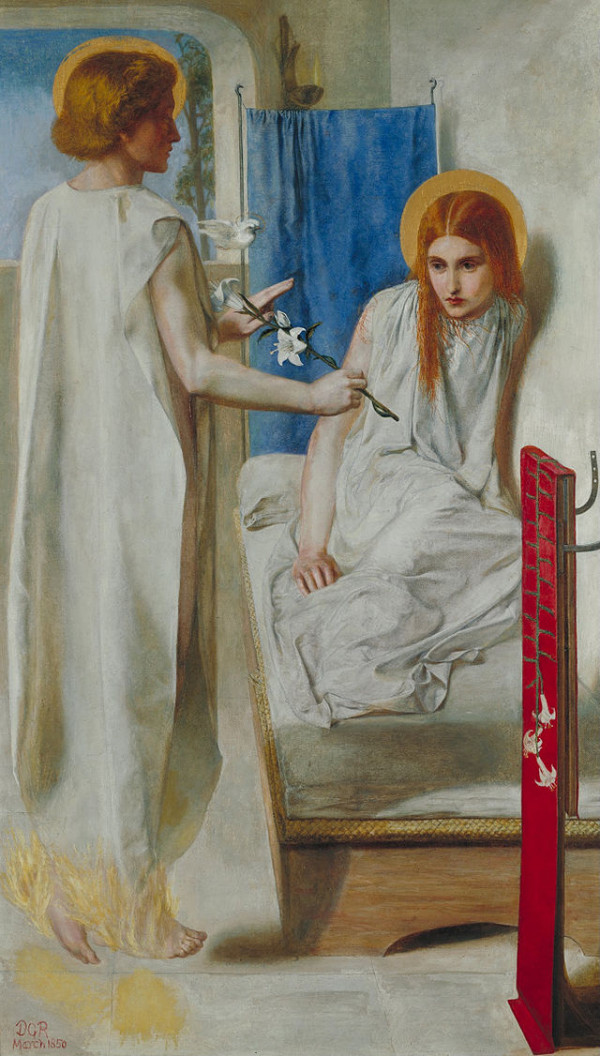
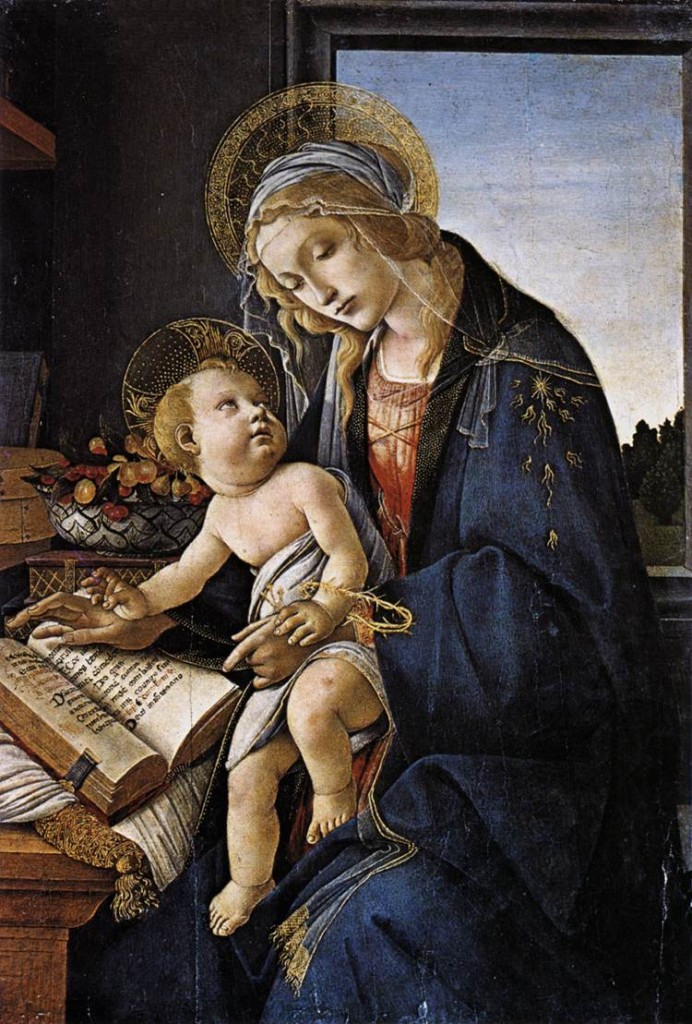
(image source: guardian.co.uk)

EmailFacebookGoogle ReaderPinterestTumblrTwitterShare

Little HolyDays: First Advent

Something from the archives today. I wrote this little reflection soon after Benjamin was born. It feels appropriate especially since I’m expecting during Advent again. Don’t forget to link up with Little HolyDays with your old and new posts for this second week of Advent (Link Up at the bottom of the page)!

I was huge. Not just big—gigantic. Even before I entered my third trimester, well-intentioned old ladies would pat my shoulder and say, “Any day now!” encouragingly as I waddled my way through the grocery store. Considering the raging pregnancy hormones running through my system, I’m impressed that I didn’t slap any of the kind-hearted dears. I was huge.

As it neared the end of November, I started wearing flip-flops exclusively because my swollen feet wouldn’t fit into anything else. I think I gave up on other footwear after one particularly bad day when my husband had to help me get my boots off as I helplessly yelled inchoate phrases about being the only woman who would be pregnant forever. My maternity coat didn’t fit anymore by the time it was cold enough to wear it which enraged me further. When I wasn’t at work, I was lying on the couch or in the bath tub trying to remember what it felt like to be able to see my toes.  Then I would see a tiny limb change position—reminding me that my massive tummy housed a moving, living child.

As December neared and Advent began I considered this season for perhaps the first time. I had lighted Advent candles as a little girl and been excited about Christmas coming but had never considered the season as anything except a Pre-Christmas countdown. I came to realize that this is as incomplete an understanding of Advent as a definition of pregnancy as simply the nine months preceding a birth.

While I tried to remember what my feet looked like, I remembered the Blessed Virgin Mary.  I confess that I had never thought much about her before. I had never felt that we had anything in common until now. But as my belly got rounder and rounder and my back got achier and achier, I remembered her. She has done this, I thought. She has felt her child move in her womb, perhaps even responding to the sound of her voice or her song. She experienced this miracle of life taking place within her.

In our modern disenchanted age we have not completely lost our fascination with the miracle of new life.  Whenever I dragged my sleepy pregnant body to public places my experience was different than ever before. Little children looked at my belly, fascinated, sometimes even trying to give my belly a pat or lift up my shirt to discover if there was really a baby inside. Other mothers smiled at me and grandmothers reassured me. My ordinary child, this new ordinary life, elicited such a response of amazement. How much more miraculous is the coming of our Lord?, I began to wonder.

For unto us a child is born.  Unto us a son is given.

I was expecting my son during the season of expectation. The word comes from expectare—to wait, to hope, to look for. I did all this things. At first there was a contentment in the waiting and the hoping but eventually the groaning, miserable discomfort led to a readiness to be delivered of the tiny tyrant reigning over me from my womb.  A week before my due date I was so exhausted and so tired of bumping the counters with my colossal tummy and getting up 10 times a night because the little angel had given my bladder yet another energetic punch, that I began to lose it a bit. I couldn’t go to work one more day.  I couldn’t fit behind my desk. I couldn’t sleep. Until the discomfort crossed a certain threshold and I was struck with a desperate desire to be pregnant not a day longer, the pain of delivery was alarming to me and I remained unprepared.  Now it did not frighten me. Anything but this. I started to understand that it is not until we are exhausted, ill with our condition, miserable, that we are ready for Christ—when we can really desire to be delivered.

I kept thinking about the Blessed Virgin Mary. Was she as desperate to give birth as I was? I considered with wonder how when her baby boy was delivered, he would in turn deliver her, deliver me, deliver my own unborn son.

As I waited in joyous, miserable, anxious expectation, I started to understand an inkling of what it must have felt like to wait for the Messiah, Mary’s son. I begin to understand the Joy born to the world on Christmas and present with us now as I heard the sound of the first beautiful and strong cry of my newborn son. I realized in a new way how to wait with groaning and expectation for our Lord’s return in glory. It was my first Advent.

—————————————————————————————————

Now it’s time for you to share your posts! (And be sure to check out some of our favorite links from last week at MollyMakesDo this morning.)

We are three Catholic bloggers (Carrots, MollyMakesDo, and Dualing Moms) who love to observe the liturgical year to deepen our families’ faith and build up the domestic church. We would love to hear about your family’s celebrations and traditions! Please join us in “redeeming the time” in this Year of Faith by sharing your posts (old or new) about feast days, liturgical seasons, etc. in this new linkup. We are starting at the beginning of the Liturgical Year: The Season of Advent!

Some topics we would be excited to read about during the Advent and Christmas seasons are (but not limited to!):

  • Sustainability and Responsible Gift Giving/Food
  • Food & Recipes
  • Simple Holiday traditions, crafts and activities
  • Reflections on the seasons
  • Charity
  • Teaching and Learning  about the Christian Year with Children

This link up will be open until Thursday evening, December 13th. There will be a new link up open on Monday, December 17th, and we will highlight some of our favorite links from the previous week in the new post, and on a Little HolyDays Pinterest board.

For the three of us, this link up is a way in which we plan on exploring and deepening our Catholic faith, but we would really love to hear from bloggers of all denominations.

We welcome you to share your own feast, festivals, and celebrations that fall within each week of December.

As moderators of this link up, we will reserve the right to remove any offensive or off-topic posts as we see fit, in order to maintain a kind and positive atmosphere.

So, here’s what you do:

1. Click the linky below to add your post to the Little HolyDays link up.

2. Add the Little HolyDays button (code below) to the bottom of your post so your readers can find the other great links!(If the code doesn’t work for your blog, just link to one of the hosts and don’t worry about the button.)

3. Come back next week to see our favorite posts from the previous week and link up again.

We can’t wait to read your posts and get inspired by your traditions!


My Button

<a href=”http://carrotsformichaelmas.com” title=”Carrots for Michaelmas”> <img src=”http://i1145.photobucket.com/albums/o515/Mollymakesdo/DSC_0740-1.jpg” width=”200″ height=”200″ alt=”My Button” style=”border:none;” /></a>


Powered by Linky Tools

Click here to enter your link and view this Linky Tools list…


(You have to click through to see the links. Thanks for joining us!)

EmailFacebookGoogle ReaderPinterestTumblrTwitterShare

Happy Birthday, Mary (from a 3-year-old)

It’s a birthday weekend at our house. My father-in-law’s birthday was yesterday and I get to share a birthday (27!) with Our Lady today. When Benjamin heard that we would be celebrating Mary’s birthday, he asked to make her a card. “Blue paper because she loves blue. And a pink cake with candles on the front.” Blue and pink, Our Lady’s colors of faithfulness and love.

Here’s what he asked me write to her inside:

We love that you are the Mother of Our Lord. We like that you like people and like things. We like that you’re our Mary and that you like critters. We should go up to heaven and do something with you! We love you! Happy Birthday, Mary!

I think he said it better than I could. We love you. Happy Birthday, Mary!


EmailFacebookGoogle ReaderPinterestTumblrTwitterShare

A Mother’s Love, A Mother’s Fear

It was the night that we brought our firstborn home from the hospital and I was crying like my heart would break.

I had a wonderful natural birth, no complications, and a beautiful healthy baby boy. Everything was perfect. Then a storm rolled in. Not a soothing rainstorm, one of those eerie, harsh Texas storms that turn the sky an odd, unsettling color. Our front door was blown open with a bang by the force of the wind. Then we heard that a tornado was near.

My husband, our brand new baby, my mom (who was visiting), and I huddled in the hallway. I can remember so vividly holding my baby against my chest and smelling his intoxicating baby scent. And fear washed over me. A fear I was not prepared for. My love for this tiny, new person overwhelmed me. What if something happens to him! I thought, I just met him! What if he’s taken from me? My desire to keep him safe was so deeply instinctual. It was all I could think about. How could I best shield him from harm? And I felt utterly helpless in the face of that merciless storm.

It wasn’t long before we got the all clear. Trembling, I handed my baby to my husband, walked into our bedroom, and sobbed on the bed. I was exhausted from the emotion of the moment but more than that, I was overwhelmed by the understanding that this terror for the well-being of my child would follow me every day of my life. Because my love for him was so big, so all-encompassing. My mom came in to check on me and I apologized for falling apart. She didn’t need an explanation. “A mother’s love is very fierce,” she whispered to me before leaving me to sleep. How can I bear it? I wondered. How can I live with this love filling every inch of me alongside this paralyzing fear that something might happen to my treasure, my baby?

I think I’m still trying to figure that out.

In the Four Loves, C.S. Lewis writes,

There is no safe investment. To love at all is to be vulnerable. Love anything and your heart will be wrung and possibly broken. If you want to make sure of keeping it intact you must give it to no one, not even an animal. Wrap it carefully round with hobbies and little luxuries; avoid all entanglements. Lock it up safe in the casket or coffin of your selfishness. But in that casket, safe, dark, motionless, airless, it will change. It will not be broken; it will become unbreakable, impenetrable, irredeemable. To love is to be vulnerable.

When my asthmatic 3-year-old is struggling to breathe in a hospital room, I feel just as terrified as I did when I held him during the tornado on his first night home. I haven’t miraculously conquered the fears that accompany motherhood (as much as I’d like to). Fear is just a quiet and constant companion. But it’s not paralyzing anymore. Because I know it’s the love that matters. And I’m struggling to really understand that I am never really in control (as much as I’d like to think I am). I cannot always keep my children safe. I can only love them.

And I look to the example of the Blessed Virgin. She is a model, the model, of maternal love. But she is also Our Lady of Sorrows. I think of Presentation of Our Lord, when the aged Simeon sings his joyful song of thanksgiving for the gift of seeing the Christ Child. But in the midst of that joy, he tells Mary, “and a sword shall pierce your heart.” How deeply she suffered! How deeply she loves. I think as mothers we walk through life with pierced hearts. May God give us the strength to love in the face of fear. Knowing it’s not safe. Knowing that our hearts will at times be broken. But loving all the same. Like Our Lord. Like Our Lady.

EmailFacebookGoogle ReaderPinterestTumblrTwitterShare

A Trip to the Ancient City

Last weekend my husband swept me away for a weekend in St. Augustine to celebrate our sixth anniversary (we went there for our honeymoon).

After a scramble to pack with two little ones underfoot (note to self: next time pack when they’re sleeping) including tears when I couldn’t figure out how to fold up the maddening pack n’play (why do they make them so impossible?), we were off with this cute little stowaway while big brother began his big weekend with the grandparents.

It was perfect. Two nights at the pirate-themed hotel in the historic district that we stayed in for our honeymoon, same room, even. (Yes, we are the sort of people who honeymoon at pirate-themed hotels, why do you ask?)

There was breezy, sunny weather, a darling baby girl in tow and hours to explore the ancient city and enjoy each other.

Our pirate hotel was just a block away from the Cathedral so we followed the sound of the bells to morning Mass.

It’s gorgeous inside, but I felt weird taking photographs inside a church, so you’ll just have to go visit yourself.

I did snap one of the stunning altarpiece, though.

Then we walked to the harbor to a little breakfast place before a longer walk to the Mission Nombre de Dios.

During our last visit six years ago, we weren’t Catholic yet, and we didn’t know that the very first Mass said in the New World was on the shore of St. Augustine in 1565. This giant cross marks the spot.

Nearby is a pilgrimage site: the Shrine of Our Lady of La Leche, the oldest devotional site dedicated to Our Lady in the New World.

I’ve been dying to go there and it was so special. We knelt and prayed and then I followed the Blessed Virgin’s example and nursed my hungry baby girl before the statue of Our Lady nursing Our Lord.

It was just beautiful and I won’t ever forget it. Little did I know that while I was praying that a dear friend might be blessed with a second child, she was finding out she was pregnant! Filled with joy!

We wandered all around the ancient city and ate gelato at the same spot we did as newlyweds. Forgive my flyaway beachy hair.

It was just bliss. I’m so grateful to have shared six years of marriage with Daniel.

But we were so glad to see this little guy after being away two nights…don’t feel bad for him, though, he had a rip roarin’ time with his grandparents.

EmailFacebookGoogle ReaderPinterestTumblrTwitterShare

Getting to Know Mary (And a GIVEAWAY from Trendy Traditions! NOW CLOSED)

Daniel and I both agree that getting to know the Blessed Virgin Mary is one of the most grace-filled aspects of our conversion to Catholicism. It was not so long ago that the idea was absolutely unfamiliar to me. I grew up in the Protestant tradition which, in my experience, completely ignored the Mother of God except during Christmas time when we were sure to mention that she was “just a regular gal! Nothing special about her! Move along, please!“

It wasn’t until college that I starting thinking about Our Lady much at all. But one day I distinctly remember being “introduced” to her. When an Eastern Orthodox housemate of mine was setting up her room and hung an icon of Madonna and Child (Our Lady of Tender Mercies) right above her bed, I asked her about it. She explained that she was devoted to Mary and that this icon was her very favorite image of Our Lady because of the tenderness of her countenance and the way she embraced the infant Christ. “It reminds me to pray and to ask her for her intercession,” she said. From further conversations about her Marian devotion, I came to understand that she had a relationship with Mary. She knew her. I was intrigued. (Fittingly, this gal’s name is Marianna Rose—I’m not even kidding. You can’t get more Marian than that!)

Image credit: Aquinasandmore.com

 When I was pregnant with Benjamin I started to think about Mary more often and even started asking for her prayers for my baby and her help so I could be a good mother. But, it wasn’t until I started praying the Rosary that my relationship with Mary started to blossom. I pray it when I’m frightened, when I’m joyful, for my children, for my marriage, for our families. It is always there to catch me. During long nights with sick babies, Our Lady is there, keeping company with me and praying with me to her precious Son. When tragedy strikes and I can come up with no words of my own, I can rest on the words of the Rosary.  A year and a half ago when I received the news that dear friends had lost a child, I sat down on the kitchen floor speechless. What could I say? The grief was too great to compose any words. The Rosary was there and I rested in the knowledge that Our Lady knew just how they felt: she lost her child and had to see Him suffer more deeply than any other would ever suffer. That sorrow had pierced her heart and she would understand their pain in a way that I did not.

Pope Benedict XVI has said of the Rosary:

“…the Rosary is experiencing a new Springtime. Without a doubt, this is one of the most eloquent signs of love that the young generation can nourish for Jesus and his Mother, Mary. In the current world, so dispersive, this prayer helps to put Christ at the centre, as the Virgin did, who meditated within all that was said about her Son, and also what he did and said. When reciting the Rosary, the important and meaningful moments of salvation history are relived. The various steps of Christ’s mission are traced. With Mary the heart is oriented toward the mystery of Jesus. Christ is put at the centre of our life, of our time, of our city, through the contemplation and meditation of his holy mysteries of joy, light, sorrow and glory.”

I love the Rosary which is why I’m so excited to host a giveaway sponsored by Melanie of Trendy Traditions for one of her beautiful handmade rosaries. I’ve actually had the pleasure of praying the Rosary with Melanie, because we go to the same ladies monthly Rosary night (how apropos, right?). She contacted me about doing a giveaway before we realized that we live in the same town and have mutual friends! Then I realized that Melanie made the beautiful rosary that Lucy’s godmother, Colleen, gave her on the day of her baptism.

It has beads with her name and Melanie even attached a St. Lucy medal for our little Lucy Elanor. And it’s blue for Our Lady!

Trendy Traditions is a family business and they donate 10% of all sales to Catholic charities.


Melanie has generously offered to give away one of her beautiful personalized Our Lady of Guadalupe rosaries. This design features a large, beautiful crucifix and a center in the traditional Guadalupe image. Both are made of high-quality pewter. She will customize the rosary with the winner’s name and choice of color.

To enter (you can do any or all options for a total of 5 entries):

1. Subscribe to Carrots for Michaelmas via email (see subscription form on the upper sidebar) or via Google Reader or another RSS reader and leave a comment saying you did. (If you were subscribed via email before last week, you will have to resubscribe to the new site, sorry for the hassle!)

2. Like Carrots for Michaelmas on FB

3. Like Trendy Traditions on FB

4. Subscribe to Melanie’s blog 

5. Share this giveaway on FB (or on your blog)

(Leave an additional comment for each extra entry  to let us know you did)

A winner will be chosen by a random number generator on Sunday May 20, 2012 at 10pm EST.

Thank you, Trendy Traditions for this fantastic giveaway! Please check out the Trendy Traditions Etsy site to see all of the gorgeous rosaries available!

p.s. If you’re looking for a good introduction to the Rosary, I highly recommend Karen Edmisten’s The Rosary: Keeping Company With Jesus and Mary

AND THE WINNER IS….Sarah O.! Sarah, you will be hearing from Trendy Traditions very soon about personalizing your rosary and shipping to you :)

EmailFacebookGoogle ReaderPinterestTumblrTwitterShare

The Cover of TIME and the Blessed Virgin Mary

Ok, so I promised I wouldn’t talk about sex for awhile after my two-part ramble on contraception, etc. But then I saw this TIME cover:

photo credit: TIME magazine

You guys know that I’m a huge supporter of breastfeeding in public. Breastfeeding is not a sexual act. Breasts are not merely sexual. Breastfeeding in public IS NOT immodest. So, why does this image look so sexual? Some might claim that nursing is an intimate act and therefore should be private, no need to plaster images of it everywhere. I disagree. I think breastfeeding should be in the public eye. It is intimate, but it doesn’t mean that it should be tucked away in lonely corners. I think images of breastfeeding are so beautiful (maybe that’s why I post pictures of nursing Lucy all over my blog). So, what’s the problem with this image? It’s not the fact that she’s nursing and some breast is exposed (grow up, people!) and it’s not the fact that the nursing child is three years old (the WHO recommends that ALL children are breastfed until they’re at least 2, I’m all for extended breastfeeding). The problem is difficult to nail down but I think we can do it by comparing the image to images of another lady breastfeeding:

Artist: Da Vince (from beautiful-breastfeeding.blogspot.com)

In this image, the Blessed Virgin is nursing Our Lord as a toddler. He’s big, squirmy, and looking straight at the viewer (just like the child is gazing at the viewer on the magazine cover). And there’s definitely a lot of breast showing. So what makes it different? The difference is in the Blessed Virgin’s pose and face. She is looking lovingly at her precious son. She is cradling him with love. She is not detached from her child and striking a “modelesque” pose while looking provocatively at the viewer. She’s not self-promoting. She’s not putting on the sex appeal. She is immersed in this act of love for her little son.

Sadly, TIME took an act that is so beautiful and natural and has presented it as extreme, sensational, and sexual. I hate that. Breastfeeding (and extended breastfeeding) are none of those things. I know TIME wants to sell magazines, but that doesn’t exonerate them from this incendiary journalism.

And the title is the icing on the cake: Are You Mom Enough? Again, the focus is completely on the mother, rather than the child. As if women who choose to practice AP and extended breastfeeding are doing it to prove that they’re better moms than other mothers or to impress other people. I hope that’s not the case for the woman who posed for the picture and I think she is being misrepresented. TIME is also misrepresenting all of us who practice AP and extended breastfeeding.  Mothers try their very best and agonize about what’s best for their families when they make decisions about parenting styles. Most mothers aren’t making any of those decisions because they have anything to prove.

What do you think? Am I overreacting?

EDIT: A reader noted that the mother on the cover was not trying to look sexy. I think this is probably true and I hope my post doesn’t sound too critical of her. When I’m describing her modelesque pose and “provocative gaze” I am criticizing TIME and the way they are portraying this mother and child which is probably not at all the fault of the mother.

EmailFacebookGoogle ReaderPinterestTumblrTwitterShare

Why I Breastfeed in Public: The Blessed Virgin Mary Does It!

There was an uproar recently when a women was kicked out of a church for nursing her child in the service and the pastor compared her public breastfeeding to a stripper performing.  What?! I know. Insanity. A blog I read posted the news article on FB and a commenter expressed her view that nursing in church was very inappropriate and that the mother was wrong to do so. She went on to say that she would never want her children “subjected” (yes, she really used that word!) to such a sight and that she was sure that Mary NEVER would have breastfed Jesus in public. I was honestly shocked.

Now, I imagine the commenter’s sentiment is due to the misunderstanding that breastfeeding is sexual because breasts are involved. Honestly, I’m sure her children are more “subjected” to the sight of breasts in the check out aisle of the grocery store than they would be if they saw a mother feeding her child. I for one, love that my 3-year-old son sees me nursing my baby. He is seeing the incredible nourishing aspect of the female body. Breastfeeding is completely normal to him—it’s how his sister eats! He is learning already that the female body isn’t merely a sex object and I couldn’t be happier about that.

But, my shock at her comment was due not only to the fact that she found public nursing so offensive (aren’t we passed that?), not only that she wouldn’t want her children to see a woman nursing, but more importantly due to her certainty that Our Lady wouldn’t have fed Our Lord unless she was out of sight. Why would anyone believe that?! Before formula became an option, mothers would have needed to take their babies everywhere and guess what? Babies need to eat! Would the Blessed Virgin have stayed home for months and months to be sure that no one would see her (gasp!) NURSING? Surely not! I highly doubt that nursing was considered even remotely taboo in her community. And we have an amazing typographical tradition in Christian art of Our Lady breastfeeding the Infant Christ. In fact, the very earliest image we have of The Blessed Virgin and Jesus is one in which…drumroll…she’s breastfeeding him! It’s found in the catacomb of Priscilla from ca. 160 AD.

This beautiful subject is carried through out the centuries. I simply love this one:

Look how serene she is! And how squirmy he is! Beautiful. There’s also a shrine to Our Lady of La Leche in St. Augustine, FL that I am dying to visit! (Read about the trip Stephanie of Mama and Baby Love took there.)

Imagine a splendid portrayal of Our Lady nursing Our Lord displayed in a church (as has been the case). How can it make any sense that a woman should be maligned and humiliated for following Mary’s example?

EmailFacebookGoogle ReaderPinterestTumblrTwitterShare

10 Ways to Nurture Positive Body Image for Your Daughter


I’m not an expert. My daughter’s a baby and whether she’ll turn out to have a positive body image is yet to be seen. But, I’ve learned a few things about the challenge of nurturing a positive body image over the past two and a half decades from growing up as a girl in our weight-obsessed culture, watching my mother thoughtfully and intentionally raise me, and as a ballet teacher seeing even very young girls struggle with the cultural messages of body image constantly before them. Here’s my two cents:

  1. Love Your Body: If you want your daughter to grow up confidently loving her body you will have to model this behavior for her. Dissatisfied looks and critical statements when you look in the mirror will not go unnoticed by her. Constantly complaining about weight and your plans for dieting will affect how she views her own body. This is a tall order. I know that I don’t always look in the mirror and have lots of positive thoughts. I see things I think are flaws and wish I looked different. But I never see room for improvement when I look at my baby girl—she is absolutely perfect in my eyes. She is a precious little body and soul beloved by her family and by her Heavenly Father. And if I want her to see herself that way I have to remember that I, too, am made in the image of God and that He looks at me, his creation, with tender affection. If I want my daughter to be confident and at peace with her body, I must show her how.
  2. Eat as a Family: I know there might be overwhelming demands on your time in the evening with extracurriculars to attend and family members moving in a thousand different directions.  Eating a leisurely meal together on a regular basis might feel impossible. Change this and make time to eat as a family. By eating dinner together and enjoying each other’s company, you are impressing upon your daughter that partaking of food is a positive experience. It’s not just calories in your mouth, it’s a MEAL. Over the dinner table you connect with your kids and spouse. I’ve read several times that the occurrence of eating disorders in preteen and teenage girls decreases dramatically when their family regularly eats dinner together.
  3. Cook as a Family: Take the family togetherness a step further. Cook together. Now you’re not just opening up a packaged meal with a label explaining how many grams of this or that is contained within. You’re creating culinary art together! Food isn’t just sustenance, it is a delight. And you’re also providing your kids with skills they can take beyond your kitchen. When they move out, they can take positive eating habits with them!
  4. Grow a Garden: OK, so now you’re cooking together. Great. Now, start a garden in your yard. Begin with just herbs if you’re overwhelmed! Fresh herbs are easy to grow and so fun to use in recipes. Grow some veggies in a little raised bed and let your children be involved in every step. Then food isn’t just associated with sustenance and positive family experiences, but it takes on an entirely new role: the bounty of nature, God’s creation. Watching plants grow is exciting to children! My 3-year-old will run inside to tell me that the tomatoes “ARE TURNING RED! And RED MEANS RIPE!” Then we will go out so he can pick them off our tomato plants and he will devour a juicy, sun-ripened tomato that HE GREW. Often before cooking begins, he will participate in harvesting what we need for our meal. He sees us prepare it and then we sit down to eat it. Food becomes downright miraculous!
  5. Tell Her That She Is Beautiful: She needs to hear this from you and, perhaps more importantly, from her father. She must know that you think she is beautiful, absolutely gorgeous. And start using the word “beautiful” to mean more than physically attractive. Say, “that was a beautiful thing to do,” when she acts kindly. Note that a woman you admire is a “lovely person.” Help her expand her idea of beauty from what our culture says it is (sexually attractive) to include: virtuous, feminine, courageous, self-sacrificial, loving.
  6. Tell Her She Is More than Beautiful: Note and praise her other attributes. Mention that you think she’s clever, interesting, determined, kind, fun, delightful, talented, etc. Don’t allow her identity to be limited to her physical appearance. Nurture in her the understanding that her identity rests in her status as God’s child—so beloved that Our Lord sacrificed himself for her.
  7. Be Honest With Her: When we as mothers fall short of #1 (confidently loving our bodies) we should offer those experiences to our daughters to learn from. It was incredibly helpful to me to hear about my mother’s struggles with healthy body image as a college student. She was very open with me about her bouts with anorexia. She explained what pressures caused her to harm her body by not eating, her need for control over her weight, the dangers of her behavior, and her road to recovery. This provided me with the ability to see red flags in my own thought patterns when pressures arose in my life and environment. When, knowing intellectually that I was at a healthy weight, I looked in the mirror and didn’t see a thin girl, I remembered her explanation of how our minds can get sick and our perspective warped so that we can no longer see reality and, instead, become obsessed with being thin. I was able to stop those negative thought patterns in their tracks because of the honest conversations my mother offered me.
  8. Discuss Cultural Messages of Beauty: Another awesome thing my mother did to guide my way to healthy body image was to point out positive and negatives messages in advertising, toys, movies, etc. For example, although my mom never bought me a Barbie doll, she didn’t ban them from the house when they were gifted to me by others. Instead, we talked about them. She noted the length of the Barbie’s legs and her tiny waist in proportion to the rest of her. “Have you ever seen anyone who looks like that?” she asked. No, I hadn’t. “That’s right. This isn’t what women really look like, is it?” she explained. “Do you think the people who made this doll want us to think she’s pretty? How do you think a girl would feel if she thought she was supposed to look like Barbie since no one really looks that way? Do you think she might feel bad about how she looks—how women are really made to look–since she can’t ever look like that doll?” Open a dialogue. Teach your daughter to question the subtle messages that are being presented to her. Teach her to distinguish between lies and the truth about her body. Expand her views of what beauty is beyond the narrow box of the runway model.
  9. Don’t Watch Commercials: When I see a commercial for makeup or clothes or razors or whatnot presenting skinny models as the epitome of beauty that I should be seeking to imitate, I know it influences my thoughts. I’ve got almost 3 decades under my belt of learning to fight those messages. How much more dangerous are those messages to a young girl who hasn’t yet learned to see the lies presented in commercials for what they are! Your daughter will be receiving negative messages about her body every time she steps out of the house. Don’t let those messages invade her household as well.
  10. Provide Her With Positive Role Models: There will come a time when she will struggle with these issues, so give her some good company for her journey. I grew up with my head full of wonderful characters like Anne of Green Gables. I watched Anne struggle with her body: she felt ugly and wished she was pretty like her best friend Diana. “Why doesn’t Anne like herself? Anne is SO COOL!” I would think. Then I watched Anne grow up to be a confident, amazing woman during Montgomery’s wonderful series. These sorts of tales served me well when I felt awkward or ugly as a girl and compared myself to friends I thought were prettier. Anne was in it with me. I wasn’t alone and I wanted to be as confident, clever, funny, and kind as Anne. Because after all…who wants to be boring and pretty Diana when you can be amazing and exciting ANNE?! Here’s my list of the 10 Books You Must Read to Your Daughter that might help you get started. And even more importantly, give her the wonderful gift that Our Lord gave to us when he was on the Cross: the Blessed Virgin Mary as her mother. Pray that Our Lady will be her model and guide. For who is more truly beautiful than the Mother of Our Lord?

Do you have anything to add? How do you nurture positive body image for your children?

EmailFacebookGoogle ReaderPinterestTumblrTwitterShare

First Advent: Repost

This is a repost from last year of a piece I wrote for our beloved Landing Literary Society in Waco about what pregnancy taught me about Advent and I’m thinking of sweet friends who are expecting this year during the Advent season (hi, Jen, Jeni, and Emily!)

———————————-

I was huge. Not just big—gigantic. Even before I entered my third trimester, well-intentioned old ladies would pat my shoulder and say, “Any day now!” encouragingly as I waddled my way through the grocery store. Considering the raging pregnancy hormones running through my system, I’m impressed that I didn’t slap any of the kind-hearted dears. I was huge.

As it neared the end of November, I started wearing flip-flops exclusively because my swollen feet wouldn’t fit into anything else. I think I gave up on other footwear after one particularly bad day when my husband had to help me get my boots off as I helplessly yelled inchoate phrases about being the only woman who would be pregnant forever. My maternity coat didn’t fit anymore by the time it was cold enough to wear it which enraged me further. When I wasn’t at work, I was lying on the couch or in the bath tub trying to remember what it felt like to be able to see my toes.  Then I would see a tiny limb change position—reminding me that my massive tummy housed a moving, living child.

As December neared and Advent began I considered this season for perhaps the first time. I had lighted Advent candles as a little girl and been excited about Christmas coming but had never considered the season as anything except a Pre-Christmas countdown. I came to realize that this is as incomplete an understanding of Advent as a definition of pregnancy as simply the nine months preceding a birth.

While I tried to remember what my feet looked like, I remembered the Blessed Virgin Mary.  I confess that I had never thought much about her before. I had never felt that we had anything in common until now. But as my belly got rounder and rounder and my back got achier and achier, I remembered her. She has done this, I thought. She has felt her child move in her womb, perhaps even responding to the sound of her voice or her song. She experienced this miracle of life taking place within her.

In our modern disenchanted age we have not completely lost our fascination with the miracle of new life.  Whenever I dragged my sleepy pregnant body to public places my experience was different than ever before. Little children looked at my belly, fascinated, sometimes even trying to give my belly a pat or lift up my shirt to discover if there was really a baby inside. Other mothers smiled at me and grandmothers reassured me. My ordinary child, this new ordinary life, elicited such a response of amazement. How much more miraculous is the coming of our Lord?, I began to wonder.

For unto us a child is born.  Unto us a son is given.

I was expecting my son during the season of expectation. The word comes fromexpectare—to wait, to hope, to look for. I did all this things. At first there was a contentment in the waiting and the hoping but eventually the groaning, miserable discomfort led to a readiness to be delivered of the tiny tyrant reigning over me from my womb.  A week before my due date I was so exhausted and so tired of bumping the counters with my colossal tummy and getting up 10 times a night because the little angel had given my bladder yet another energetic punch, that I began to lose it a bit. I couldn’t go to work one more day.  I couldn’t fit behind my desk. I couldn’t sleep. Until the discomfort crossed a certain threshold and I was struck with a desperate desire to be pregnant not a day longer, the pain of delivery was alarming to me and I remained unprepared.  Now it did not frighten me. Anything but this. I started to understand that it is not until we are exhausted, ill with our condition, miserable, that we are ready for Christ—when we can really desire to be delivered.

I kept thinking about the Blessed Virgin Mary. Was she as desperate to give birth as I was? I considered with wonder how when her baby boy was delivered, he would in turn deliver her, deliver me, deliver my own unborn son.

As I waited in joyous, miserable, anxious expectation, I started to understand an inkling of what it must have felt like to wait for the Messiah, Mary’s son. I begin to understand the Joy born to the world on Christmas and present with us now as I heard the sound of the first beautiful and strong cry of my newborn son. I realized in a new way how to wait with groaning and expectation for our Lord’s return in glory. It was my first Advent.

EmailFacebookGoogle ReaderPinterestTumblrTwitterShare