Category Archives: Green Living

Seasonal Eating Thoughts

Ever wonder how to take your enjoyment of food to a new level? The answer might be a major shift in your food lifestyle to embrace seasonal eating.
 
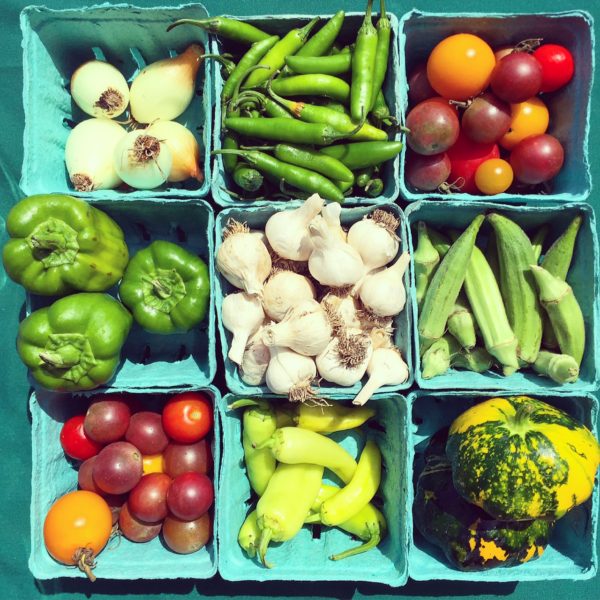
Until college, a tomato was a tomato to me. It certainly wasn’t a food I would ever want to bite into all by itself. You pick them up any ol’ time of year at the grocery store to add texture to sandwiches or burgers and they all taste the same, right? Wrong! There are thousands of varieties of tomatoes and a fresh local tomato is in a different ballpark from the flavorless produce stocked in grocery stores…Read the rest
EmailFacebookGoogle ReaderPinterestTumblrTwitterShare

Introducing the Hens!


And now, the post you’ve been waiting for! A chicken virtual meet and greet! You have been waiting for that, right? Ahem.

Apparently there’s a nesting instinct that takes over pregnant women as they approach their due date. Instead of starting a painting project, organizing, or attacking the dire laundry situation, this phenomenon prompted me to do super unnecessary things like convince my longsuffering husband that we should spend a Saturday afternoon photographing each of our backyard chickens. What can I say? I’m a weirdo. But it’s endearing, right?

So here we go! Introducing the three Barred Rock gals:

photo-570

photo-571

photo-572

These are the stinkers that escaped the other day and had me chasing them all around the yard with my giant 40 week pregnant belly. They are generally the trouble-makers and Bellatrix is the loudest of all the hens. They lay medium-sized pinkish-brown eggs. (Named after Narcissa, Bellatrix, and Andromeda Black from Harry Potter, of course.)

photo-575

Her name inspired by Arthurian legend, Miss Morgan Le Fay is my second favorite chicken. The greens and oranges of her feathers are soooo pretty. We’re pretty sure she’s an Americauna because she lays lovely olive green eggs.

photo-573

The Questing Beast is our only Aracauna. At first we though she was one of our meat birds but then those tell-tale fluffy feathers on the sides of her face gave her away and we realized she was a layer. Her mint green eggs are by far the prettiest. We named her after a creature from T.H. White’s The Once and Future King which is one of my all-time favorite books.

photo-576

Our little Rhode Island Red! She lays large brown eggs. Yes, we named her after a Game of Thrones character. Nerd alert.

photo-574

Maeve, Queen of Fairies, is my favorite favorite hen. There are FEATHERS ON HER FEET! She’s so exotic and beautiful and lays little pinkish-brown eggs.

Thanks for letting me introduce you to the ladies!

What’s your favorite hen?

EmailFacebookGoogle ReaderPinterestTumblrTwitterShare

6 Must-Have Books and Cookbooks for Seasonal Eating Inspiration

Since our conversion, I’ve gained more appreciation for the rhythms of the Christian Year and that by observing those seasons, the story of the Gospel unfolds. One way to participate in the Christian Year is to feast and fast according to the traditions of the Church which, obviously, involves food! Sharing food with family and friends should ideally be a daily reminder of sacred things: The Last Supper, the Holy Eucharist, and the Wedding Feast of the Lamb (all connected, of course). If we consider the partaking of food not as a mundane event but as an intersection with the sacred, then what we eat, where it came from, and who grew it becomes more important.

Something we try to add to the rhythm of our lives is the practice of eating seasonal food. It seems elementary to eat according to what’s growing but until recently I never knew what was in season–produce is available at the grocery store all year round! Until we started growing a garden, I really had no idea if it was the season for tomatoes or for butternut squash.

A few books have been really helped me understand some of these ideas.

I love this collection of Wendell Berry’s agrarian essays: The Art of the Commonplace. I’ve written about how Berry’s emphasis on the value of home has helped me embrace my vocation as a mother, but his essays have been just as life-changing in regards to food ethics. Please read ASAP!

Barbara Kingsolver’s farm memoir Animal, Vegetable, Miracle is a wonderful introduction to eating local and seasonal foods. It chronicles her family’s experience moving back to a family farm and producing almost all of their food for a year. I don’t agree with every little thing she says, but it’s a delightful read that found informative and inspirational.

Seasonally-organized cookbooks have also been really helpful in training me about what’s in season and how to cook according to what’s growing in our garden.

If you’re just starting out, I highly recommend Simply in Season (by the creators of More with Less, an essential on my mother’s cookbook shelf). It is organized by Spring, Summer, Fall, and Winter recipes and is very real food friendly. For someone like me who didn’t have the first idea how to cook an eggplant or a spaghetti squash when they showed up in our CSA bag or our frontyard garden, there’s a handy and simple guide in the introduction explaining how to prepare different kinds of produce in a myriad of ways. It is definitely my first stop when I’m trying to figure out how to prepare a veggie I’ve never cooked with or when I want to attempt a seasonal meal. The recipes sometimes need additional spice added but then again, we like things spicy!

And I also adore Brother Victor-Antoine d’Avila Latourrette’s cookbooks. They contain simple, frugal, almost entirely vegetarian natural food recipes by a monk who cooks with ingredients from his monastery garden. I love that they’re organized according to season and the Christian Year! Although, because Brother Victor-Antoine’s monastery is in the northeast, we have to make some substitutions because what’s in season in sunny Florida is usually a little different.

Twelve Months of Monastery Soups is a great and easy way to incorporate all those seasonal veggies. This one was gifted to us and we use it often. “The Monk,” as we affectionately refer to him, also has a Twelve Months of Monastery Salads, but we haven’t added it to our Cookbook Library yet.

We also love Sacred Feasts which is organized by month according to the feasts and fasts of the Christian Year. January, for example, contains seasonal recipes as well as specific ideas for Epiphany and Saint Anthony’s Day.

We recently acquired From a Monastery Kitchen which is similar to Sacred Feasts, but organized according to the four seasons instead of by month. We’ve never tried a recipe by Brother Victor-Antoine that didn’t turn out delicious!

Do you try to cook seasonally? What books have inspired and assisted you?


EmailFacebookGoogle ReaderPinterestTumblrTwitterShare

Women Speak on NFP: Fertility Charting with an App!

This is a guest post by Mary of Better Than Eden in the Women Speak on NFP series. In this series you will hear from women using various methods of NFP, some to avoid pregnancy, some trying to conceive, and their experiences.

Disclaimer: This series is not meant to be a substitute for any method of training in NFP! If you are interested in one of the methods introduced in this series, please contact a certified instructor for information about training in that method of NFP. 

I remember sitting in the living room of our Creighton instructor when my husband and I were engaged learning about fertility signs and the dynamics of Natural Family Planning.  I had been sure for a long time before then that if I was to be married, learning and using NFP would be a part of the deal.  I knew some of the very basics to fertility awareness but those first meetings were instrumental in being confident about God’s design for fertility and the crazy wonderful way we are made as male and female.  In theory, it was also a great way to get used to using words like mucus with your betrothed thus further cementing our eventual union and deepening our intimacy.  Or…not.  Eleven years later and those words are sometimes still weird to use.  But the occasional awkwardness is far outweighed by the many benefits of NFP.  We chose Creighton for the simple and easy fact that it was the “official” NFP method promoted by our diocesan NFP office.


I think one of the main draws for me with NFP is the recognition that a woman’s body makes sense just the way it is.  With just a few little lessons, my husband and I could understand our fertility cycle and we were then able to make decisions regarding it.  It is empowering information in that you truly appreciate and have respect for the tremendous capability of the human body.  For me it was mind-blowing to TRULY realize that our actions in the bedroom could have eternal consequence.  In our culture we don’t necessarily like that.  Our contraceptive mentality shrugs off responsibility to a pharmaceutical company, a doctor, or a piece of latex until we don’t even realize the purpose and power of the sexual union anymore.  If contraception fails then it is someone else’s fault.  With NFP it is entirely different.  A couple knows that they are the ones who are ultimately responsible for their actions in the bedroom and that those actions hold incredible power and will impact every sphere of life and society – the power to bring another eternal soul into existence impacts everyone.  Before a child is even created, a man and woman are already recognizing their responsibility in the creation of that new life.  And I think that’s how it is supposed to be.


On a smaller scale, once I learned NFP, I was finally able to pinpoint the exact day to expect my menstrual cycle, something I had never before been able to do!  We women know how important that can be, right?  I remember just being amazed that my body actually made sense, contrary to the message I had received in health classes and advertisements and even the doctors office.  I don’t think I even realized until writing this that my experiences learning and using NFP were instrumental in my decision to become a doula and foster that same type of attitude when it comes to birth.


I was blessed in that I didn’t have a hard time learning or interpreting my signs so Creighton as a mucus-only method worked well for us.  Using the knowledge of my fertility signs and Creighton’s method of charting, my husband and I did not conceive until we were married for fourteen months.  And then the first cycle we used fertile days, bam, John Paul came into existence.  We now have four children here on earth (we did experience one miscarriage after John Paul) and I know the day that we conceived each one of them.  In between each baby, due to nursing without a strict schedule, my cycles did not return until 15-17 months postpartum and by then we felt we were ready for another baby, if God willed.  Each subsequent baby was then conceived within a few months or so.  During those postpartum times I didn’t chart until my cycle returned.  Learning my signs and how my body worked, it was very clear when I was still infertile and when fertility was returning so I didn’t even bother to chart.  Once they did return I did my own form of pseudo-charting in a small notebook in my nightstand so that I would have an accurate due date if we conceived.


After the birth of our youngest, we discerned that we need, at least for a time, to chart more diligently.  A few months back I heard about a new app called MyFertilityMD.  I hadn’t used the official Creighton charts and stickers in about eight years (they were long since gone and I didn’t necessarily feel the need to have those laying in my nightstand drawer just waiting for a curious child) and my pseudo charting via notebook wasn’t going to cut it if we were truly serious about avoiding a pregnancy.  This new way of charting piqued my interest.  After scanning the introduction on their website www.myfertilitycycle.com, I thought it might be just what we were looking for.  At that time it cost $4.99 for the app so we happily paid and began charting.  I personally think that it is imperative for those who want to foster awareness and use of NFP to utilize the most modern technology available to appeal to current culture and MyFertilityMD does just that.  Since we started using the app, the folks at MyFertilityMD have also begun offering charting via their website so now you don’t even need a fancy phone to use it!
 
MyFertilityMD has combined the best research of all the other methods into one extremely easy to use program.  It is primarily a mucus based method but does take into account other fertility indicators if they are observed.  Once I understood the format, I have felt completely confident with my background in Creighton to use this as our method of NFP (or as they call it: organic family planning).  From their site:  ”This app combines 10 years of medical research and iOS simplicity to bring charting to a new level. In less than 20 seconds a woman can record her vital fertility signs and make informed decisions to either enhance or avoid pregnancy. The app includes over 15 videos to guide every user though this safe an organic method of family planning. MyFertilityMD offers 120 different Pathways to determining your fertility. MyFertilityMD always uses Bleeding, Lubrication, and Mucus Bio-Markers, but also allows you to add Temperature, Cervical Observations, Saliva Ferning, urinary Estrogen, and Luteinizing Hormone. This equates to many possible combinations and a lot of flexibility in one app.

It is very helpful to have a background in another method to utilize MyFertilityMD BUT I don’t think it is absolutely necessary.  If you simply answer the questions prompted by the app to chart each night, you will get an accurate assessment that charts your potential fertility for that day.  There are videos to help understand how to observe fertility signs if that has never been previously learned. We’ve been very happy so far with our use of my husband’s phone to chart using MyFertilityMD.
Here are some of the things that I appreciate about MyFertilityMD:
  • You have 24/7 access to a real doctor for any questions or concerns that may pop up.  (Did you read that?  Try calling your normal doctor at 8 p.m. with a question about your mucous pattern.  ”Dr. Smith?  This is Mary.  I was just in the bathroom checking my mucous and…” “what?  Mary.  I saw you a few months ago?  The crunchy granola one with the weird ideas about birth control?”  ”Yeah, that one.  Anyway, my mucous stretched but I couldn’t tell whether it was cloudy or clear. and…Dr. Smith?  Yes, my mucous…Um, yes…from there….Hello?”)
  • When I actually tested out this feature out on a SUNDAY NIGHT, I had an email back within an hour addressing my specific question.  Amazing.
  • Your charts are stored in your phone.  Or in my case, my husband’s phone.  Which is actually kind of helpful when he’s wondering during the day where we are fertility-wise.  Because…ahem.
  • If you do happen to already work with a doctor, nurse, midwife or NFP teacher who understands and respects fertility awareness, you can email them your chart right from your phone.  So MyFertilityMD does NOT need to replace a method that you like.  It can simply be a much easier way to chart.
  • To chart each day, the app asks you questions about your fertility signs that day.  For some reason having it laid out like that makes it simpler for me to remember the signs to look for.  Answer the questions.  It’s that simple.
  • For people who use additional signs to confirm ovulation there is an option to add those to your observations, too.  Temperature, ferning, Clearblue monitor readings, and cervix positioning can all be charted.
  • They call it “organic” family planning.  NFP is the only method of family planning that is completely eco-friendly and fosters health, rather than harming it.
  • Right now it is selling for $9.99.  That’s it.  Forever.  That’s way less than one month of birth control pills, a box of condoms (I think…), an appointment to insert an IUD, etc.  They aren’t making millions off of this.
  • Your phone will alert you to remind you to chart at the end of the day.  I need that.
  • There are photos available if you have a question about the specifics of your observations.
  • Charting your cycle with various methods of organic family planning is an incredible diagnostic tool to treat infertility, hormonal imbalances, PCOS, endometriosis, PMS, and other health issues.  The fact that you can email your charts or very easily bring them into an appointment with your doctor, midwife or instructor means that women can be treated – and healed – that much more effectively.
  • Let’s be real.  The app looks way cooler and more modern than the old paper charts.  And since it looks cool and it’s on my husband’s gadget phone, he’s more into it as well.
  • Lastly, I feel like it respects women and men to be able to understand their fertility.  The app lays things out simply without being condescending.  It’s not rocket science but it is effective and empowering.  I really feel like being told to take a pill or get “fixed” (i.e. broken) while easier in some ways is condescending.

Some of the things that I felt could use improvement before have now been remedied.  There is now a feature for keeping notes on your chart on specific days like if you experience ovulation pain you can write that down.  Or if you are sick or under stress (which can alter your cycle) you can note that.  You can also now chart online and they have added a bit more help in special circumstances.  I do feel like if you are having trouble understanding your cycle or getting confusing charts, it would be helpful to go beyond their resources.  

My experiences with NFP have truly helped me view my body in a positive light.   Our bodies truly are fearfully and wonderfully made and because they are made by a God of order and reason, our bodies make sense.  NFP is not easy in the sense that you get to pass responsibility over to someone else and there certainly are times when it is challenging.  It requires a certain amount of diligence and self-control and sacrificial love but all those things, while hard, are good.  For me, knowing my body through NFP has been empowering and freeing and now, just a way of life.

If I can help anyone with any questions, you can find me at Better Than Eden and I’m happy to help in any way I can.  Thank you to Haley for inviting me to share my experiences with you all!
102_1308
Mary has been married for eleven years to her husband Brian.  They live in Western New York with their four boys, a brood of chickens, and a whole lot of mud.  She has a degree in Theology from Franciscan University and is a certified labor and birth doula.  When not homeschooling, you can probably find her cleaning something, remodeling something, knitting something, reading something, cooking something or blogging about a combination of all those things at www.betterthaneden.com

EmailFacebookGoogle ReaderPinterestTumblrTwitterShare

Women Speak on NFP: Why My Husband and I Don’t Use Contraception

This is a guest post by Stephanie of Captive the Heart in the Women Speak on NFP series. In this series you will hear from women using various methods of NFP, some to avoid pregnancy, some trying to conceive, and their experiences.

Disclaimer: This series is not meant to be a substitute for any method of training in NFP! If you are interested in one of the methods introduced in this series, please contact a certified instructor for information about training in that method of NFP. 

I bet not everyone gets to learn about contraception with the help of a Slip N’ Slide. Seriously. Born and raised Catholic, I learned somewhere along the way that the Church never permits artificial forms of birth control, but until I attended this particular gathering of my high school youth group, the one involving said slide, I’d thought birth control was one of those things, like Crocs and the Backstreet Boys, that wasn’t really taken seriously anymore.

I’ve discovered, as it turns out, that birth control totally is serious business. Love, I was told that night, is meant to be free, faithful, total, and fruitful (the slide was supposed to represent this, I think). It’s meant to be given without reserve, promised and sealed in fidelity, to hold back nothing, and to invite a man and woman to become creators of new life. It all made a lot of sense, especially when I discovered that the Catholic Church didn’t insist that every sexual act produce a baby.

So yes; my Catholic faith tells me that contraception is always inherently wrong. If you told me that it’s foolish to follow a bunch of rules just because the Catholic Church tells you to, I’d say you’re absolutely right. The amazing thing about the Church, I’ve learned, is that every time I’ve put a question of teaching to the test, there’s been a perfectly clear, logical answer that emphasizes one’s best good. Rules don’t exist to burden us (there’s a reason why you stop at a red light, for instance, or why your iPod manual tells you not to take your iPod swimming), but to let us live in the most fulfilling way.

The thing is, I don’t want to lead with my religion. I want to lead with who I am. My understanding has since deepened beyond a teenager’s somewhat blind obedience to her faith. The more I learned, the more convinced I became that birth control is one of the greatest inhibitors of romance, intimacy, and true freedom. I’ve come to see that biologically, practically, logically, and even romantically speaking, choosing not to bring contraceptives into a relationship is one of the absolute best ways to foster trust, honest communication, and authentic love. Who doesn’t long for that?

In the past few years, various friends and personal reading have led me to become a huge advocate for what I like to call the crunchy life. You know: coconut oil, kale, homemade cleaning products, and natural deodorant. I know I’m not the only one — in my observation, the benefits of things like green juice, organic restaurants, and neti pots are becoming commonplace on the pages of many women’s magazines.

It’s a puzzle to me, then, that with all the justified concerns we have about our well-being and environmental impact, so many of us seem to overlook a critical area of our lives: our reproductive health. Biologically, the birth control Pill and other hormonal contraceptives work by releasing large amounts of synthetic hormones, estrogen and progestin, that suppress ovulation and mimic the hormonal symptoms of pregnancy. In other words, they fool a woman’s body into a sort of state of constant pregnancy.

This, to me, couldn’t be further from natural. Consider, for instance, the fact that it’s normal to take medicine when you have a headache. It’s not normal when you don’t have a headache. In the same way, the Pill is marketed to “treat” a condition that doesn’t exist: it’s intended to actually prevent a woman’s body from functioning as it naturally does.

What’s more, the information packet for the Pill contains an extensive list of side effects that are directly related to taking it, ranging from weight gain, acne, migraines, and high blood pressure all the way to heart attack and increased chances of breast and cervical cancer. Ironically enough, the Pill often lowers a woman’s sex drive, the very thing she sought to liberate, as well. While packets are quick to point out that the Pill is merely “associated with” higher instances of serious conditions, and that they are rare, I still personally don’t find that the freedom to enjoy sex without pregnancy outweighs these risks.

I’m angered when I see how readily the Pill is pushed on women, largely in the name of profit. Friends have described taking birth control to me as feeling trapped in one’s own body, not feeling at all like oneself, and living in fear of what might happen to one’s complexion, weight, and future children, if one ceased to take it (you can read more anecdotal testaments here). We deserve so much more. The health-related shortcomings of birth control speak for themselves, but I think the logical case against contraception is just as convincing.

Free, faithful, total, and fruitful. It seems that even to a nonreligious individual, these four elements of love and sex are, at some point in a relationship, very desirable. I think most would agree that the body speaks a language, and that sex and love speak the same thing, whether one intends them to or not. They say, I want you, and all of you, forever. Isn’t that what we’re all longing to hear?

If one of these elements is missing, the body essentially speaks a lie. I want you, it says, but not all of you. It’s a conditional promise. When the fruitful aspect of sex is artificially eliminated, there’s a withholding of one’s fertility and the accompanying responsibility it bears.

That exact sense of unconditional love and responsibility is my biggest reason of all not to contracept. I met my husband Andrew four years ago, and when we became a couple, it didn’t take long for either of us to know we’d never go on another first date. Not only was he a handsome lover of words who’d hide notes around my apartment, he shared my take on birth control. During our engagement, we signed up for Natural Family Planning (NFP) courses to prepare for a contraceptive-free marriage.

Choosing to forego birth control in our marriage comes down to love. Karol Wojtyla, the man who became Pope John Paul II, wrote that the opposite of love is not hatred, but using another person. One need only look to the culture, I think, to see that hookups, friends with benefits, and cohabitation have left so many of us broken. We’re promised freedom, but are left instead with deep wounds. No one’s body or heart is meant to be used only for what it can offer sexually; it’s meant for love that sacrifices and heals.

Each of us is so much more than just a body, but in our humanness that can be easy to forget. Even in a loving marriage, there exists the possibility of desiring one’s spouse for self-gratifying purposes, rather than a desire to express love for the other. It’s a daily battle to let love prevail over lust.

I want my husband and I to have the best possible chances of winning that battle–when birth control takes pregnancy off the table, I can only foresee a greater temptation to use one’s spouse, even unintentionally, to take sex for granted. Birth control, I think, could easily become a crutch to mask a lack of self-control for one another’s sake.

In our attempts to not take sex for granted, we’ve found NFP a powerful way to understand sex as good and beautiful without idolizing it. A far cry from the rhythm or calendar methods of old, NFP is a scientifically precise, observation-based method of simply tracking, rather than altering, the existing conditions of a woman’s body in order to determine periods of fertility and infertility throughout her cycle. When used correctly, NFP is as effective at postponing pregnancy as the Pill.

I’d be lying if I said it wasn’t hard not to giggle, at first, when we learned that cervical mucus was one of the observable signs of fertility. We discovered that planning to use NFP in the abstract and actually sitting in a classroom learning it, trying to pretend a couple wasn’t standing there talking about ovulation the way most people talk about the weather, are two completely different things. You get used to it.

It’s actually something I’m so thankful for–I’d venture that, between texting my husband about my mucus while I’m at work, filling in my chart together each night, and constantly discerning a prudent time to begin a family, we have a more goofy, more intimate, and more joyful sex life than we ever could with contraception. The responsibility of planning our family doesn’t just fall to me as I take a daily pill or replace a monthly patch; it’s shared by the both of us. The self-control required to abstain during times of fertility sets us free to truly give ourselves to one another.

Intimacy isn’t a right to be demanded. It’s the fruit of loving, willful submission. Sexual freedom, we’ve seen, doesn’t mean a total lack of responsibility for each other. It means a willful choice to love in a pure, self-giving way. “Freedom,” said John Paul II, “exists for the sake of love.” That is, when you love someone, you actually desire to place their happiness before your own. It’s a beautiful thing to behold.

Love that is free, faithful, total, and fruitful; love that sacrifices and unites. It’s nothing less than any of us deserve. I’d say that’s definitely worth a trip down the Slip ‘N Slide.

This post originally appeared on Arleen Spencely’s blog.

313154_570245596748_641374495_n

Stephanie delights in bike rides, good books, puddle jumping, The Avett Brothers, hammocks, avocados, and the notes her husband Andrew sneaks under her pillow. She is thirsty. Knowing so many others are, too, she spent a missionary year with Generation Life speaking to students about human dignity and authentic love. Her passion is telling young women they possess immense worth and that pure, sacrificial love is real; she thinks a truthful understanding of sex and love is medicine for an aching culture. Upon noticing there were few resources for Catholic brides-to-be, Stephanie decided to make a humble attempt at filling the void. Her blog,Captive the Heart, is a collection of wedding ideas, spiritual reflections, inspired dates, and general ways to plan a sacred, stylish celebration and a holy marriage.

EmailFacebookGoogle ReaderPinterestTumblrTwitterShare

Herb Gardening Tips for Beginners

Happy Monday! Today you can find me over at Mama And Baby Love chatting about herb gardening :)

It’s still wintry and chilly outside, but it’s time to start planning for your Spring garden. And for those of us in the deep south, spring gardening is already in full swing now that we’re had our last frost (fingers crossed!). If you’ve never tried out your green thumb before (and even if you have) an herb garden is an easy and useful way to start. If you’re gardening with limited space, like many of us in the urban gardening crowd, it’s important to know how to get the most out of the space you’ve…

Read the rest here!

EmailFacebookGoogle ReaderPinterestTumblrTwitterShare

10 Ways to Avoid the Flu (And Recipe: Immune-Boosting Lemonade Jello)

Did you make New Year’s resolutions about improving your health? I have a treat for you today, a guest post from Chef Karen, Catholic mama to an adorable 8-month-old baby girl, good friend, and certified natural chef. We were childhood friends and got reconnected when we both moved back to our hometown. Enjoy her awesome wisdom about avoiding the flu by strengthening your immune system! – Haley

Hello, Carrots-For-Michaelmas-ites!  I am so excited to be writing this guest post for the lovely Miss Haley! She was so sweet to ask me. Today I’m going to talk about something that is on everyone’s mind this time of year: THE FLU!

Getting the flu is no fun, but watching your babies get the flu is even less fun.  I am all about natural health, so I’m going to give some great tips on how to keep your family’s immune systems rockin’ all through the winter season, so you will just beast past the flu.

Here’s what you can do:

1. Get lots of sunshine!  Contrary to popular belief, the sun is your friend!  While the majority of people in America are vitamin D deficient and supplementing is a good thing to do, it cannot replace good ol’ natural sunshine.  When your skin is exposed to sunshine, it synthesizes vitamin D3 sulfate, which is water soluble and can travel freely through your bloodstream.  The supplemental D3 is not sulfated, and cannot be converted.  Try to get at least 30 minutes of midday sun (no sunscreen!), but don’t burn.  Whenever I am fighting something, a good little baking in the sun always makes me feel better!

2. Supplement Vitamin D3. Vitamin D3 has been shown in numerous studies to be one of the most important factors in combating the flu and colds.  For those days when you just can’t get in the time in the sun, a liquid vitamin D3 supplement is a must.  Current research is saying up to 8,000 IU a day may be needed for adults, but you really need to monitor your blood serum levels to know, because everyone is different.  I usually take about 5,000 IU if I have gotten sun that day, 7,000 if I haven’t, and 10,000 if I feel a cold coming on.

3. Up your Vitamin C.  The ideal source of vitamin C would be pure vitamin C powder, but that is pretty sour and most people don’t have it on hand.  While Emergen-C has a lot of sugar in it, it has definitely been effective in my experience in staving off colds!  You can also make fresh squeezed lemonade, warm lemon water, and nourishing healthy lemonade jello (see recipe below)!

4. Keep your hands away from your nose and eyes.  I know most people are paranoid about drinking after a sick person, but chances are, you’ll more likely catch the flu if you’ve been rubbing your eyes a lot after being around sick people!  Think about it – if you ingest something (bacteria, etc.), it has to go all the way through your stomach and all the acids and gut flora.  What is the likelihood it would survive all that?  However, your nose and eyes give almost free access to your system.  So, wash your hands frequently, and keep them away from your face!

5. Up the probiotics.  If you don’t take probiotics normally, DO!  They have been shown to be extremely necessary for proper immune function, and since most of us aren’t eating tons of fermented foods all the time (although that would be great too!), you definitely want to supplement.  If you are getting sick or around sick people, you should be able to double your dosage short-term, as long as it doesn’t bother your stomach.  If you are up for it, fermented foods (preferably homemade) are an awesome way to get more good gut flora naturally  - sauerkraut (Bubbi’s makes a live version), pickles, kombucha, kefir, yogurt, etc.

6. Eat fresh bone broth.  Turns out, there is science behind the old remedy of a bowl of chicken noodle soup!  Although I don’t recommend the processed, gluten-filled store-bought stuff, making your own bone broth at home is a super easy, cheap, and EXCELLENT option.  Simmering the bones pulls out all of those beneficial minerals like calcium, magnesium, and phosphorus, plus bone marrow, healthy fats, and gelatin.  Gelatin is extremely nourishing and also healing for your gut, which affects your overall health tremendously.  Using lots of homemade bone broth to cook with during flu season, or just drinking a big steaming mug of it, will definitely help to keep you on the path of health.

Oscillococcinum.  Did you get that?  Yeah, I don’t blame you.  Oscillococcinum is a homeopathic remedy that has gotten lots of recognition for its effectiveness in warding off and shortening the length of the flu.  It is most effective if taken when you first notice any signs of flu-like symptoms – it has worked for me many a time!  You can even find it at drugstores like Walgreens.

Get plenty of rest.  I know, I’m being kind of hypocritical with this one.  Having an 8-month-old who likes to wake up at least every hour at night doesn’t exactly make the ideal situation for adequate sleep.  But, do what you can to optimize your sleep – take a magnesium supplement, like Natural Calm, before bed, drink chamomile tea, take time to unwind.  Rest when you can!

Manage your stress levels.  This can also be much easier said than done, but make a concerted effort to keep your stress levels low.  Get some sort of exercise every day, go out in the sun, play a fun game, listen to some chill music – whatever works for you!

Last, but certainly not least, Eat a healthy diet.  This means whole foods, nothing processed, and NO SUGAR, including sugary fruits!  Eat lots of organic meats, veggies, especially green leafy ones like kale and spinach, sweet potatoes, and coconut oil.  Lots of coconut oil (anti-microbial, anti-bacterial, anti-fungal, and immune boosting).

There you have it, folks!  If you incorporate all, or at least most, of these tips, you should be able to breeze through this flu season without fear. And now, for that recipe I promised…

Immune-Boosting Lemonade Jello

Ingredients:

  • 2 lemons, juiced
  • 1 lime, juiced
  • 1 Tablespoon Great Lakes Kosher Gelatin
  • ¼ cup cold water
  • ¼ cup water near boiling
  • 1 cup cold water
  • 25-30 drops liquid stevia

Directions:

  1. In a bowl or large mason jar, whisk gelatin powder into ¼ cup cold water.
  2. Once well incorporated and beginning to thicken, add hot water and whisk until gelatin powder is all dissolved.
  3. Add additional 1 cup of cold water and stir.
  4. Stir in lemon and lime juice and add stevia to taste. Be sure to do this at the end, so the hot water doesn’t destroy all of the vitamin C, which is heat-sensitive.
  5. Pour into an 8×8 glass baking dish, or any other dish (will take longer to solidify if the dish is deeper).
  6. Place in refrigerator for at least 2 hours, or until set.
  7. Enjoy the immune-boosting properties AND delicious taste of your lemonade jello!

Disclaimer: These tips are not designed to replace the advice of your physician. 

Come visit my blog for lots of yummy real food recipes, including gluten-free and grain-free, tips for living a more natural, chemical-free life, and lots of crazy stories from my life as a health nut Therapeutic-Chef-turned-mama!  I am committed to making healthy, nourishing food without ever sacrificing flavor, because ain’t nobody got time for that.  If you want more personalized help on your path to a better you, I also offer services such as Whole Food Lifestyle Coaching, cooking lessons, pantry makeovers, guided shopping trips, consultations, and even long-distance cooking lessons via Skype.  Come on over and say hi! – Chef Karen

Linked up with:

EmailFacebookGoogle ReaderPinterestTumblrTwitterShare

Backyard Chicken Tips

Find me today over at Mama and Baby Love giving you the scoop on getting started with backyard chickens. 

Free, delicious, healthy organic eggs whenever you need them? A pet that can help teach your kids about nature, reproduction, and responsibility? There are so many benefits to having backyard chickens, but getting started can be a little intimidating. Here are some guidelines to get you going! Research your local city ordinances regarding keeping poultry. In some places it’s simply not allowed at all, in other places there are important restrictions you should know about. In my town, for instance, backyard hens are allowed but a homeowner can’t have more than one rooster…

Read the rest here :)

EmailFacebookGoogle ReaderPinterestTumblrTwitterShare

Orange Pomanders: A Festive Kid-Friendly DIY

One of my favorite festive scents is the combination of orange and cloves. I made orange pomanders once or twice as a little girl and decided to share the experience with my 3-year-old this year since it’s such a fun and kid-friendly activity. And because I have no crafting skill and they’re so easy to make.

Basically, an orange pomander is an orange decorated with whole cloves. They’ve been popular around Christmastide for hundreds of years. You can dress them up with ribbon to create festive, delicious-smelling holiday decor or you can use them in apple cider to give it extra flavor.

Here’s all you’ll need:

  • Oranges or other citrus (we used clementines this year.)
  • Whole cloves (Not ground. They’re cheaper in the “bulk section” if your grocery store has one.)
  • Toothpick to make holes for the cloves (Depending on how thick the skin of the orange is, this might not be necessary. I just stuck the cloves right in without making any holes with a toothpick.)
  • And if you’re getting fancy, ribbon to decorate.

Directions: Just stick the cloves in the orange (or punch holes with the toothpick first if the skin is thick) in whatever pattern you’d like. This kept my 3-year-old busy for a good 30 minutes and I just let him punch the cloves in wherever he wanted.

We displayed ours on our Thanksgiving table and used some to make hot apple cider (just drop the orange pomander in with the cinnamon sticks, etc). Easy peasy, pretty, and all natural/non-toxic. Love it. The only major clean up was sweeping up the cloves that fell off the table during assembly :) I’ve seen them used in beautiful centerpieces and I bet you could even decorate your tree with them if you tied ribbon to hang them up with!

Enjoy!

I linked up with:

EmailFacebookGoogle ReaderPinterestTumblrTwitterShare

Food Choices ARE a Moral Issue

I recently read a very popular blog post, Food Choices Are Not a Moral Issue, on one of my favorite blogs, Keeper of the Home by Mandi Ehman of Life Your Way (another blog I read and enjoy). Mandi writes a lot of great stuff and I usually like her posts, but in this case, I wholeheartedly disagree with her claim. You can read the post here.

Basically, Mandi bemoans the rigid judgmentalism of many “real-food advocates” toward those who make “inferior” food choices. She quotes another blogger: “A culture that elevates eating to some holistic act of ethical self-definition – localvore, low-carbon-impact food, fair trade, artisanal cheese – will find the casual carefree choices of the less-enlightened as an affront to their belief system. Leave it to Americans to invent a Puritan strain of Epicurianism.” The quote made me think of Chris, the health nut from Parks and Recreation: health and food have become his religion. He’s obsessive and is always pointing out how unhealthy other people’s choices are. It’s no way to live.

C.S. Lewis makes a similar criticism of modern culture in The Screwtape Letters when he describes the warped gluttony of the mother of “The Patient.”  She is so particular about her food that she takes all the joy out of eating. Her nitpickiness ruins the meal for others. My favorite college professor who taught the book said, “You need to reevaluate your moral attitude toward food if you can’t enjoy a good chicken fried steak every once in a while!” I agree. So, sure, don’t stand outside of McDonald’s and glare at everyone who goes in. Don’t criticize the meals your friend makes for her family because you don’t think they’re as healthy as they should be.

But does that mean that food choices do not carry moral weight? NO. The choices we make about food can either nourish or harm our bodies and therefore have a moral dimension. But the bigger issue (that isn’t even touched on in Mandi’s post) is that our food choices influence much more than personal health. The choices we make about food affect the environment, God’s creatures, and most importantly, other human beings.

I agree that to be unkind to others based on their food choices shows a lack of compassion to those who may have different circumstances or understanding of food ethics. Not everyone is as aware of the massive problems with the food industry as you may be. There’s no need to be a jerk and sneer at other’s fast food or processed meals. There’s no need to refuse to eat what’s offered to you at someone else’s house because it’s not what you would serve (barring serious allergies, of course). There are rules of hospitality that require that we are gracious and thankful and never unkind in these situations. It doesn’t help anything to rudely judge other people’s eating habits and there are better ways to educate about food ethics. However, I passionately disagree with Mandi’s statement: “food choices are not a moral issue”! 

When we buy food, we vote with our money for what is ethical or what is not ethical. When we support a horrible corporation like Monsanto, we are making a moral decision. When we buy food from a source whose practices we know and believe to be ethical, we are also making a moral decision.

There was a lot of talk in the comments about everyone having the “right to eat what they choose.” Nobody is arguing with that. But just because you have the right to do something, doesn’t mean it’s morally permissible. Let me give an illustration: smoking. Everyone has the right to smoke. I don’t go around telling every smoker I see to stop. Nor do I glare at them or mutter under my breath. But I think what they’re doing has moral implications. If you understand what smoking does to your body and yet choose to smoke regardless, you are knowingly causing harm to your body. Holy Scripture is very clear that intentionally causing harm to our bodies is wrong. Furthermore, smoking does not only affect the smoker. If someone is smoking around their kids, they are harming their children. And if you’re irresponsibly spending your money on cigarettes, you are supporting a corrupt system. We can have compassion for smokers and give them grace because their circumstances might be very different from our own, but we can’t pretend that their choice is a good one.

And sure, people have different situations. My husband is a long-distance runner. If he has a soda now and then it’s no big deal because he’s burning it off. But if someone has diabetes and yet decides they still want soda everyday, they are making a grave moral choice: to harm the body God has given them. If we give our kids candy for every meal and they develop diabetes, our choices have serious consequences of a moral nature: we caused our children harm.

But what really shocked me about the article is the view that our food choices only have to do with our personal health aspirations. This is not the case. They affect the livelihood of people all over the world and have a huge impact on the environment, the world God has given us to care for. On top of that, there are the many problems with the meat industry and the inhumane treatment of animals in CAFOs (concentrated animal feeding operations). Is the abuse of God’s creatures not a moral problem?  Can we be aware of the mistreatment these animals suffer in feed lots and choose to support those companies anyway without acting immorally?

Even more importantly, consider the plight of migrant workers in our country. When you purchase produce you might be contributing to conditions in which migrant workers are abused, physically and sexually.  If you don’t know about these issues, that’s one thing. If you are aware, you become complicit. Is it not a moral issue whether or not to support the abuse of others? Our choices have great consequences and carry moral weight. To say that food choices are not a moral issue is to say that our food choices don’t matter. And they do. If we are knowingly harming ourselves, God’s creatures, and God’s creation, can we really claim that our actions have nothing to do with morality?

So how do we respond? With compassion and love, understanding that these issues are complex, not everyone may have the same information we do, and that their circumstances might make good food choices difficult for their family. We can try our best to make the right choices and offer good information to our family and friends. We can treat others with respect and accept food at other people’s houses with gratefulness rather than judgment. But we can’t ignore the great influence of our actions under the guise of being “nice.” It’s certainly not “loving” to ignore the abuse of migrant workers, the disastrous effects on the environment, and the grotesque treatment of animals typical on giant farming operations.

I understand that the point of Mandi’s post was to combat the snobbery of some sort of food choice superiority: an unkind, unhelpful, and arrogant attitude towards others which should not be encouraged. But ignoring the moral implications of food cannot be the answer!

My family has a far from perfect record when it comes to food ethics. We try to grow a lot of our own produce and buy locally from farms we want to support. But sometimes we eat out or purchase products from questionable companies. We are not perfect. We are trying to be ethical and honor God’s creation and creatures and little by little we’re doing better. So let’s support, encourage, and inform each other. Let’s love God by caring for our bodies, farm workers, animals, and his earth. But let’s not pretend that our choices aren’t important. There’s too much at stake.

For some great information on food and farming ethics, I highly recommend Wendell Berry’s wonderful agrarian essays. Many of them are in the collections The Art of the Commonplace and Bringing it to the Table. A good introduction to food issues, and a fun read, is Barbara Kingsolver’s Animal, Vegetable, Miracle. Or you can watch Food, Inc. or some of the other documentaries that expose the massive problems in the food industry.

This post contains Amazon affiliate links.

EmailFacebookGoogle ReaderPinterestTumblrTwitterShare