
Tag Archives: nfp

Women Speak on NFP: How NFP Got Me Pregnant

This is a guest post by my dear friend Kaitlin of More Like Mary~More Like Me. in the Women Speak on NFP series. In this series you will hear from women using various methods of NFP, some to avoid pregnancy, some trying to conceive, and their experiences.

Disclaimer: This series is not meant to be a substitute for any method of training in NFP! If you are interested in one of the methods introduced in this series, please contact a certified instructor for information about training in that method of NFP. 

My experience with NFP has been different than most. I’m coming up on five years of marriage to my husband, Ted, and we’ve yet to actually use NFP to avoid a pregnancy. Because of my history, we knew we might have trouble conceiving and started trying for a baby pretty much from the get-go. Even though we haven’t needed to chart to postpone getting pregnant, we are eternally grateful for the knowledge that came with our pre-marriage NFP courses. NFP led us to NaPro technology, a technology that uses a woman’s NFP charts to direct its diagnoses and treatments for infertility.

We have NFP (and NaPro) to thank for getting us pregnant. Here’s how:

1. NFP helps to identify key days of your cycle to make diagnostic testing and treatment more accurate. One exampleAnyone who has gone through the initial rounds of testing for infertility has probably heard of  ”day 21 blood work”. In theory, day 21 is one week after ovulation and a good time to check your hormone levels to get an idea of what your body is doing. This is based on the idea that women have 28 day cycles and ovulate on day 14. But, last I checked, a woman who has 28 day cycles 100% of the time….. doesn’t really exist. So if you ovulate a few days later than the doctor thinks you “should”, your blood work could be horribly inaccurate and even misleading. A much better approach is to complete the blood work on “peak + 7″. That is to say, seven days after you identify your “peak” which is ovulation. If you don’t chart, you can’t identify this crucial time and complete the blood work with this level of accuracy.

The first OB we sought help from when we realized we couldn’t get pregnant was not trained in NaPro. He suggested the “day 21 blood work” and an ultrasound series on days 12, 14, and 16 to watch my follicles grow, hopefully erupt, and produce an egg. We opted to do the blood work (and paid thousands of dollars out of pocket. Don’t even get me started on that….) but weren’t able to do the ultrasound series. He ended up putting me on a high risk medication for a hormone level he thought was too high. When I was tested by a NaPro doc on “peak + 7″ months later, it was perfectly normal and the medication wasn’t needed. I’m thankful we didn’t do the ultrasound series because if I didn’t ovulate on the exact days he thought I would, it could have been a complete waste of time.

We did several ultrasound series with our NaPro doctor a year later and discovered I wasn’t ovulating. Thanks to my charts, we were able to identify the best days for me to take a medication that helped with this. We then used my charts to identify my peak and watch my follicles grow in order to determine if more medication was needed. We have NFP to thank for giving us this amazing picture:

follicles

Three follicles. All of which erupted later that day. One of which released the egg that held half the DNA for her

 10w5d-1

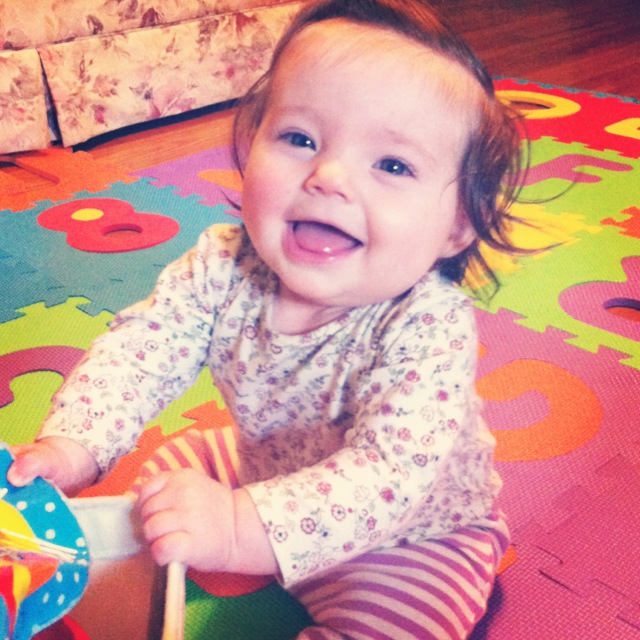
who has known grown into this.

Amazing.

2. NFP helps doctors heal your body rather than just get you pregnant. I think that many doctors, in their quest to “get you pregnant” really miss an opportunity to get you pregnant. 

Let me back up first.

I saw my first OB when I was 15 years old. I had horrible, horrible, horrible periods that were causing me to miss school every month. Cramps that sent me to the floor in agony. Puking for the first several days of my cycle. I saw just about every OB our small town had to offer and they all said the exact. same. thing. They all suggested I take the pill. It sounded like a great idea to me…except my mom refused to let me. My long term boyfriend probably had something to do with her refusal, but all I could see at 15 was her refusing to let me feel better. “This is the only thing that will help me!” I argued. She finally consented when I was 18 and my cramps instantly went away. But after only a few months I began to wonder what I was actually putting into my body every day. Even more so, I began to wonder what this meant for my future. I knew I wanted children, so what was going to happen to me when I went off the pill? I came to realize that I wasn’t healed, I was patched. And I desperately wanted to be healed.

As a sophomore in college, I sought out our local NFP instructor and asked her if she knew of any doctors who would treat me without prescribing the pill. She knew of one, several hours away, and I called immediately. The office said I had to learn NFP before meeting with him so he could review my charts. So I signed up for the class and took it with a friend who was having similar issues. After a few months, I met with my first NaPro doctor, told him about my symptoms, and showed him my charts.

Endometriosis.

Not yet a diagnosis, but a strong suspicion. He suggested surgery.

I cried and cried. In part because I was worried about what this meant for a future family (Ted and I were newly dating but pretty serious at this point). But I also cried tears of joy and relief. Finally, after five years and countless doctors, I had one who was actually going to try to help. He even gave me this analogy. “If your car breaks down, you don’t call a tow truck to tow you around in a broken car forever. You call a mechanic and get it fixed. Birth control is just a tow truck. I want to actually fix your car.

Cut forward a few years when Ted and I are seeking help for infertility. Our blood work experience has already taught us to only work with doctors trained in NaPro, but we needed to meet with a local OB to arrange for ultrasounds to be sent to our doctor. (He was three hours away. NaPro is worth. the. drive.) I started to tell the OB just a tad about my history and was about to ask him if he would simply order ultrasounds for me and let us use his technician when he interrupted me. “It looks like, with your history, you’re going to need In-Vitro. I highly doubt you’ll ever get pregnant on your own.” I told him that, as a Catholic, that was not a moral option and not something I wanted to do. He just restated his stupid opinion and acted like I was crazy. He did consent to ordering the ultrasounds, however, which was all we needed from him.

A year later, after his technician conducted our ultrasound series and our NaPro doctor prescribed the right medicine, I gave birth to our beautiful daughter just two hours before Dr. In-Vitro went on call. If she had been born just a bit later he would have been the doctor catching her. I was actually disappointed it didn’t work out that way. I would have loved to have had the opportunity to look him the eye and say, “Remember me?“. Don’t think I wouldn’t have done it.

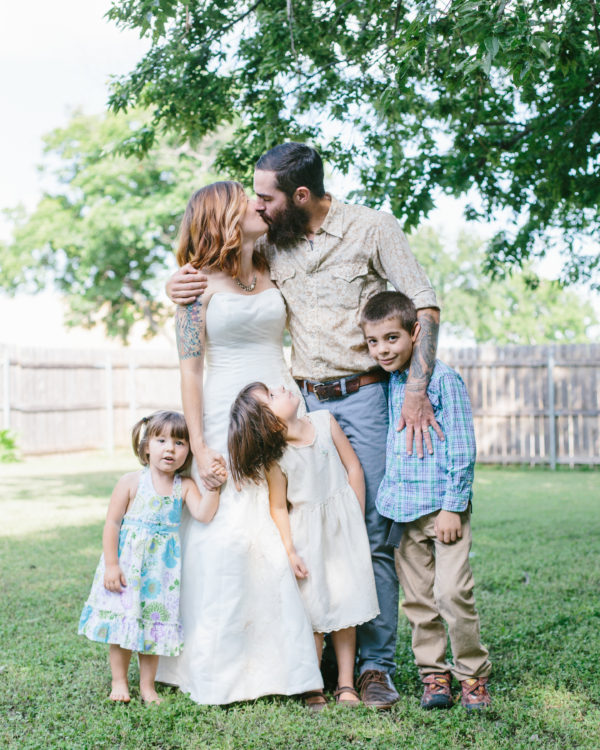
Because I had a doctor who understood NFP and was able to read my charts, he never once suggested that I wasn’t able to get pregnant without artificial reproductive technology. He fixed the problem. He healed my body. And he gave us our Hannah.

2-11 76

3. NFP helps you identify the best possible days for conception. If you’ve been following Haley’s series, you are aware of the fact that you can use NFP to avoid pregnancy by avoiding sex on certain days. But you can also increase your chances of getting pregnant by having lots of sex at the right times!

Anyone who has dealt with infertility knows that’s not nearly as fun as it sounds.

Nuff said?

4. NFP treats the whole person. We are body and soul. We cannot find healing in a system of medicine that only seeks to treat our body. When I sought out doctors who were committed to treating me with NFP and NaPro technology I found doctors who truly cared about me. I’ve worked with four different NFP only doctors in three different states and each of them has helped me deal with the spiritual and emotional aspects of infertility just as much as the physical. One doctor told me of his prayers for me the morning of my first surgery. Another allowed Ted to bless his hands with holy water before going in for surgery a second time. Each of them took the time to fully explain things to me, allowed me time to process and grieve, offered me tissues, and assured me of their prayers. I’m not saying you can’t also find that in mainstream medicine, but holy doctors seem to abound the world of NaPro. And the world needs holy doctors to treat more than just medical conditions.

NFP is powerful. It’s information that every women deserves to have about her body. Especially women struggling to get pregnant.

That’s real medicine. That’s what got me pregnant.

DSC_0274
Kaitlin is a Catholic wife who, by the grace of God, has gone from blogging about infertility to blogging about motherhood. She writes at More Like Mary~More Like Me.
EmailFacebookGoogle ReaderPinterestTumblrTwitterShare

Women Speak on NFP: Dealing with the Wait

This is a guest post by Kate of be merry, kate in the Women Speak on NFP series. In this series you will hear from women using various methods of NFP, some to avoid pregnancy, some trying to conceive, and their experiences.

Disclaimer: This series is not meant to be a substitute for any method of training in NFP! If you are interested in one of the methods introduced in this series, please contact a certified instructor for information about training in that method of NFP. 

I have many glowing things I could say about NFP. I love how informative it is. I love how natural it is. I love that there is this option for families who truly need it. What I hate? Having to use it. I had big dreams of graduating college, getting married, and having children right away. I kind of forgot that children cost money and there is the little fact that I was in mountains of college debt and I was married to a graduate student. We prayed and we tried to figure out a way to make it work, but it just wasn’t in the cards yet. To be frank? It sucked.

So how do you deal with that time when you have to postpone pregnancy when you (whine) just don’t want to? Here’s a few do’s and don’t's.

(Disclaimer: I only have experience in using NFP at the very early days of our marriage. I have no clue how much more difficult it would be to have to use NFP indefinitely because of a health issue or what it would be like to postpone when you already have kids. So take what I say with a big ole grain of salt.)


DO: PRAY. I shouldn’t have to list this, but seriously, do it. I’m horrible at prayer. Pray for patience. Pray for cheerfulness. Pray that you may properly discern God’s will for your family.


DON’T: Get mad at God. Well, you shouldn’t get mad at Him at any point. But I mean, we’re all human and we like to blame things on others. He has a plan for you and your marriage. Don’t doubt Him. Trust Him.


DO: Enjoy the time with your husband. Once you start having kids, your marriage will change. Not everyone gets to have significant time as a family of two. That isn’t to say you should use NFP for that reason alone, but if you’re in that situation anyway, make the most of it. Enjoy Saturday mornings watching movies and staying in bed until noon. Enjoy going on spur-of-the-moment dates. Go get drinks at a bar on a Wednesday night at 11pm… because you can. (Note: If you’re waiting, but you already have children, enjoy the time with the family as it currently stands. Snuggle the kids you have a little extra now, because they will only be little once and you already know how drastically things change once a new baby comes along.)


DON’T: Mope. Yes, it stinks. Especially when you have friends having babies. Especially when people ask you why you don’t have babies yet. Especially when nosey people ask you your reasons for using NFP (I’ve been that nosey person before. Sorry to those affected!).


DO: Find hobbies. If you don’t have any children yet, this is a little easier. I learned to sew, started hiking and camping, practiced my baking and cooking, learned to cross stitch, took spinning classes… Also? Find hobbies to occupy yourself during the fertile times. SERIOUSLY. It is much easier to deal with that window of time if you have lots of stuff going on. Just being honest here…


DON’T: Live like you’ll never eventually have those children… especially if you know your wait is temporary. If your situation is more permanent, this of course doesn’t apply (and my heart goes out to you). Enjoy the time, sure, but be sure to prepare your family for the possibility of an addition. I mean financially, practically, emotionally… etc.


DO: Get counsel. Sometimes it is hard to know what is best. Get counsel from your priest or even your NFP instructors. Have a serious reevaluation of your situation every so often (every month even!). It is much easier to deal with waiting when you know you are doing it for the right reason and that you made the decision with good and wise counsel.


DON’T: Compare your life with others. What is good for one family isn’t necessarily what is good for your family. I had a hard time with this one. Realize that appearances are merely that, appearances. “Comparison is the thief of joy.” Say that over and over again until it sticks.


And one final note, remember that just because this part of your life may be hard, it doesn’t mean that it isn’t good. What you are going through now could very well be preparing you for something better. The Lord is pretty awesome that way. Stay strong and remember that, this too, shall pass.


kate


Kate is a wife and a full time working mama to one. In her copious amounts of free time she likes to run, sew and craft. She has dreams of spending her days raising a litter of kids on her own little homestead while her husband is off teaching philosophy to the youth of America. You can find her over at be merry, kate where she (usually) writes about her attempts to balance it all.
EmailFacebookGoogle ReaderPinterestTumblrTwitterShare

Women Speak on NFP: An Interview with Dwija

This is a guest post by Dwija of House Unseen, Life Unscripted in the Women Speak on NFP series. In this series you will hear from women using various methods of NFP, some to avoid pregnancy, some trying to conceive, and their experiences.

Disclaimer: This series is not meant to be a substitute for any method of training in NFP! If you are interested in one of the methods introduced in this series, please contact a certified instructor for information about training in that method of NFP. 

(Dwija had the brilliant idea to make this post “interview” style. Hope you enjoy it! – Haley)

Haley: So, Dwija, you’re a Catholic convert like me, so I assume you haven’t always had the view of marriage and fertility that you do now. Tell me a little bit about your journey toward NFP.

Dwija: Okay, well…you know how I like to drop new tidbits about my weird childhood every now and then, right? Brace yourself: I was raised in an “unusual” faith community that taught that any sex, even within marriage, that wasn’t intended for procreation was a sin. So, the Church’s teaching that sex is both unitive AND procreative was pretty wonderful for me.

Between the time that I basically stopped believing in the faith I was raised with and my conversion to Catholicism, though, I had sort of a muddled view of marriage and fertility- one that I wasn’t ever able to flesh out until I came to the Church. But I basically assumed that any “regular” guy would expect consequence-free sex and I agreed to think that was reasonable so I could be “normal”. Lucky for me, my husband is faaaaaaaaaaabulous and selfless. Even in college, before we were engaged, he said that no man should expect any woman to alter her body for his pleasure. It was amazing. And that was the day my pro-NFP stance was born.

Haley: What method(s) of NFP have you tried? Did you have a good or bad experience?

Dwija: The only method of NFP we’ve ever used is the Sympto-thermal method, which I taught myself after our second child was born using Toni Weschler’s book “Taking Charge of Your Fertility.” Without getting into the reasons right now, we used STM to avoid pregnancy for five years after that. So if you need it to work to space the babies, it WILL work. But it’s not easy to abstain when you’re fertile because, well, it’s supremely natural to want to come together during that time, ya know? Since then we’ve not had as grave reasons to avoid having more children, so the spacing is a little closer, with an average of a bit more than two years between babies (so far!).

Haley: I know you have horrible, debilitating morning sickness during pregnancy like I do. Tell me a little bit about that and how it affects your child-spacing and NFP.

Dwija: Well, the sickness with each pregnancy has been totally different and did not depend on gender or personal physical fitness or anything that I can determine. Two of my full-term pregnancies have come with half-dead-for-months-how-will-I-ever-survive-this hyperemesis (one boy and one girl), two have come with “run of the mill” nausea, and one, our second child, was practically symptom free. Amazingly, as with labor, once you hold that baby in your arms, the physical discomforts all make sense somehow. Or are worth it. Or something. Basically I’ve given up on comfort being a deciding factor in any major life decisions. Like Papa B16 said “This world promises you comfort, but you were not made for comfort. You were made for greatness!

Haley: How has NFP affected your marriage and spiritual life?

Dwija: NFP has been the tool that’s allowed us to consider children so often. Considering them, talking about them, knowing they could be on the horizon, keeps us grounded in our primary vocations as spouses and parents. The most difficult time in our marriage came, not coincidentally, toward the end of that long space between babies two and three. Although it is definitely sometimes necessary, it is not natural in a healthy marriage to abstain consistently for so long. After a while, that can put a strain on a relationship. Being able to identify that and get brave together about trusting God’s plan for our future instead of our own breathed new life into our family- figuratively and literally!

Haley: Your youngest baby is beyond adorable. Please elaborate on that statement.

Dwija: Ehrmagherd.  Right?  She is the bees knees.  She totally made friends with the cashier at the grocery store today.  Her two front teeth are enormous.  I love her chubby thighs.  Not a single older child can stay crabby when Mare Bear comes in the room.  Also, first home birth…so, super neat memories there and all that jazz, too.  You know: bonus!  I’m attaching a photo (of course) for your entertainment ;)

067
headshot
Dwija is the beer drinking, joke cracking friend you wish you had in real life. In her (imaginary) spare time, she loves Will Farrell movies, 90s rap, and jalapeño kettle chips.  She lives in a fixer with her five kids in that she and her husband bought sight-unseen off the internet.  Clearly she makes prudent decisions. Visit her at House Unseen, Life Unscripted.
EmailFacebookGoogle ReaderPinterestTumblrTwitterShare

Women Speak on NFP: Fertility Charting with an App!

This is a guest post by Mary of Better Than Eden in the Women Speak on NFP series. In this series you will hear from women using various methods of NFP, some to avoid pregnancy, some trying to conceive, and their experiences.

Disclaimer: This series is not meant to be a substitute for any method of training in NFP! If you are interested in one of the methods introduced in this series, please contact a certified instructor for information about training in that method of NFP. 

I remember sitting in the living room of our Creighton instructor when my husband and I were engaged learning about fertility signs and the dynamics of Natural Family Planning.  I had been sure for a long time before then that if I was to be married, learning and using NFP would be a part of the deal.  I knew some of the very basics to fertility awareness but those first meetings were instrumental in being confident about God’s design for fertility and the crazy wonderful way we are made as male and female.  In theory, it was also a great way to get used to using words like mucus with your betrothed thus further cementing our eventual union and deepening our intimacy.  Or…not.  Eleven years later and those words are sometimes still weird to use.  But the occasional awkwardness is far outweighed by the many benefits of NFP.  We chose Creighton for the simple and easy fact that it was the “official” NFP method promoted by our diocesan NFP office.


I think one of the main draws for me with NFP is the recognition that a woman’s body makes sense just the way it is.  With just a few little lessons, my husband and I could understand our fertility cycle and we were then able to make decisions regarding it.  It is empowering information in that you truly appreciate and have respect for the tremendous capability of the human body.  For me it was mind-blowing to TRULY realize that our actions in the bedroom could have eternal consequence.  In our culture we don’t necessarily like that.  Our contraceptive mentality shrugs off responsibility to a pharmaceutical company, a doctor, or a piece of latex until we don’t even realize the purpose and power of the sexual union anymore.  If contraception fails then it is someone else’s fault.  With NFP it is entirely different.  A couple knows that they are the ones who are ultimately responsible for their actions in the bedroom and that those actions hold incredible power and will impact every sphere of life and society – the power to bring another eternal soul into existence impacts everyone.  Before a child is even created, a man and woman are already recognizing their responsibility in the creation of that new life.  And I think that’s how it is supposed to be.


On a smaller scale, once I learned NFP, I was finally able to pinpoint the exact day to expect my menstrual cycle, something I had never before been able to do!  We women know how important that can be, right?  I remember just being amazed that my body actually made sense, contrary to the message I had received in health classes and advertisements and even the doctors office.  I don’t think I even realized until writing this that my experiences learning and using NFP were instrumental in my decision to become a doula and foster that same type of attitude when it comes to birth.


I was blessed in that I didn’t have a hard time learning or interpreting my signs so Creighton as a mucus-only method worked well for us.  Using the knowledge of my fertility signs and Creighton’s method of charting, my husband and I did not conceive until we were married for fourteen months.  And then the first cycle we used fertile days, bam, John Paul came into existence.  We now have four children here on earth (we did experience one miscarriage after John Paul) and I know the day that we conceived each one of them.  In between each baby, due to nursing without a strict schedule, my cycles did not return until 15-17 months postpartum and by then we felt we were ready for another baby, if God willed.  Each subsequent baby was then conceived within a few months or so.  During those postpartum times I didn’t chart until my cycle returned.  Learning my signs and how my body worked, it was very clear when I was still infertile and when fertility was returning so I didn’t even bother to chart.  Once they did return I did my own form of pseudo-charting in a small notebook in my nightstand so that I would have an accurate due date if we conceived.


After the birth of our youngest, we discerned that we need, at least for a time, to chart more diligently.  A few months back I heard about a new app called MyFertilityMD.  I hadn’t used the official Creighton charts and stickers in about eight years (they were long since gone and I didn’t necessarily feel the need to have those laying in my nightstand drawer just waiting for a curious child) and my pseudo charting via notebook wasn’t going to cut it if we were truly serious about avoiding a pregnancy.  This new way of charting piqued my interest.  After scanning the introduction on their website www.myfertilitycycle.com, I thought it might be just what we were looking for.  At that time it cost $4.99 for the app so we happily paid and began charting.  I personally think that it is imperative for those who want to foster awareness and use of NFP to utilize the most modern technology available to appeal to current culture and MyFertilityMD does just that.  Since we started using the app, the folks at MyFertilityMD have also begun offering charting via their website so now you don’t even need a fancy phone to use it!
 
MyFertilityMD has combined the best research of all the other methods into one extremely easy to use program.  It is primarily a mucus based method but does take into account other fertility indicators if they are observed.  Once I understood the format, I have felt completely confident with my background in Creighton to use this as our method of NFP (or as they call it: organic family planning).  From their site:  ”This app combines 10 years of medical research and iOS simplicity to bring charting to a new level. In less than 20 seconds a woman can record her vital fertility signs and make informed decisions to either enhance or avoid pregnancy. The app includes over 15 videos to guide every user though this safe an organic method of family planning. MyFertilityMD offers 120 different Pathways to determining your fertility. MyFertilityMD always uses Bleeding, Lubrication, and Mucus Bio-Markers, but also allows you to add Temperature, Cervical Observations, Saliva Ferning, urinary Estrogen, and Luteinizing Hormone. This equates to many possible combinations and a lot of flexibility in one app.

It is very helpful to have a background in another method to utilize MyFertilityMD BUT I don’t think it is absolutely necessary.  If you simply answer the questions prompted by the app to chart each night, you will get an accurate assessment that charts your potential fertility for that day.  There are videos to help understand how to observe fertility signs if that has never been previously learned. We’ve been very happy so far with our use of my husband’s phone to chart using MyFertilityMD.
Here are some of the things that I appreciate about MyFertilityMD:
  • You have 24/7 access to a real doctor for any questions or concerns that may pop up.  (Did you read that?  Try calling your normal doctor at 8 p.m. with a question about your mucous pattern.  ”Dr. Smith?  This is Mary.  I was just in the bathroom checking my mucous and…” “what?  Mary.  I saw you a few months ago?  The crunchy granola one with the weird ideas about birth control?”  ”Yeah, that one.  Anyway, my mucous stretched but I couldn’t tell whether it was cloudy or clear. and…Dr. Smith?  Yes, my mucous…Um, yes…from there….Hello?”)
  • When I actually tested out this feature out on a SUNDAY NIGHT, I had an email back within an hour addressing my specific question.  Amazing.
  • Your charts are stored in your phone.  Or in my case, my husband’s phone.  Which is actually kind of helpful when he’s wondering during the day where we are fertility-wise.  Because…ahem.
  • If you do happen to already work with a doctor, nurse, midwife or NFP teacher who understands and respects fertility awareness, you can email them your chart right from your phone.  So MyFertilityMD does NOT need to replace a method that you like.  It can simply be a much easier way to chart.
  • To chart each day, the app asks you questions about your fertility signs that day.  For some reason having it laid out like that makes it simpler for me to remember the signs to look for.  Answer the questions.  It’s that simple.
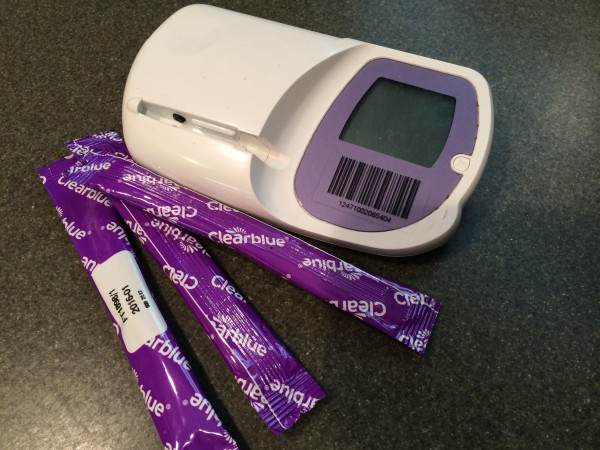
  • For people who use additional signs to confirm ovulation there is an option to add those to your observations, too.  Temperature, ferning, Clearblue monitor readings, and cervix positioning can all be charted.
  • They call it “organic” family planning.  NFP is the only method of family planning that is completely eco-friendly and fosters health, rather than harming it.
  • Right now it is selling for $9.99.  That’s it.  Forever.  That’s way less than one month of birth control pills, a box of condoms (I think…), an appointment to insert an IUD, etc.  They aren’t making millions off of this.
  • Your phone will alert you to remind you to chart at the end of the day.  I need that.
  • There are photos available if you have a question about the specifics of your observations.
  • Charting your cycle with various methods of organic family planning is an incredible diagnostic tool to treat infertility, hormonal imbalances, PCOS, endometriosis, PMS, and other health issues.  The fact that you can email your charts or very easily bring them into an appointment with your doctor, midwife or instructor means that women can be treated – and healed – that much more effectively.
  • Let’s be real.  The app looks way cooler and more modern than the old paper charts.  And since it looks cool and it’s on my husband’s gadget phone, he’s more into it as well.
  • Lastly, I feel like it respects women and men to be able to understand their fertility.  The app lays things out simply without being condescending.  It’s not rocket science but it is effective and empowering.  I really feel like being told to take a pill or get “fixed” (i.e. broken) while easier in some ways is condescending.

Some of the things that I felt could use improvement before have now been remedied.  There is now a feature for keeping notes on your chart on specific days like if you experience ovulation pain you can write that down.  Or if you are sick or under stress (which can alter your cycle) you can note that.  You can also now chart online and they have added a bit more help in special circumstances.  I do feel like if you are having trouble understanding your cycle or getting confusing charts, it would be helpful to go beyond their resources.  

My experiences with NFP have truly helped me view my body in a positive light.   Our bodies truly are fearfully and wonderfully made and because they are made by a God of order and reason, our bodies make sense.  NFP is not easy in the sense that you get to pass responsibility over to someone else and there certainly are times when it is challenging.  It requires a certain amount of diligence and self-control and sacrificial love but all those things, while hard, are good.  For me, knowing my body through NFP has been empowering and freeing and now, just a way of life.

If I can help anyone with any questions, you can find me at Better Than Eden and I’m happy to help in any way I can.  Thank you to Haley for inviting me to share my experiences with you all!
102_1308
Mary has been married for eleven years to her husband Brian.  They live in Western New York with their four boys, a brood of chickens, and a whole lot of mud.  She has a degree in Theology from Franciscan University and is a certified labor and birth doula.  When not homeschooling, you can probably find her cleaning something, remodeling something, knitting something, reading something, cooking something or blogging about a combination of all those things at www.betterthaneden.com

EmailFacebookGoogle ReaderPinterestTumblrTwitterShare

Women Speak on NFP: Why My Husband and I Don’t Use Contraception

This is a guest post by Stephanie of Captive the Heart in the Women Speak on NFP series. In this series you will hear from women using various methods of NFP, some to avoid pregnancy, some trying to conceive, and their experiences.

Disclaimer: This series is not meant to be a substitute for any method of training in NFP! If you are interested in one of the methods introduced in this series, please contact a certified instructor for information about training in that method of NFP. 

I bet not everyone gets to learn about contraception with the help of a Slip N’ Slide. Seriously. Born and raised Catholic, I learned somewhere along the way that the Church never permits artificial forms of birth control, but until I attended this particular gathering of my high school youth group, the one involving said slide, I’d thought birth control was one of those things, like Crocs and the Backstreet Boys, that wasn’t really taken seriously anymore.

I’ve discovered, as it turns out, that birth control totally is serious business. Love, I was told that night, is meant to be free, faithful, total, and fruitful (the slide was supposed to represent this, I think). It’s meant to be given without reserve, promised and sealed in fidelity, to hold back nothing, and to invite a man and woman to become creators of new life. It all made a lot of sense, especially when I discovered that the Catholic Church didn’t insist that every sexual act produce a baby.

So yes; my Catholic faith tells me that contraception is always inherently wrong. If you told me that it’s foolish to follow a bunch of rules just because the Catholic Church tells you to, I’d say you’re absolutely right. The amazing thing about the Church, I’ve learned, is that every time I’ve put a question of teaching to the test, there’s been a perfectly clear, logical answer that emphasizes one’s best good. Rules don’t exist to burden us (there’s a reason why you stop at a red light, for instance, or why your iPod manual tells you not to take your iPod swimming), but to let us live in the most fulfilling way.

The thing is, I don’t want to lead with my religion. I want to lead with who I am. My understanding has since deepened beyond a teenager’s somewhat blind obedience to her faith. The more I learned, the more convinced I became that birth control is one of the greatest inhibitors of romance, intimacy, and true freedom. I’ve come to see that biologically, practically, logically, and even romantically speaking, choosing not to bring contraceptives into a relationship is one of the absolute best ways to foster trust, honest communication, and authentic love. Who doesn’t long for that?

In the past few years, various friends and personal reading have led me to become a huge advocate for what I like to call the crunchy life. You know: coconut oil, kale, homemade cleaning products, and natural deodorant. I know I’m not the only one — in my observation, the benefits of things like green juice, organic restaurants, and neti pots are becoming commonplace on the pages of many women’s magazines.

It’s a puzzle to me, then, that with all the justified concerns we have about our well-being and environmental impact, so many of us seem to overlook a critical area of our lives: our reproductive health. Biologically, the birth control Pill and other hormonal contraceptives work by releasing large amounts of synthetic hormones, estrogen and progestin, that suppress ovulation and mimic the hormonal symptoms of pregnancy. In other words, they fool a woman’s body into a sort of state of constant pregnancy.

This, to me, couldn’t be further from natural. Consider, for instance, the fact that it’s normal to take medicine when you have a headache. It’s not normal when you don’t have a headache. In the same way, the Pill is marketed to “treat” a condition that doesn’t exist: it’s intended to actually prevent a woman’s body from functioning as it naturally does.

What’s more, the information packet for the Pill contains an extensive list of side effects that are directly related to taking it, ranging from weight gain, acne, migraines, and high blood pressure all the way to heart attack and increased chances of breast and cervical cancer. Ironically enough, the Pill often lowers a woman’s sex drive, the very thing she sought to liberate, as well. While packets are quick to point out that the Pill is merely “associated with” higher instances of serious conditions, and that they are rare, I still personally don’t find that the freedom to enjoy sex without pregnancy outweighs these risks.

I’m angered when I see how readily the Pill is pushed on women, largely in the name of profit. Friends have described taking birth control to me as feeling trapped in one’s own body, not feeling at all like oneself, and living in fear of what might happen to one’s complexion, weight, and future children, if one ceased to take it (you can read more anecdotal testaments here). We deserve so much more. The health-related shortcomings of birth control speak for themselves, but I think the logical case against contraception is just as convincing.

Free, faithful, total, and fruitful. It seems that even to a nonreligious individual, these four elements of love and sex are, at some point in a relationship, very desirable. I think most would agree that the body speaks a language, and that sex and love speak the same thing, whether one intends them to or not. They say, I want you, and all of you, forever. Isn’t that what we’re all longing to hear?

If one of these elements is missing, the body essentially speaks a lie. I want you, it says, but not all of you. It’s a conditional promise. When the fruitful aspect of sex is artificially eliminated, there’s a withholding of one’s fertility and the accompanying responsibility it bears.

That exact sense of unconditional love and responsibility is my biggest reason of all not to contracept. I met my husband Andrew four years ago, and when we became a couple, it didn’t take long for either of us to know we’d never go on another first date. Not only was he a handsome lover of words who’d hide notes around my apartment, he shared my take on birth control. During our engagement, we signed up for Natural Family Planning (NFP) courses to prepare for a contraceptive-free marriage.

Choosing to forego birth control in our marriage comes down to love. Karol Wojtyla, the man who became Pope John Paul II, wrote that the opposite of love is not hatred, but using another person. One need only look to the culture, I think, to see that hookups, friends with benefits, and cohabitation have left so many of us broken. We’re promised freedom, but are left instead with deep wounds. No one’s body or heart is meant to be used only for what it can offer sexually; it’s meant for love that sacrifices and heals.

Each of us is so much more than just a body, but in our humanness that can be easy to forget. Even in a loving marriage, there exists the possibility of desiring one’s spouse for self-gratifying purposes, rather than a desire to express love for the other. It’s a daily battle to let love prevail over lust.

I want my husband and I to have the best possible chances of winning that battle–when birth control takes pregnancy off the table, I can only foresee a greater temptation to use one’s spouse, even unintentionally, to take sex for granted. Birth control, I think, could easily become a crutch to mask a lack of self-control for one another’s sake.

In our attempts to not take sex for granted, we’ve found NFP a powerful way to understand sex as good and beautiful without idolizing it. A far cry from the rhythm or calendar methods of old, NFP is a scientifically precise, observation-based method of simply tracking, rather than altering, the existing conditions of a woman’s body in order to determine periods of fertility and infertility throughout her cycle. When used correctly, NFP is as effective at postponing pregnancy as the Pill.

I’d be lying if I said it wasn’t hard not to giggle, at first, when we learned that cervical mucus was one of the observable signs of fertility. We discovered that planning to use NFP in the abstract and actually sitting in a classroom learning it, trying to pretend a couple wasn’t standing there talking about ovulation the way most people talk about the weather, are two completely different things. You get used to it.

It’s actually something I’m so thankful for–I’d venture that, between texting my husband about my mucus while I’m at work, filling in my chart together each night, and constantly discerning a prudent time to begin a family, we have a more goofy, more intimate, and more joyful sex life than we ever could with contraception. The responsibility of planning our family doesn’t just fall to me as I take a daily pill or replace a monthly patch; it’s shared by the both of us. The self-control required to abstain during times of fertility sets us free to truly give ourselves to one another.

Intimacy isn’t a right to be demanded. It’s the fruit of loving, willful submission. Sexual freedom, we’ve seen, doesn’t mean a total lack of responsibility for each other. It means a willful choice to love in a pure, self-giving way. “Freedom,” said John Paul II, “exists for the sake of love.” That is, when you love someone, you actually desire to place their happiness before your own. It’s a beautiful thing to behold.

Love that is free, faithful, total, and fruitful; love that sacrifices and unites. It’s nothing less than any of us deserve. I’d say that’s definitely worth a trip down the Slip ‘N Slide.

This post originally appeared on Arleen Spencely’s blog.

313154_570245596748_641374495_n

Stephanie delights in bike rides, good books, puddle jumping, The Avett Brothers, hammocks, avocados, and the notes her husband Andrew sneaks under her pillow. She is thirsty. Knowing so many others are, too, she spent a missionary year with Generation Life speaking to students about human dignity and authentic love. Her passion is telling young women they possess immense worth and that pure, sacrificial love is real; she thinks a truthful understanding of sex and love is medicine for an aching culture. Upon noticing there were few resources for Catholic brides-to-be, Stephanie decided to make a humble attempt at filling the void. Her blog,Captive the Heart, is a collection of wedding ideas, spiritual reflections, inspired dates, and general ways to plan a sacred, stylish celebration and a holy marriage.

EmailFacebookGoogle ReaderPinterestTumblrTwitterShare

Women Speak on NFP: Confidence and Simplicity with the Billings Ovulation Method

This is a guest post by Christy of fountains of home in the Women Speak on NFP series. In this series you will hear from women using various methods of NFP, some to avoid pregnancy, some trying to conceive, and their experiences.

Disclaimer: This series is not meant to be a substitute for any method of training in NFP! If you are interested in one of the methods introduced in this series, please contact a certified instructor for information about training in that method of NFP. 

In the almost seven years of my married life I’ve come to learn much more about NFP and the science behind it than I ever thought I would! Of course I should also say that I’ve learnt a whole lot more of what it takes to practice NFP on a daily basis and how it can really become part of one’s lifestyle. I think the choice of NFP method is a very important decision for a woman to make, not only because it effects her life, but also the life of her husband and family so intimately. And its been my experience that because NFP is a part of your life day in and day out that it should be as simple to live as possible and must be a method that gives confidence!

Although my experience with natural family planning has been anything but easy or straightforward, I am thankful for the knowledge I’ve somehow accumulated over that time. Most of that knowledge has come directly from practicing the Billings Ovulation Method. In what’s become a strange hobby of mine – researching different natural family planning methods, I’ve come to believe that Billings offers a confident and reliable, yet simple, approach to fertility awareness.

Here’s How it Works

Billings teaches you to recognize the natural signs of your own fertility throughout the course of your cycle. This happens simply by observing throughout your day any sensations of discharge felt at the vulva and any visible signs of cervical mucus. (I know, I know, gross words-we just have to get over that!) These signs are recorded in the woman’s own descriptive words on her chart and when there becomes a developing, changing pattern of mucus this indicates the woman’s fertile phase. Billings clearly identifies the Peak day of a woman’s fertility, the day ovulation most likely will occur, by the recording of a sensation of slippery followed by a day of dryness. After a Peak is determined the fertile phase of the cycle is over.

No thermometers or monitors are needed, there are no specified times of the day where you have to check things, and no clinical observations that you have to match with what you yourself are seeing. Just your own observations in your own words as you go about your day as you normally would, as the mucus has been proven to be the best indicator of fertility. Simple.

Once a woman becomes aware of the sensations of her body and begins to recognize and identify differing types of mucus the 4 Rules of the Billings method can be applied. These four simple rules are applied through all stages of a woman’s reproductive life including breastfeeding, menopause, and during different health issues. These rules are simply applied throughout the cycle and are easy for both husband and wife to understand. Of course these rules can be applied either way-in avoiding conception or in trying to achieve a pregnancy.

This is just a broad overview on how the Billings method works, charting with a trained instructor who can help identify and navigate your individual cycle is a really great way to learn and is the recommended route if you want to practice this method.

What I Tell My Friends 

I love that the science behind Billings is ridiculous. And I mean ridiculously good.

This method was developed by a husband and wife team of doctors, Drs. John and Evelyn Billings, who studied hundreds of thousands of woman’s cycles. From there they discovered that the cervical mucus of healthy women was always right in indicating the changing hormonal levels throughout their cycles, thus making way for determining patterns of fertility and non-fertility. The research began over 50 years ago and more and more studies, trials, and discoveries regarding what impacts woman’s cycles are still being done by doctors involved with the Billings Ovulation Method. The Billings method has been endorsed and validated by the World Health Organization, and even China has recognized the Billings method as an approved way of family planning. The effectiveness of the method when taught and practiced properly has been found to be much higher than the pill and condoms.

Practicing the Billings method is also a great way of monitoring not only your reproductive health but your health as a whole. More and more recent research and work with women who practice the Billings method is revealing how charting can be the earliest detector in a myriad of health issues including diabetes, thyroid issues, and many other health concerns. Charting is also a great way to monitor your reproductive health even through health issues such as cysts, polyps, endometriosis, etc. Personally I know that without charting I would not have discovered my own health concerns as the symptoms only appeared in my charting.

The Billings method treats all woman as unique individuals. This may at first glance seem trivial. The Billings method teaches that each woman can recognize her own signs of fertility without the need of objectifying or classifying her symptoms into predetermined categories or descriptors. A woman’s cycle is also always treated individually. Whether long or short, a cycle is treated as unique and a woman’s signs of fertility as recognizable no matter what day they may appear. This attitude reflects the importance of the individual woman, and not only her health but also her individual circumstances, spirituality, and family situation. The woman is never made to fit the method, the method simply works with the woman.

I feel that this approach is very appropriate because natural family planning has grown out of the belief of the inherent dignity and importance of the human person. The respect for life which is reflected in the rejection of artificial birth control and in turn the openness to life reaffirms the importance of the woman’s, the couple’s, and the family’s, individual participation in God’s creation which can only happen on an individual basis. By treating a woman as an individual even in the method itself the truth of the individual woman’s importance and dignity is reflected. This truth impacts the woman’s spirituality and her relationship with God which is a key part of her openness to life and the decisions she makes in regards to natural family planning.

Natural family planning is not easy, but it is rewarding for so many reasons. Being free from the chemicals of artificial contraception, the deeper intimacy and self-giving that the practice of NFP brings to spouses, the cooperation with God’s plan and openness to children, can bring so much to our lives. The choice not only to use NFP but also the choice of what method to use is an important one for women, their husbands, and families. For me the simplicity of the Billings method as well as the confidence the science of the method gives me makes natural family planning a little easier, and when something demands so much of you like natural family planning does its nice to find a method that suits you!

For more information:

http://www.thebillingsovulationmethod.org

http://www.woombinternational.org

http://www.boma-usa.org (To find teachers in the US)

http://www.billingslife.ca (To find teachers in Canada)

afterlight

Christy Isinger is a full-time, at-home, sometimes crazy mom to five(!) children aged 5 to newborn. She herds toddlers and tries to keep a chaotic but loving home in northern Alberta, Canada. You can keep up with the craziness at her blog fountains of home where she writes about family, living the Catholic faith, books, and other random observations and opinions. 

EmailFacebookGoogle ReaderPinterestTumblrTwitterShare

Women Speak on NFP: Why I Use NFP as a Protestant

This is a guest post by Leah Heffnerin the Women Speak on NFP series. In this series you will hear from women using various methods of NFP, some to avoid pregnancy, some trying to conceive, and their experiences.

Disclaimer: This series is not meant to be a substitute for any method of training in NFP! If you are interested in one of the methods introduced in this series, please contact a certified instructor for information about training in that method of NFP. 

Why I use NFP as a Protestant (or Why I use NFP when I don’t HAVE to):

1.       A long time ago, before I was sexually active, I was put on the pill to control symptoms of extreme PMS. Not only did I see no relief from symptoms, truthfully, everything stayed the exact same, including my cycles being irregular and unpredictable. After more than a year on the pill, I decided to stop taking it and my cycle became regular, my extreme symptoms of moodiness and irritability literally stopped and the severe cramping was reduced – none of which had happened on the pill like it was supposed to.

2.       At the same time I stopped taking the pill, my (now) husband and I started exploring some natural medicine paths for his Crohn’s and my psoriasis. The natural doctor we saw taught us about how medications truly only treat symptoms and do not actually change anything in your body. We decided we wanted to try to fix our bodies instead of treating symptoms and so began our use of only minimal medical interventions, only after we had tried natural or home remedies. And by the way, once I started making our bodies healthier, my cycle went back to about 5 weeks (not bad for me) and my other symptoms became less and less severe (see #1).

3.       When my (now) husband and I were discussing our family plans, we discussed prevention of pregnancy. What we could not wrap our head around was how we were supposed to medicate to prevent my body from acting the way it was supposed to (especially after all the work we had done to get it to be healthy). I was supposed to be fertile and supposed to be able to get pregnant. Most importantly, I would soon be engaging in sexual relations with my husband, and I knew that meant possible pregnancy. We did not see how the various barrier methods made sense in marriage either – we were supposed to enjoy each other’s bodies. So we decided to use NFP. I charted my cycle. We discussed fertility windows and the possibility of becoming pregnant. We grew closer in our marriage because we had some difficult talks early on.

As an aside here – I know there are others who would argue that denying the wife full pleasure (most easily attained during the fertile point in the cycle) is also not fair to a marriage. And so one could reason that using the pill makes sex mutually pleasurable for husband and wife, even when fertility is at its highest. While I’m certainly no doctor, I know that the pill not only has side effects which they share on every TV commercial (which are scary enough), the pill has side effects which are not highly shared – like that women on the pill have higher instances of vaginitis and other fluid imbalances leading to yeast infections and other medical problems. So while she is often recovering from something, sex is no longer mutually pleasurable for either person.

4.       I think what people in our society need to realize is that marriage was created to “multiply” the population of the earth. Is that the only reason for marriage? Certainly not. We are meant to sharpen one another, just as iron sharpens iron. We are meant to be a companion and a helpmate. Children are a natural product of what is a blessing in marriage – sex. Sex does not always and exclusively create children. It is also for mutual pleasure. But to take out the procreation element is to step in and take away God’s job in the process. If there was no need for God in the process, then IVF and other infertility treatments would always work because the life would already be created. Likewise, one could ask why God allows victims of rape to get pregnant. And I know this isn’t an easy or clean-cut answer. But there is a God-element to creating life. And we can’t take that away. So when we medically intervene – especially with the pill – we are trying to remove God from the process.

I know many couples who get married at a young age – especially Christians – but who do not want to have children – yet. I struggle with this since that is part of the every marriage and I know God calls people to be parents in different ways and at different times. But I think the lack of openness to the subject by young couples to have kids until they get everything just right is confusing and sends mixed signals to those around us.

5.       The pill has extremely unfortunate side effects which are not widely broadcast. The most troubling to me is that most women on the pill are unknowingly aborting about one pregnancy a year. If you are a person who believes that life begins at conception – the point at which the sperm enters the egg and cells start to split and multiply – and the point at which most people who say they are pro-life believe that life begins – then the pill is preventing that life from implanting in the uterus to begin to grow. Most people don’t even know this about the pill (and surprisingly, many doctors don’t know this because they are too busy to read every document on every drug they prescribe) and simply believe that it prevents the egg from dropping each month. That is what the pill was designed to do, but obviously, if you know anyone who’s ever gotten pregnant on the pill, you know that this does not work 100% of the time. The back-up fail safe is to prevent implantation of the fertilized egg.

6.       Last but not least, my husband and I choose NFP because we know that we can only do our part – we can only come together as man and wife. We can do everything right to make or prevent a baby through knowing my cycle and embracing its nuances. But at the end of the day, we don’t get to decide if we will be having a baby or not. That is up to God. We have been blessed with two pregnancies throughout our marriage so far. This could be our last pregnancy or our 2nd in a line of several. Either way, how God chooses to bless us – we are open to receiving those blessings. He has so much to teach us through children and growing families and we are so excited to be a part of it. We are certainly not perfect at it – bringing new life into the world has its own ups and downs. But we want to give this part of our life to God too, and trust that he will lead and direct us like he does in the other parts of our lives.

LHHeadShot

Leah Heffner is a wife and mom of (almost) two. She lives in Ohio where she is a stay-at-home momma and loves to whip up whole foods in the kitchen. Leah is a believer and is passionate about talking to young wives and moms about Eph 5:33 (new blog coming soon!) and about her biggest ministry – teaching her kids about walking with the Lord.


EmailFacebookGoogle ReaderPinterestTumblrTwitterShare

Women Speak on NFP: One Girl’s Experience with the Sympto-Thermal Method


This is a guest post by Deirdre of Like Mother, Like Daughter in the Women Speak on NFP series. In this series you will hear from women using various methods of NFP, some to avoid pregnancy, some trying to conceive, and their experiences.

Disclaimer: This series is not meant to be a substitute for any method of training in NFP! If you are interested in one of the methods introduced in this series, please contact a certified instructor for information about training in that method of NFP. 

What I have to share with you is a mere introduction to this practice, which is simply a way of understanding one’s fertility and knowing how to work with it. I learned the STM from The Art of Natural Family Planning: Student Guide, which is published by the Couple to Couple League. Understanding was my motivation for learning NFP in the first place. I think for some women, the cycle is very regular and the body is straightforward and easy to read. This has never been the case for me, so I liked the idea of learning some tracking techniques so that I would come to have a better grasp of what was going on with me, both physically and emotionally.

Based on my experience, I would say that, no matter what your situation — whether you’re hoping to conceive or whether you are currently seeking to avoid pregnancy for a time, or even if you’re single and pregnancy is not a potential part of your life — it could be a helpful exercise to do some charting on your cycle and learn some more about yourself in this area, especially if you are not already particularly regular or aware of your phases.

Have you ever been very tuned into nature, such that you can wake up in the morning and look at the sky and listen to the wildlife, and predict the day’s weather, based on the signs around you? There is a pleasant and satisfying feeling that goes with being in the know in this way. You learn a practical wisdom and sensitivity that can be very useful but is also enjoyable in itself — maybe it’s helpful to know that rain is coming, so that you can get the things out of the yard and into the shed; or maybe it’s nice to know just because it’s nice to be able to grasp and work with nature, rather than being taken by surprise or at nature’s mercy. Coming to know your fertility cycle is a similar experience.

All this being said, I am not an expert on the STM! But I can tell you a few things about it, and perhaps the introduction will be helpful.

Basics

The “thermal” part of Sympto-Thermal is the easy starting point of the method. The basic idea is that you track your fertility by taking your temperature with a high-quality thermometer at the same time every morning, right when you wake up. By doing this, you capture your Basal Body Temperature (BBT), which is an indicator of where you are in your cycle. Each day, you make a note of your BBT on a chart. Over the course of the month, you will be able to see trends in your BBT. From these, you should be able to identify your different cycle phases, and in particular your time of ovulation. From this alone, you can garner key information about what days of the month you can expect to be fertile.

The “sympto” part of STM is a little more complex. This part is about identifying the various qualities of your cervical fluid as it changes throughout your cycle, and learning how these changes are also clues of where you are in your cycle. This takes a bit more effort than a moment with the thermometer in the morning; you really have to be conscious of it it throughout the day and diligent about it throughout the month if you want to get an accurate read on yourself. The basic way to approach this kind of “research” is at each bathroom break. Sometimes it may mean simply taking a look at your used toilet paper before discarding it and sometimes it may mean doing a little self-inspection, testing your cervical fluid between your fingers in order to identify its consistency. I find that it’s easiest to gather this information during the day, making mental notes, and then do your formal notation on your chart at the end of the day.

If you get into this method and are doing a thorough job with it, you can also opt to keep track of your cervical opening on your chart, which would be another element of the “sympto” part. I personally have not done this part, and it’s not as important as the other two, but you can certainly find info on it in whatever official STM reading materials you pick up and it will increase the accuracy of your charting.

So that’s the basic picture for you of what activity the method entails: a morning notation of your BBT and an evening notation of your cervical fluid (and your cervix itself). Both are noted on the same chart so that, after a few weeks, you have a one-stop-shop visual of the various factors that indicate your fertility. If you are charting for the purposes of achieving or avoiding pregnancy, you will learn more about exactly how to use the information on your chart for reliable decision-making.

Experience and Challenges

Two major perceived deterrents with this method are 1) that morning thermometer routine part is probably obnoxious and 2) that cervical fluid part is probably disgusting. The good news is that neither fear is accurate.

It is not that much of a burden to take your temperature once you get in the habit of it. Fortunately, it doesn’t have to be at the EXACT same time every morning; as long as you’re measuring your BBT within the same space of about a half-hour, you’ll get the proper read. That means that, if your normal waking time is 7am, you can plan to take your temp anywhere between, for example, 6:45am and 7:15am, and you’ll be able to track accurately enough. It would only be a problem if you were measure at 7am three days out of the week and then 10am on the other four days. Also, if you have a thermometer that stores your temperature for you, you don’t actually have to read it and write it down immediately. In my experience, it worked to take my temperature at 6am and then immediately shut off the thermometer for the day. Then, in the evening, when I was making my other notations, I would power the thermometer back up and read what it had recorded that morning, thus getting all my charting done in one go. On the weekends, when I wanted to sleep a little later, I would simply set my alarm for 6am, take my temperature, set the thermometer aside for later, and roll back to sleep! Not too bad.

Also, I never bought the high-accuracy thermometers that some sources talk about. I just used the one I already owned (for fever-detecting purposes) and it seemed to serve me just fine.

As for the cervical fluid, it can be a bit off-putting to read about it at first, but I believe that’s something to get over once the initial surprise factor is behind you. After all, this is a natural and healthy process of your body and there’s no reason to be afraid of or repulsed by the proper functions of your systems – even more intimate ones. Actually, for me the challenge was not any ‘yuck’ factor, but simply the fact that the cervical fluid can be hard to read. I’ve talked about it with friends as well and we have agreed that it is not always as straightforward as the literature presents it. The expectation is that you’ll have a certain kind of fluid for each phase of your cycle and that differentiating among them will be simple, as long as you know what you’re looking for. This may well be true for you! In my experience, however, it can be a frustrating process when this doesn’t quite happen. How do I make note if it’s not quite one type or the other, but somewhere in between? What if it changes back and forth every day? In the end, I found that it could be helpful to keep a note of what I saw, but that I depended more on my BBT to get a chart that made some sense. The cervical fluid part was more like occasional corroborating evidence than a guide unto itself.

The Chart

The chart itself is probably the most daunting part when you first see a STM kit in front of you. I remember when I first saw my friend’s chart and I thought it was impossibly complicated. Fear not! Once you get a very basic tutorial on what notation goes where, you’ll find that it’s actually extremely simple. I never actually bought a kit for myself, so at first I was simply borrowing some chart sheets from someone else. When I ran out, I went ahead and just drew up my own charts, which I enjoyed doing because I could tailor them for my exact purposes and needs (and eliminate the one small expense of this method). Of course, if you enroll in a program, like the Couple to Couple League — through which you can actually send a copy of your chart to a consulting, expert couple so that they can give you feedback — you will probably want to stick with the standard-issue charts, which include a carbon copy.

General Thoughts

As I said before, I think it is a good thing to learn how to learn about yourself and your body in this particular way. Sometimes it can be extremely clarifying and even comforting to have a visual resource (your completed or semi-completed chart) to refer to and to give you insights into the crazy world that is your hormonal shifts. Charting can also be a great way to uncover any anomalies or problems existing in your reproductive system, so it’s worth trying for a while if you have concerns in that area.

I would be sorry, however, to provide all this information if it ended up being an aid in anyone’s pursuit to avoid having children who could otherwise be happily welcomed into the world. One of the best things about my (short, thus far) experience with the STM is that I was informed enough to know pretty much the moment I had conceived, and to begin to enjoy my pregnancy right from the start. While the STM is easy to learn and the basics can be put into practice quite simply, at the end of the day, it would still be a challenge to use it for purposes of avoiding pregnancy – and in a way that is natural, because of course the joy of frequently and freely giving yourself to your spouse and the accompanying promise of life can’t be easily set aside. As we know from the Psalmist:

Children are a heritage from the Lord: and the fruit of the womb is his reward. As arrows are in the hand of a mighty man; so are children of the youth. Happy is the man that hath his quiver full of them

Deirdre Folley is a young Catholic wife living in the DC area who is passionate about advocating for Life and all other beautiful things. She and her husband John are expecting their first child this summer. You can visit her at Like Mother, Like Daughter where she blogs, along with her mother and sisters, about Catholic domesticity and maintaining the collective memory.

EmailFacebookGoogle ReaderPinterestTumblrTwitterShare

Women Speak on NFP: Kelley on the Creighton Method

This is a guest post by Kelley of Over the Threshold in the Women Speak on NFP series. In this series you will hear from women using various methods of NFP, some to avoid pregnancy, some trying to conceive, and their experiences.

This series is not meant to be a substitute for any method of training in NFP! If you are interested in one of the methods introduced in this series, please contact a certified instructor for information about training in that method of NFP. 

Hello, Carrots readers!  My name is Kelley and I’m an NFP user.  We have been using the Creighton model to postpone pregnancy for over three and a half years.


Our choice to use NFP came as a bit of a default choice for us originally.  Because I have Lupus it was recommended that I not use hormonal birth control pills because I am at a higher risk for clots already and birth control pills increase that risk even more.  Birth control pills work in 3 ways: suppressing ovulation, thinning cervical mucus, and preventing implantation of a fertilized egg (usually through thinning of the uterine lining).  My gynecologist advised me that low-dose or progesterone-only pills do not carry the same amount of risk for clots (since it is the estrogen really that increases the risk for clots).  However, I knew that low-dose and progesterone-only pills were also the pills that relied more heavily on preventing implantation of a fertilized egg because they are not as reliable at preventing ovulation.  This was not okay with me.  I was not Catholic, but I did not like to think a fertilized egg would be expelled from me because of my birth control.  So, pills were out.


My husband is Catholic, but he left the whole matter up to me.  I decided to give checking my temperature a try.  I got a basal thermometer and tracked my temperature for a full six months.  There was no discernable pattern or connection to my cycle.  It’s possible that my Lupus was the reason for this since I have read that certain illnesses can cause abnormal fluctuations in temperature.  I know couples who do rely solely on a temperature method, but in my opinion, there are way too many variables that can affect your temperature and if you are serious about avoiding pregnancy, I think you should always pair temperature with cervical mucus.


Then I decided that since the temperature method was out, condoms were in.  I wasn’t really aware of other types of NFP so I didn’t really pursue it anymore.  For three or four years I had carefully tracked my cycle and knew the minimum and maximum number of days per cycle so I determined based on that what the range of days for my ovulation would be (11-18) and I figured we would employ condoms only when it was really necessary.  As it turned out, we pretty much relied only on my calendar method and used condoms only a few times ever because we really hated them.  So there I was, using that ancient rhythm method!


When I went for my annual exam it was the first since I’d been married.  I told the nurse practitioner that we were using NFP, even though technically I guess it was the rhythm method.  I was interested in learning about a diaphragm so we talked about it and she gave me information to take home.  She was obviously not really supportive of my NFP, but she had the decency to keep it to herself for the most part, unlike most doctors.  I never did pursue the diaphragm because to me, barrier methods always seemed more risky than NFP unless you were also tracking your cycle at the same time.  The failure rate of barrier methods is really pretty high, especially with diaphragms and the way I see it, if you aren’t having sex at all during the fertile period it must be more effective than a barrier method during the fertile period.


About six months after we were married we saw an announcement in our Catholic church’s bulletin for an NFP intro class.  We decided to go mostly because I wanted to see if one of those methods would give us a shorter period to avoid!  Ahh, newlyweds!  It was just us and one other girl who was engaged.  Kind of sad for the cathedral in the diocese of Atlanta!  Anyway, it appeared we’d have even more days when sex was off limits so I wasn’t interested.  But the instructor kept calling me and I finally decided to meet with her.


I showed up and she asked me about what kind of family planning we were doing and I think she was shocked to realize I was just doing rhythm and avoiding pregnancy was still very important to us.  (My husband had just started grad school and I was only making $10-12/hour for the first few months.)  She gave me a chart and taught me what I needed to do.  We met pretty frequently to start and I got excited about it and couldn’t wait to count how many days there was from my “peak” to the start of my period.  It was always 12–how cool!  (I was an NFP nerd from the beginning.)


At every session she’d quiz me on the whole procedure, but I caught on really quickly.  Creighton is based only on cervical mucus.  You can chart other symptoms if you want, but that’s really all there is.  I think it’s a really easy method to use and I’m glad I don’t have to wake up early to take my temperature no matter what.  While regular cycles aren’t required for Creighton, I will admit that it probably helped me learn it a lot faster than I would have otherwise.  Since you are only looking at the cervical mucus, it doesn’t matter what day it is at all so being irregular is irrelevant.  It turned out that based on my normal fertile period and peak, my rhythm method was fine.  It worked for those 6 months, but I didn’t have any irregularities.  I have seen irregularities a couple of times and been able to see how that affects things.


Using NFP is not always easy, but I’ve really appreciated not having to add yet another drug to my long list.  I also really enjoy knowing my cycle so well and I think it’s really intresting.  I know it’s been easier for me having regular cycles and being a nurse as well, but I think lots of other women can benefit from the Creighton method.  I hope to be an instructor one day, but it’s an awfully expensive method to learn so it hasn’t happened yet.


If you have any questions or would like to talk to me more about my NFP experience as a Protestant, you can find me at Over the Threshold. But these will be past experiences because this Easter I became Catholic :-)


Best2
Kelley and her husband have been married for almost 4 years and currently live in Connecticut.  Their blog has been chronicling their married life from day one.  You can follow their adventures (living in 4 different states and Germany), read book and movie reviews, recipes, and a hodge-podge of other faith-based thoughts at Over the Threshold.
EmailFacebookGoogle ReaderPinterestTumblrTwitterShare

Women Speak on NFP: Top 11 Reasons to Try Creighton

This is a guest post by Michele Boda in the Women Speak on NFP Series about her experience with NFP using the Creighton method. This series of women’s experiences is not meant to serve as training in NFP, if you are interested in learning more about the Creighton model, please visit: www.creightonmodel.com
www.naprotechnology.com
or www.fertilitycare.org to find a Practitioner near you

creightonmodel

When Zac and I were married just two years ago, doctors told me not to risk using natural methods because surely I would get pregnant and that would be dangerous, both for me and the baby. I have Type 1 Diabetes and getting pregnant before my blood sugars were totally in control would mean serious complications. Those doctors were, however, quick to push the pill, the implant and all sorts of IUDs, all methods with lengthy lists of side effects and dangerous health risks (Increased risk of breast cancer? Perforated uterus? Decreased libido? No thanks). Because of my disease we are dedicated to a healthy lifestyle and these methods just didn’t sit well with us. And as faithful young Catholics we were looking for a system that respects the dignity of women and marriage.  So we took a leap of faith and began charting with the Creighton Model FertilityCare System, a completely safe, all natural and effective method of avoiding (or achieving) pregnancy, and reaped lots of benefits we were not expecting.

It’s not always easy, but Zac and I feel peace knowing that I am not loading my body with artificial hormones, but that we are avoiding pregnancy naturally and benefiting my reproductive health at the same time. So when we are able to start our family I know I will be the healthiest I can be. My wonderful husband and I now talk to engaged couples about the awesomeness of this natural method. In true Letterman style we call this our Top 11 reasons why we use Creighton (because 10 were just not enough):

11. NaProTechnology! Creighton is the first method of NFP to be fully integrated with a new women’s health science. My PCP and OB/GYN were unconcerned with my abnormal cycle, faulting stress and offering birth control pills as a swift solution. Thankfully, my Creighton practitioner saw the irregularity in my chart and referred me to a NaProTechnology (Natural Procreation Technology) doctor. Because of the Creighton System, I was able to connect with NaPro docs who were not interested in masking my symptoms with destructive drugs but who tackled the cause of my symptoms with a cooperative and healthy approach.

infertility success rates

10. Affordable- and who doesn’t appreciate that?

9. Zero side effects- Nothing bad is going in, and I’m feeling pretty great.

8. Natural- Nothing artificial about this gal!

7. Eco-friendly- Using my own body to monitor my fertility- talk about true organic living.

6. Morally acceptable – We have a problem with the post fertilization effects of artificial birth control- with that and any barriers limiting our marriage and lowering the dignity of the human person. Using NFP we are open to life even when we are avoiding pregnancy.

5. Increased communication- Natural methods involve attentive communication about charting signs of fertility and also our intentions in using the system. And if you can talk about “biological markers,” you can talk about anything.

4. Easy to learn- With the help of a dedicated practitioner, Creighton Model System is easy to learn and easy to interpret. Checking for biological markers (cervical mucus) is as quick and easy as going to the bathroom. (No internal exams, no thermometers, no monitors. Just you and your toilet tissue).

3. Effective- 99.6% perfect use and 96.8% typical use effectiveness is a number we could really stand behind (Sorry oral contraceptives, 91% typical use is not gonna do it (Trussel 2011)).

Avoiding Success Rates vs Pill

2. Shared System- I observe, he charts, and we use the system together- because we always knew we were a great team.

1. There are possibly, I suppose, a few things my husband wishes he could change about me- my dangerous habit of using dish towels for ovenmits, my unbearable reliance on morning coffee, or perhaps my insistence to always sing the harmony to our favorite tunes- but my fertility is not one of them.

We believe in this system so much I am now not only a satisfied user but a proud FertilityCare Practitioner Intern out of the Pope Paul VI Institute in Omaha. NFP is a part of our Catholic lifestyle and is now my vocation and career.  Creighton has changed our lives and it’s a privilege to share the good news about natural methods with other young couples.

Michele Boda, FCPI & Zachary Boda

Bodas

Michele is a graduate of the University of Pittsburgh and John Cabot University in Rome. She lives in small town Butler, PA with super-husband, Zac. Wed in 2011, they love to talk to fellow young couples about the awesomeness of the Creighton Model System. Michele recently started her education as a FertilityCare Practitioner Intern in Omaha, NE at the Pope Paul VI Institute for the Study of Human Reproduction under the instruction of Creighton and NaProTechnology founder Dr. Thomas Hilgers. She is totally excited to share the system with you to make for healthier women and happier marriages! She can be reached at michele.a.boda@gmail.com or visit her blog: http://bodafide.wordpress.com/

www.creightonmodel.com
www.naprotechnology.com
www.fertilitycare.org to find a Practitioner near you!

EmailFacebookGoogle ReaderPinterestTumblrTwitterShare