Tag Archives: Motherhood

A Mother’s Love, A Mother’s Fear

It was the night that we brought our firstborn home from the hospital and I was crying like my heart would break.

I had a wonderful natural birth, no complications, and a beautiful healthy baby boy. Everything was perfect. Then a storm rolled in. Not a soothing rainstorm, one of those eerie, harsh Texas storms that turn the sky an odd, unsettling color. Our front door was blown open with a bang by the force of the wind. Then we heard that a tornado was near.

My husband, our brand new baby, my mom (who was visiting), and I huddled in the hallway. I can remember so vividly holding my baby against my chest and smelling his intoxicating baby scent. And fear washed over me. A fear I was not prepared for. My love for this tiny, new person overwhelmed me. What if something happens to him! I thought, I just met him! What if he’s taken from me? My desire to keep him safe was so deeply instinctual. It was all I could think about. How could I best shield him from harm? And I felt utterly helpless in the face of that merciless storm.

It wasn’t long before we got the all clear. Trembling, I handed my baby to my husband, walked into our bedroom, and sobbed on the bed. I was exhausted from the emotion of the moment but more than that, I was overwhelmed by the understanding that this terror for the well-being of my child would follow me every day of my life. Because my love for him was so big, so all-encompassing. My mom came in to check on me and I apologized for falling apart. She didn’t need an explanation. “A mother’s love is very fierce,” she whispered to me before leaving me to sleep. How can I bear it? I wondered. How can I live with this love filling every inch of me alongside this paralyzing fear that something might happen to my treasure, my baby?

I think I’m still trying to figure that out.

In the Four Loves, C.S. Lewis writes,

There is no safe investment. To love at all is to be vulnerable. Love anything and your heart will be wrung and possibly broken. If you want to make sure of keeping it intact you must give it to no one, not even an animal. Wrap it carefully round with hobbies and little luxuries; avoid all entanglements. Lock it up safe in the casket or coffin of your selfishness. But in that casket, safe, dark, motionless, airless, it will change. It will not be broken; it will become unbreakable, impenetrable, irredeemable. To love is to be vulnerable.

When my asthmatic 3-year-old is struggling to breathe in a hospital room, I feel just as terrified as I did when I held him during the tornado on his first night home. I haven’t miraculously conquered the fears that accompany motherhood (as much as I’d like to). Fear is just a quiet and constant companion. But it’s not paralyzing anymore. Because I know it’s the love that matters. And I’m struggling to really understand that I am never really in control (as much as I’d like to think I am). I cannot always keep my children safe. I can only love them.

And I look to the example of the Blessed Virgin. She is a model, the model, of maternal love. But she is also Our Lady of Sorrows. I think of Presentation of Our Lord, when the aged Simeon sings his joyful song of thanksgiving for the gift of seeing the Christ Child. But in the midst of that joy, he tells Mary, “and a sword shall pierce your heart.” How deeply she suffered! How deeply she loves. I think as mothers we walk through life with pierced hearts. May God give us the strength to love in the face of fear. Knowing it’s not safe. Knowing that our hearts will at times be broken. But loving all the same. Like Our Lord. Like Our Lady.

EmailFacebookGoogle ReaderPinterestTumblrTwitterShare

This Messy Life

Everything has been at sixes and sevens over here while we’re trying to get packed to go on vacation for a week. I’ve been letting Benjamin eat parfaits for lunch and didn’t even notice that he had moved his entire mattress to the floor for a little bedroom makeover.

On top of the upcoming trip, some friends of ours who had to move out of their place due to mold are going to stay at our house while we’re away. There are piles of laundry and things to pack all over the house. The fridge is a disaster. All the floors need mopping. And my two littles make it nearly impossible to get what needs to be done DONE.

This afternoon I was having a meltdown. While I had terrifying daydreams of our friends opening our bathroom cabinet and seeing how I just stuff the towels in there precariously or noticing that all our windows have little person fingerprints smeared on them, or that our back porch looks like the aftermath of a hurricane, a clearly exhausted and grumpy Benjamin was flat out refusing to nap. He wouldn’t even stay in his room for a bit to rest and read so that I could accomplish something. And I completely lost it with him. He ran back into his room while I vented to Daniel on the phone about the state of things and how EVERYTHING WAS HORRIBLE.

When I hung up the phone, I went to check on a surprisingly quiet Benjamin. He was fast asleep with the sheets tucked up under his chin wearing a knit hat with dinosaur spikes on the top that stick out adorably. And my little sleeping dinosaur just looked so precious. And I felt so monstrous for losing it with him. And then Lucy woke up full of sweetness and light. She nursed and then we snuggled on the bed and her joyful grin just slayed me. And I felt so grateful that this imperfect mama was given the gift of two perfect children. Two amazing children that drop little bits of granola all over the floor and smear banana on highchairs.  Two beautiful children that make packing for a week a Herculean effort. Two joyful children that fill my days with light. And the façade of good homemaking that was trying to hold together just didn’t matter anymore. Also, it’s laughable. Let’s face it, my friends KNOW I’m a dreadful housekeeper and can’t stay organized to save my life. And they’ll still love me after they try to get a towel out of the bathroom cabinet and all the other towels fall on them. So the rest of the packing and clean up felt different. The drips of yogurt plastered to the kitchen table made me chuckle and after bedtime when Benjamin got out of bed for the 10th cup of water, instead of barking at him, I kept noticing how precious his long, dark eyelashes are and wanted to kiss his little cheeks. I love my messy children. I love this messy life.

So, dear ones, if posting is sparse for a week or two and the comments aren’t being moderated and I’m not answering your email, it’s not because I don’t love you or think you’re swell. It’s just because I’m packing up my messy family for a little adventure where the great interwebs may or may not be available. Hoping to at least post a This Week’s Miscellany, but be patient with me if I disappear for a few days :)

EmailFacebookGoogle ReaderPinterestTumblrTwitterShare

10 Ways to Prepare Your Toddler for a New Baby

When we became pregnant with our second child, we were nervous about how our two-year-old son would react to having a new sibling. Our firstborn is a bit of a handful and is very intent on having everyone’s attention at all times. We were worried that having to share our attention with a new baby would cause him to resent his little sister. We were so wrong! He has been a spectacular big brother from day one. He calls her his “little sweetie pie,” delights in making her smile and laugh, and is very concerned when she is upset. He is constantly telling us how much he loves her and has never been anything but kind and gentle with her. Seeing their little friendship grow has truly been one of the most beautiful experiences of my life. Every child is different and will react differently to the realities of a new baby, but here’s a few things we’ve learned about preparing toddlers for the arrival of a new sibling:

1. Talk it up. Don’t let your toddler be surprised when you waltz home with a new sibling. Start talking about the new baby with your child at least as soon as you tell family and friends about your pregnancy. Your toddler will need several months to process this information about the upcoming changes.

2. Learn together. Read books about pregnancy and newborns and look at pictures of babies in utero to help your toddler visualize and understand what’s happening inside mama’s tummy. One very helpful thing I discovered during my last pregnancy was watching short videos about fetal development with my son using a pregnancy app on my phone. He was fascinated and wanted to see videos showing the development of his baby sister several times a day.

3. Imagine together. Help your toddler start imagining what his/her new sibling will be like and how life will change. Ask, “What color eyes do you think the new baby will have? What color hair? Do you think they’ll have brown eyes like you?”

4. Watch your words. Your toddler is very tuned in to your attitude and conversation about your baby. When you talk about your pregnancy and upcoming birth, be sure to emphasize how exciting, wonderful, and blessed it is to be receiving this gift of new life. If you focus on the inevitable difficulties, inconvenience, and stress of a new baby, your attitude won’t be lost on your toddler.

5. Give your toddler a role. OK, so we can all imagine how much “help” a toddler will be during the early weeks of your new baby’s life. However, it’s crucial to help your child see that rather than getting dethroned as the baby of the family, they are taking on a new, big, and very important role as a older sibling. If your child is dinosaur-obsessed, remind him that the new baby won’t know anything about dinosaurs and will need big brother  to teach all he knows. If your child is a burgeoning ballerina, tell her how much fun it will be to teach her steps to the new baby. Explain what sort of things mama and daddy will need help with (fetching toys or diapers for baby), how the toddler will need to look out for the new baby, how special it will be to be a big brother or sister, and how the new baby will want to try to do everything their brother or sister does.

6. Tell them what to expect. Obviously, baby won’t be able to play legos with big brother or sister from day one. But if your toddler is expecting a playmate right off the bat, you’re setting him/her up for disappointment. Be sure to emphasize that when baby is born, “baby won’t know how to talk like you do. They won’t even know how to sit up! They will have to watch you and practice before they can walk and play with you…etc.” And it might be a good idea to mention that sometimes new babies cry, and that big brother or sister will have to be very patient and try to help the baby feel better.

7. Tell stories about your toddler. When you’re explaining about your upcoming birth, be sure to tell your toddler about the night he/she was born. Explain how excited you were to meet your baby. How precious and beautiful he/she looked at the first moment you held your new baby. My son loved hearing about how he didn’t like his first bath. He would ask me whether his baby sister was going to hate her first bath, too. Most toddlers are entranced by their own birth story. Telling them about their birth will remind them that their story is just as special as the new one unfolding.

8. Give them something to look forward to. We tried to build anticipation for the birth of our new baby by explaining to our toddler how he would get to have a slumber party at grandma’s house and watch a Pixar movie he’d been wanting to see. He was so excited about the prospect of the sleepover and movie watching that he would say to my tummy, “It’s time to come out, Lucy! I want to go to my special trip to Ooma’s house!

9. Give presents from the new baby. When your toddler arrives on the scene (be it hospital, birth center, etc.), have a gift for him to open “from the baby.” Our newborn “gave” our toddler some toy trucks and a special “big brother” t-shirt. To this day he’ll say, “Lucy gave me this truck! Wasn’t that sweet of her?

10. Give a little extra love. Be sure to spend a little extra time snuggling and encouraging your toddler. A big change is coming and a little extra love can’t hurt! Remind your child how much they are loved by mama and daddy…and how much the new baby will love them, too!

Did your older children have an easy transition to life with a new baby or a difficult one? What helped ease your child into the big changes of sharing the spotlight with a younger sibling?

EmailFacebookGoogle ReaderPinterestTumblrTwitterShare

3 Daily Rituals to Help Mothers of Littles Stay Sane

Little folks are awesome. I get to wake up next to a sunny baby girl to the sound of our three-year-old boy singing the Zulu chant from the beginning of The Lion King’s Circle of Life Song at the top of his lungs. It is indeed a splendid life.  But, as wonderful as young motherhood is, there are some (many) moments of insanity exacerbated by never having a single moment to myself.

After our firstborn was born, I was entirely unprepared by the reality of never getting to be alone. “Can’t I just sit BY MYSELF for five minutes to read a book and drink my coffee?!,” I pleaded hysterically. And I’m quite a people person so I can only imagine how draining it is for introvert mamas who really need alone time to recharge.  I have discovered that adding some ritual down time to my days and weeks really helps me maintain some semblance of sanity. A few pages of good literature is also crucial for my well-being and happiness so I’ve figured out a few times to sneak that in as well. Our society is so focused on being productive that often taking the time to just SIT AND BE is considered lazy and followed by mama guilt. I probably swing in the opposite direction of productivity. My house might be a disaster, but boy, do I know how to relax! Mamas, here are my suggestions for implementing daily rituals of calm so you don’t lose your mind:

Nap Time (Snuggle and Rest): I know many mamas use naptime to do everything from prepping dinner to cleaning the baseboards. If that works for you, great, but for me, being a rested, cheerful mama takes priority above having an immaculate home. After reading some books with the toddler and tucking him in for nap, I usually nurse the baby down and snuggle her, then sleep, read, or listen to an audiobook with headphones as I lie next to her. By the time I hear the dulcet tones of my three-year-old saying, “I toooook a goooooood naaaaaap, Mama!” I’m energized and excited to spend the afternoon with him instead of getting grouchy and losing steam before dinner even gets started.


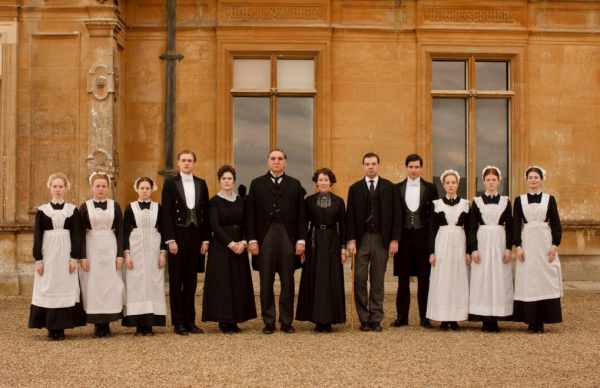
Tea Time (Create Beauty and Calm): How very Downton Abbey of me, don’t you think? But really, the ritual of drinking a hot beverage (or iced in the heat of summer) is so therapeutic. After everybody naps I make a cup of coffee or tea. It makes me calm and gives me a mood lift for the afternoon. Often, my toddler wants to participate and I help him make blueberry herb tea. He feels mighty fancy and I get to sit for a minute while we drink our treats and the baby plays. I often pull out a lovely china cup (for me, Benjamin has to stick with a mug) because why not, amirite? See how pretty? Don’t you feel better already?

Bath Time (Read and Relax): Especially in late pregnancy and early post-partum, I love to take a bath before bed. Often, the kids will be asleep or settling down for the night and Daniel will listen out for them so I can be ALL BY MYSELF for 20 minutes, hot tea or a cocktail on the edge of the tub and book in hand. Of course, mama taking a bath seems to have a magnetic draw and all littles will emerge from bed to go potty as soon as they hear the bath water running. So, be prepared to be interrupted by a little voice on the other side of the shower curtain saying, “Are you reading in there? Don’t drop your book in the water, silly Mama!”

 What daily rituals do you have that help you keep your sanity?


EmailFacebookGoogle ReaderPinterestTumblrTwitterShare

“A Dog Could Take Care of Your Child” Or Why I Quit Grad School to Stay Home with My Kids

Firstly, let me clarify what this post is not. This is not a post in which I judge working mothers. Five weeks after my son was born I went back to work full-time until after he turned one. Daniel needed to finish school so I needed to bring home the bacon. I don’t think that made me a bad mother, nor do I think that other moms who need to or choose to work outside the home are bad mothers. However, this is a post in which I explain why staying home was the right choice for me. This is a post in which I challenge our culture’s views on the value of motherhood.

My story:

My husband had just finished his thesis and graduated and our son was almost 18 months old when I applied to and was accepted into a graduate program at Unnamed University in Unnamed Department with stipend and a tuition waver. I was really excited about the opportunity. I had been pretty miserable being away from my son, Benjamin, 9-10 hours everyday at work and I thought that my program would allow me more time with him since I could do much of my studying at home. I was also motivated to begin grad school because a) I loved what I was going to get to study and b) I felt like I needed to use my academic skills (I graduated from a very prestigious undergraduate program) and move toward a career path. Because that’s what you do if you’re a well-educated, intelligent woman, right? You have a career! You make an impressive salary! You definitely don’t just stay home, right?

So, I began my program during the summer session. My classes were inspiring. I loved the course material. I was getting good feedback from my professors. But…I just wasn’t happy. When I was in class or in the library I missed Benjamin so much and I wished I were home with him. When I was home with Benjamin I felt anxious and preoccupied: “I really should be studying right now! I wish he would go to sleep so I can finish my readings! I need to go back to the library!” I couldn’t just relax and enjoy the precious hours with my boy. I started to think more seriously about my program and what exactly I was going to do with my degree. After all, our current economy isn’t kind to teaching positions in the humanities. When I graduated, how would I get a job? Would I have to move? (We had just moved back to our hometown for my program and were blissfully spoiled by having two sets of grandparents in town.) What about having more babies? Wouldn’t it be impossibly hard to get tenure while mothering more than one child? And if I wait to have more babies until after getting tenure…my fertile days might be over. And perhaps most importantly: do I really need a prestigious career in order to be happy?

Toward the end of the semester, I met with the Director of the program and explained that I was seriously considering leaving the program to raise my son and just work part-time. The director voiced his concern that I was throwing away a great opportunity: great program, full-tuition waver, stipend, not the sort of thing you just walk away from. “You can be a mother and an academic,” he claimed. He described a female faculty member in another department who had 3 children and yet had a successful career. (I later discovered that the female professor’s husband stayed home full-time to raise their children.)  Anyhow, he said he would give my number to the only female faculty member in our department who had children (she had one child) so she could explain just how to do it all.

When she called me, she described her life a little bit. I was admittedly shocked to hear that she commuted to Florida from…..Pennsylvania. Every week, leaving her son with her husband for the week and going home for the weekend.  It’s not that I think that makes her a horrible mother. Different things work for different families and jobs in the humanities are hard to come by. But, for me, it would be a miserable way to live my life.

I voiced some of my struggles with being a mother in grad school such as feeling constantly torn between two worlds. “What you need to learn,” she explained, “is how to compartmentalize your life. When I get on that plane I am Dr. X, then when I get home I can be mom again.” I tried to explain that learning to compartmentalize my life didn’t appeal to me very much, what I was trying to do was integrate my life. Live it as a whole. Not have to sever various aspects of myself into this or that context.

Then she told me all the dreadful things that would happen if I left the program to stay home: “You will become intellectually stagnant.” (I’ll forget how to think? Is that what happens to everyone who doesn’t have an advanced degree?) “You will only have friends who talk about diapers and you’ll be bored out of your mind.” (Um….who do you think I hang out with? And how insulting is that to SAHMs?) “You will wake up in 10 years and realize you don’t know who you are.” (You are your career, she seemed to say. If you’re merely a mother, when your kids go to school, you are no one.) But to me that mindset seemed very odd because my identity must be found in Christ, anything else will be ultimately unsatisfying. If my identity was wrapped around being a respected professor, it would be just as misplaced, if not more, as if my identity was founded on my role as a mother alone.

Anyhow, I tried to explain to her that I just didn’t feel like I was being the mother I desired to be while I was trying to succeed in the graduate program.

Oh, you’re just experiencing guilt because of cultural norms of motherhood.” (“I am?” I thought. “Aren’t almost all American mothers working mothers? Isn’t staying at home the exception, not the rule? Isn’t the pressure I’m feeling concentrated around having a successful career to define me instead of the unimpressive role of merely being a mother?”)

You have no reason to feel guilty. Your son doesn’t need you with him every minute.”

It’s not that I feel guilty, necessarily.” I explained. “When my son isn’t with me he’s with his dad or his grandmother having a wonderful time. He’s happy and coping very well when I leave for class or to study. But I am miserable. I MISS him.”

Well, your son will be around forever. But this is your one chance to do this program and have this opportunity.”

This statement seemed completely upside down to me. “But…my son won’t be almost two forever. He’ll only be almost two RIGHT NOW. And…I wasn’t aware that medieval studies was going anywhere…”

You son is almost two? At that age they just want attention. It really doesn’t matter at all whether they get that attention from you or from someone else.” And then there was the real kicker: “At that age, a dog could take care of your child.”

A dog could….what?!” I refrained from saying, “You are out of your ever-loving mind! You have successfully convinced me to stay home with my kids because your entire perspective on motherhood is absurd!” But I didn’t say that. I think I mostly just stood with my mouth open, too shocked to speak a real sentence. Because of course, I knew she didn’t mean that literally a dog could raise my kid. No, indeed. What she meant was far more offensive than that. She meant that the day-in-day-out tasks of motherhood are such meaningless drudgery that an intelligent, well-educated woman with potential to succeed in a prestigious career should never lower herself to merely raise children. Such work requires neither intelligence, creativity, engaging challenges, nor the unique attention and love that only I, as their mother, can give my babies in the daily tasks of mothering them. Staying home with my babies has no real value. There would be no paycheck, no performance reviews. Diaper changes and feedings and kissing boo boos and tucking them in at night: those things can be done by someone else, while I reach my true potential and gain respect in my field.

I was appalled. The thing is, the professor wasn’t a bad person. She wasn’t trying to insult me. She was trying to help me. She felt sorry for me. (Poor young mother! She got landed with this kid at 23 and now she’s having to give up her dreams and throw her life away!) But I think her perspective was misguided.

At this point in the conversation, I tried to respectfully explain that I thought I had made up my mind as to what I would do and I would let them know as soon as possible so that they could give the funding going to my tuition waver and stipend to someone else. Because I had made up my mind. I had made up my mind to be there with my kids. To embrace the daily grind of motherhood. To discover it’s not drudgery at all, but something meaningful and beautiful, using every ounce of my intelligence and creativity to do it well, challenging me at every turn. This work of motherhood is my vocation, my privilege, and my joy. 

It’s been almost two years since I quit grad school. During that time, I’ve had another precious baby and never regretted my decision once. Not for one second. Because I can’t imagine that life could get any better than this.

EmailFacebookGoogle ReaderPinterestTumblrTwitterShare

Crossroads

(Lucy getting a snack before Ellie’s wedding, Photo courtesy of Jade Pierce Photography)

Well, I feel like I’m at a motherhood crossroads with my sweet baby girl. I’ve been following the principles of ecological breastfeeding very thoroughly since her birth. I read Sheila Kippley’s The Seven Standards of Ecological Breastfeeding and Breastfeeding and Catholic Motherhood which promote mama and baby togetherness, on-demand nursing, co-sleeping, no pacifiers, no bottles, baby wearing, exclusive breastfeeding until 6 months, and daily naps with baby (what’s not to love?!). Ecological Breastfeeding naturally delays the return of fertility because of super frequent breastfeeding as a way to naturally space out babies.

The natural baby spacing aspect of this method of mothering is what attracted me to it in the first place since I’m terrible at charting. But then I really adored the close relationship with my baby that ecological breastfeeding supports. I guess it’s a good thing that I really enjoyed it because I was surprised and a little bit bummed that my fertility returned after only 5 months. I was seriously really careful to follow all the principles, although occasionally I didn’t take a nap, and was shocked that my fertility returned before I even started solids with Lucy. I had friends tell me that it would be so unlikely for my fertility to return before a year if I was co-sleeping still. Oh, well, not having to even consider NFP was nice while it lasted! And it did delay the return of my fertility a month longer than after I had Benjamin. And the past five months have maybe been the best of my whole life with my precious baby. What a light this sweet girl has brought to my heart!

Anyhow, now I need to decide if I want to continue doing ecological breastfeeding or make some changes. Should we get the crib out of it’s packaging and start moving her toward sleeping in her own space? Should I start pumping so that I can occasionally leave her at home with Daddy?

As for co-sleeping, I’ve slept much better having her in bed with me than during my desperate attempts to try to get Benjamin to sleep by himself during his first six months, but maybe we could move towards sleeping through the night if she had her own room. She’s such a good sleeper already! We got 5 hour stretches for the past three nights which was awesome. We tried cry-it-out when Benjamin was 6 months old because I was so sleep-deprived I thought I would lose my mind. But I don’t want to go that route with Lucy, I just can’t. Whatever we choose to do sleep-wise won’t involve tears.

And as for no bottles, I hate the idea of having to pump (I pumped so much when I was working during Benjamin’s infancy that the idea is just repellant to me) but on the other hand, having a girls night also sounds amazing. But who knows if she will even take a bottle? And washing out bottles….blerg. Hate it.

And what kind of NFP should I use? I was using the sympto-thermal method (kind of) but taking my temperature at the same time each morning after having uninterrupted sleep is just…NEVER going to happen. Uninterrupted sleep? What is this miracle you speak of? So, I want to look into NFP methods that look for other fertility symptoms, not temperature. Got any recommendations? Part of me doesn’t really want to bother…babies rule.

I’d love your thoughts on good methods of NFP and gentle sleep training!


EmailFacebookGoogle ReaderPinterestTumblrTwitterShare

10 Ways to Nurture Positive Body Image for Your Daughter


I’m not an expert. My daughter’s a baby and whether she’ll turn out to have a positive body image is yet to be seen. But, I’ve learned a few things about the challenge of nurturing a positive body image over the past two and a half decades from growing up as a girl in our weight-obsessed culture, watching my mother thoughtfully and intentionally raise me, and as a ballet teacher seeing even very young girls struggle with the cultural messages of body image constantly before them. Here’s my two cents:

  1. Love Your Body: If you want your daughter to grow up confidently loving her body you will have to model this behavior for her. Dissatisfied looks and critical statements when you look in the mirror will not go unnoticed by her. Constantly complaining about weight and your plans for dieting will affect how she views her own body. This is a tall order. I know that I don’t always look in the mirror and have lots of positive thoughts. I see things I think are flaws and wish I looked different. But I never see room for improvement when I look at my baby girl—she is absolutely perfect in my eyes. She is a precious little body and soul beloved by her family and by her Heavenly Father. And if I want her to see herself that way I have to remember that I, too, am made in the image of God and that He looks at me, his creation, with tender affection. If I want my daughter to be confident and at peace with her body, I must show her how.
  2. Eat as a Family: I know there might be overwhelming demands on your time in the evening with extracurriculars to attend and family members moving in a thousand different directions.  Eating a leisurely meal together on a regular basis might feel impossible. Change this and make time to eat as a family. By eating dinner together and enjoying each other’s company, you are impressing upon your daughter that partaking of food is a positive experience. It’s not just calories in your mouth, it’s a MEAL. Over the dinner table you connect with your kids and spouse. I’ve read several times that the occurrence of eating disorders in preteen and teenage girls decreases dramatically when their family regularly eats dinner together.
  3. Cook as a Family: Take the family togetherness a step further. Cook together. Now you’re not just opening up a packaged meal with a label explaining how many grams of this or that is contained within. You’re creating culinary art together! Food isn’t just sustenance, it is a delight. And you’re also providing your kids with skills they can take beyond your kitchen. When they move out, they can take positive eating habits with them!
  4. Grow a Garden: OK, so now you’re cooking together. Great. Now, start a garden in your yard. Begin with just herbs if you’re overwhelmed! Fresh herbs are easy to grow and so fun to use in recipes. Grow some veggies in a little raised bed and let your children be involved in every step. Then food isn’t just associated with sustenance and positive family experiences, but it takes on an entirely new role: the bounty of nature, God’s creation. Watching plants grow is exciting to children! My 3-year-old will run inside to tell me that the tomatoes “ARE TURNING RED! And RED MEANS RIPE!” Then we will go out so he can pick them off our tomato plants and he will devour a juicy, sun-ripened tomato that HE GREW. Often before cooking begins, he will participate in harvesting what we need for our meal. He sees us prepare it and then we sit down to eat it. Food becomes downright miraculous!
  5. Tell Her That She Is Beautiful: She needs to hear this from you and, perhaps more importantly, from her father. She must know that you think she is beautiful, absolutely gorgeous. And start using the word “beautiful” to mean more than physically attractive. Say, “that was a beautiful thing to do,” when she acts kindly. Note that a woman you admire is a “lovely person.” Help her expand her idea of beauty from what our culture says it is (sexually attractive) to include: virtuous, feminine, courageous, self-sacrificial, loving.
  6. Tell Her She Is More than Beautiful: Note and praise her other attributes. Mention that you think she’s clever, interesting, determined, kind, fun, delightful, talented, etc. Don’t allow her identity to be limited to her physical appearance. Nurture in her the understanding that her identity rests in her status as God’s child—so beloved that Our Lord sacrificed himself for her.
  7. Be Honest With Her: When we as mothers fall short of #1 (confidently loving our bodies) we should offer those experiences to our daughters to learn from. It was incredibly helpful to me to hear about my mother’s struggles with healthy body image as a college student. She was very open with me about her bouts with anorexia. She explained what pressures caused her to harm her body by not eating, her need for control over her weight, the dangers of her behavior, and her road to recovery. This provided me with the ability to see red flags in my own thought patterns when pressures arose in my life and environment. When, knowing intellectually that I was at a healthy weight, I looked in the mirror and didn’t see a thin girl, I remembered her explanation of how our minds can get sick and our perspective warped so that we can no longer see reality and, instead, become obsessed with being thin. I was able to stop those negative thought patterns in their tracks because of the honest conversations my mother offered me.
  8. Discuss Cultural Messages of Beauty: Another awesome thing my mother did to guide my way to healthy body image was to point out positive and negatives messages in advertising, toys, movies, etc. For example, although my mom never bought me a Barbie doll, she didn’t ban them from the house when they were gifted to me by others. Instead, we talked about them. She noted the length of the Barbie’s legs and her tiny waist in proportion to the rest of her. “Have you ever seen anyone who looks like that?” she asked. No, I hadn’t. “That’s right. This isn’t what women really look like, is it?” she explained. “Do you think the people who made this doll want us to think she’s pretty? How do you think a girl would feel if she thought she was supposed to look like Barbie since no one really looks that way? Do you think she might feel bad about how she looks—how women are really made to look–since she can’t ever look like that doll?” Open a dialogue. Teach your daughter to question the subtle messages that are being presented to her. Teach her to distinguish between lies and the truth about her body. Expand her views of what beauty is beyond the narrow box of the runway model.
  9. Don’t Watch Commercials: When I see a commercial for makeup or clothes or razors or whatnot presenting skinny models as the epitome of beauty that I should be seeking to imitate, I know it influences my thoughts. I’ve got almost 3 decades under my belt of learning to fight those messages. How much more dangerous are those messages to a young girl who hasn’t yet learned to see the lies presented in commercials for what they are! Your daughter will be receiving negative messages about her body every time she steps out of the house. Don’t let those messages invade her household as well.
  10. Provide Her With Positive Role Models: There will come a time when she will struggle with these issues, so give her some good company for her journey. I grew up with my head full of wonderful characters like Anne of Green Gables. I watched Anne struggle with her body: she felt ugly and wished she was pretty like her best friend Diana. “Why doesn’t Anne like herself? Anne is SO COOL!” I would think. Then I watched Anne grow up to be a confident, amazing woman during Montgomery’s wonderful series. These sorts of tales served me well when I felt awkward or ugly as a girl and compared myself to friends I thought were prettier. Anne was in it with me. I wasn’t alone and I wanted to be as confident, clever, funny, and kind as Anne. Because after all…who wants to be boring and pretty Diana when you can be amazing and exciting ANNE?! Here’s my list of the 10 Books You Must Read to Your Daughter that might help you get started. And even more importantly, give her the wonderful gift that Our Lord gave to us when he was on the Cross: the Blessed Virgin Mary as her mother. Pray that Our Lady will be her model and guide. For who is more truly beautiful than the Mother of Our Lord?

Do you have anything to add? How do you nurture positive body image for your children?

EmailFacebookGoogle ReaderPinterestTumblrTwitterShare

Tomorrow You’re THREE!

Oh, Benjamin, my little paleontologist,

Tomorrow you will wake up and you will have turned the venerable age of THREE. The twos that I have loved so much will be over.  I loved the day when you turned two.

And I loved your First Birthday, too.

So many gifts of grace you have brought to our lives. The Blessed John Paul II wrote that the enemy of true love is selfishness. Being your mother has made me (a little) less selfish and therefore more able to love. I love your daddy more, your grandparents more, your uncles and aunt more since you were born and taught me what true love is. Every morning when your precious arms clasp my neck and every night when you demand one more snuggle, a drink of water, a song, a prayer, and an extra kiss you are vessel of God’s grace to me.

Just look how precious you were that first week you were born!  On the night you were born I began to learn, and am still learning, that to die to myself everyday for love of you, your sister, your father, that is freedom. Freedom to love without limit or bounds. Such a gift. And when I held you, dearest, on that first night after waiting so long and through the pains of labor to meet you, love for you was overwhelming. So precious, so sweet that it hurt. And it hit me like a blow as I looked down at you, that Our Lord loves us like that. Like a mother loves her newborn. Even more than that.

My soul, I loved your babyhood.

And I’ve loved the twos as well. Oh how I’ve loved the twos! You have been such a lovable, clever, amazing chatterbox! From the moment you wake to the moment you crash you are talking up a storm: stories, jokes, and QUESTIONS. SO MANY QUESTIONS. Sometimes, I’ll admit, after a bazillion questions, you mama will be about to lose it. And I have to remind myself how amazing you and your “why”s and “how”s are. “Why can’t a real owl sleep in my bed?” “Why does that tree have white bark?” “How do robot arms work?” You never stop. And that is just how it should be.

This year you had to learn to share the spotlight with your baby sister. And you have done it brilliantly. You love her SO MUCH. The gentle and loving way you have with her makes Daddy and I so proud. You are so caring and sweet and seeing you two together makes me love you even more.

Little bear, I have loved every day so far with you. But as I was baking your birthday cake for your party the other night, I told Daddy, “I love now. I love now the best.” I love now, dearest. And I will love your now no matter what birthday you’re celebrating. Happy Birthday, big three-year-old guy.

(Birthday party post to come!)

EmailFacebookGoogle ReaderPinterestTumblrTwitterShare

3.5 Months

I can’t believe Lucy is already nearing the 4 month mark. Because I see her every day I don’t notice how much she’s grown, but check this out.

First Bath:

This week:

Well, she’s certainly getting cuter. And as my brother tells me, girl isn’t missin’ any meals.

Her smile is absolutely heartmelting.

Baby cute attack.

This morning Daniel ran a half marathon while Benjamin and I ate enough bacon to balance out his absurd fitness skills.

I love that big brother loves Lucy almost as much as she adores him.

After we ate our weight in bacon, I took pictures of Lucy instead of tidying up for B’s dinosaur birthday later. Priorities.

Last night I had Daniel document my attempt at Downton Abbey hair (this show is my current obsession). Sorry for the blurryness.

My, how I love this girl.

Now I’m really going to sweep the floor for the party (or procrastinate by taking a bath with Garden and Gun in hand and a cup of coffee on the edge of the tub).

EmailFacebookGoogle ReaderPinterestTumblrTwitterShare

10 Books You Must Read to Your Daughter (Or How to Keep Your Daughter From Ending Up Like That Horrid Girl in Twilight)

So now we have a baby daughter. Look how she slumbers. She doesn’t even know that I stay up at night worrying about her self-image. And, oh horrors! What if someday she wants to read Stephanie Meyer’s literary atrocity, the Twilight series? You know the one, the books featuring a non-descript female protagonist who, in addition to having no interests or talents of any kind (other than smelling delicious to a sparkly 100-year-old vampire), is helpless, boring, and basically suicidal when her 100-year-old sparkly vampire boyfriend breaks up with her? Yeah, those books. So, I’m coming up with a reading list containing female characters that could put a smack down on Bella Swan any day of the week and reveal what a real woman looks like.

1. The Anne Books by Lucy Maud Montgomery: Anne of Green Gables and the 7 sequels that complete the series were a staple of my childhood. Anne is fantastic. She’s clever, charming, resourceful, imaginative (to a fault), and hysterically funny. And she goes to college and gets a BA during the Edwardian era. So that’s impressive. I actually saw the miniseries first and read the books later. IMPORTANT: Anne of Green Gables the film and Anne of Green Gables the sequel (Anne of Avonlea) are wonderful but for Pete’s sake DO NOT watch Anne the Continuing Story. Pretend it doesn’t exist. It’s an absurd and wretched thing that dishonors the very name of Anne. Really. Part of you will die.

2. The Little House Series by Laura Ingalls Wilder: I was probably a little too obsessed with the Little House books in my day. I may or may not have worn lace-up black boots, braids, and read under an old-timey quilt next to an antique hurricane lamp most of the time between the ages of 6 and 8. File this one under the category of “capable women doing cool stuff.” Laura Ingalls is awesome, obvi.

3. Little Women by Louisa May Alcott: I have a distinct memory of finishing the last pages of Louisa May Alcott’s finest mere minutes before heading to the theatre to see the 1994 film on Christmas Day with my mom. What girl doesn’t adore the awkward and gutsy Jo March? I have to confess though that when I read it last year I realized I’m probably more like Amy—not because I have the slightest visual artistic talent but because we’re both selfish. I love that each of the four sisters are so different and yet each one exudes a positive kind of femininity, although, to be fair, Meg’s “I-don’t-worry-my-pretty-little-head-about-it” attitude isn’t quite what I have in mind for my daughter. Warning: after reading this I was rather bitter that I didn’t have sisters. Just a heads up.

4. The Harry Potter series by J.K. Rowling: You’d be hard pressed to find a book series with better female characters. There’s a quote swimming around the internet attributed to Stephen King: “Harry Potter is about confronting fears, finding inner strength and doing what is right in the face of adversity. Twilight is about how important it is to have a boyfriend.” I concur. I love that Rowling can depict a strong, brave, capable, intelligent, and compassionate woman in such a variety of characters: a middle-aged stay-at-home mom of seven, a pink-haired dark wizard catcher, an elderly spinster teacher, and an overachieving teenaged student, to name a few.  If my girl emulates Hermione Granger, Luna Lovegood, Ginny Weasley, Nymphadora Tonks, Minerva McGonagal, or, of course, my beloved Molly Weasley, I’ll be a happy mama. And it doesn’t hurt that the whole plot pivots around the sacrifice of one amazing mother (Lily Potter) for her son. Anyone who’s down on these books can’t have read them.

5. Till We Have Faces by C.S. Lewis: This complex book is a retelling of the Cupid and Psyche myth and Orual, the main character (Psyche’s older unattractive sister), is an incredibly complex character. It’s not so much that Orual should be a role model, but her spiritual journey is worth reading and the book is sure to lead to some good discussions about what a good woman should be. It’s notable that Lewis had lots of help from his wife, Joy Davidman, when writing this book. Otherwise, it’s hard to imagine how a man could be so amazingly insightful about a woman’s mind.

6. The Lord of the Rings by J.R.R. Tolkien: OK, so definitely not a girlie book (not that any book in this list has an exclusively female audience), and there’s very few female characters. However, the ones it depicts are fantastic. Galadriel? Eowyn? Yes, please. The book also exudes so many virtues that it seems hardly possible that having completed it your daughter will care two cents about Stephanie Whats-Her-Name. See? I can’t even remember because I’ve read Lord of the Rings. Also, it’s full of real men which is an important thing for a girl to be able to recognize. I’ll take Faramir, thanks.

7. Anything Jane Austen wrote: Want your daughter to know a thing or two about interesting women? Read all six of these novels to her. After reading them, one should know exactly what kind of woman to be and what kind of woman to avoid. Elizabeth Bennet has more clever things to say in one page of P&P than Bella Swan could mumble in her entire miserable existence. And none of Austen’s heroine’s decide to curl up and die when they’re “crossed in love.” Philosopher Alasdair McIntyre supposedly said, “I don’t trust anyone who doesn’t like Jane Austen.” I quite agree.

8. Jane Eyre by Charlotte Bronte: A plain little orphan stands up to terrible relatives, survives a childhood of neglect and abuse, strengthens her mind with education, is the intellectual match of one of the most imposing and fascinating male characters in British literature, and makes the prettiest girl in the county look like a spineless nothing in comparison, among other impressive exploits. Supposedly, Charlotte Bronte bet her sisters (and fellow authoresses) that she could write a successful novel around a female character that was neither pretty nor charming. She won, obvi.

9. A Girl of the Limberlost by Gene Stratton Porter: Lesser-known book published in 1909, but a real treat. Stratton-Porter’s main character, Elnora Comstock, is so wonderful and endearing. Also she collects moths, so that’s cool (or at least Phillip Ammon thinks so). The prequel, Freckles, is also charming and delightful.

10. Kristin Lavransdatter by Sigrid Undset: This three-part saga by Norwegian author Sigrid Undset won the Nobel prize for literature and is one of the finest works you will ever read with a female protagonist rarely paralleled. Kristin is an amazingly human character with as much depth as any female literary character I have encountered. Her spiritual journey is fascinating and the saga is set in 11th century Scandanavia which makes it way more awesome to my medieval-loving heart. However, there are some sexual themes which might make it inappropriate for younger girls. Absolutely worth reading and discussing.

At three months, I don’t think Baby Lucy is ready to dive into these, yet. In the mean time, this mama will be praying lots of rosaries. Anybody else have so many more worries about raising a girl?

Did I leave anything out? What are your recommendations? Any advice on how to raise strong, capable, intelligent, compassionate, confident women? I’m all ears…

If you enjoyed this post you might also be interested in 10 Books You Must Read to Your Son and 20 Picture Books That Will Delight Your Children (And That Won’t Annoy You).

This post contains Amazon affiliate links.

EmailFacebookGoogle ReaderPinterestTumblrTwitterShare