Tag Archives: literature

Reading Goals for 2013

photo-443

I feel pretty glum about the length of my 2012 completed reads. It was a year of sleep-deprivation and pregnancy nausea but I think that if ahead of time I’d had a plan for completing all the books I wanted to finish, maybe I wouldn’t have dropped the ball?

So, to have some accountability, I want to post my reading goals for 2013 and leave a little breathing room for your suggestions (I added several of your recommendations from the comments on my 2012 list from last week! I love having such interesting readers!). It’s not terribly long because there are a few epic classics that are going to take awhile to get through and a new baby is arriving in late May, but I’m trying to add some lighter reading in between the longer classics to keep the momentum going.

Here ’tis!

January

February

March

April

May

June (Hello, Baby Gwen!)

July

August

September

October

November-December: Your Suggestions

Please leave me some comments about what titles you consider to be in the “books to read before you die” category: your very favorite novel of all time, for example. My readers always have the best recommendations! I’m especially interested in your top suggestions for books on homeschooling. I don’t really know where to start!

Anybody have a vote for or against any of the following? I was thinking about adding them:

 What are your reading goals for 2013?

EmailFacebookGoogle ReaderPinterestTumblrTwitterShare

Books I Read in 2012

photo-437

I adore perusing everyone’s reading lists from the previous year, so I thought I’d share mine as well. Though, I warn you, it’s not at all impressive! An infant that woke several times a night for the first half of the year, and the terrible morning sickness accompanying a new pregnancy during the second half of the year meant that any brain cells left for reading were in short supply. But without further ado…

Spiritual Writings:

1. Orthodoxy by G.K. Chesterton: If you haven’t read this one, please, please do yourself a favor and put it on your reading list. It is a splendid must read.

2. Praying with Icons by Jim Forest: A lovely gift from Daniel. I learned so much about Eastern Orthodoxy and the beauty of the Christian artistic tradition.

3. Through the Year with Mary by Karen Edmisten: A wonderful collection of quotes about Our Lady, one for each day of the year.

4. Familiaris Consortio (The Role of Christian Family in the Modern World) by Blessed Pope John Paul II: Beautiful and true.

Fiction:

5. Helena by Evelyn Waugh: A hagiography of St. Helena of the True Cross in novel form by the author of my all-time favorite book: Brideshead Revisited. Perhaps it fits better in the spiritual writings category, because it’s not exactly fiction. It is perfectly wonderful and I will read be reading it again.

6. Cranford by Elizabeth Gaskell: A college professor, mentor, and friend passed away last year. She studied and loved Gaskell’s works and I want to read all of Gaskell’s novels in her honor. Next up: North and South and Wives and Daughters. There is also a delightful (but not very faithful) film adaption of Cranford starring Dame Judi Dench, if you’re interested.

7-8. The Penderwicks, and The Penderwicks on Gardam Street by Jeanne Birdsall: Get thee to a bookstore and read The Penderwicks! I can’t remember the last time I was so delighted by a book. I didn’t know books like this were still being written. They are “children’s books” in the tradition of Anne of Green Gables. When reading the adventures of these four motherless daughters and their loving, absent-minded father, there was something on every page that made me giggle out loud and get teary-eyed. They are lovely, charming, wonderful books and I sleep better knowing they exist.

9. Death Comes to Pemberley by P.D. James: I am always skeptical of any book that tries to use characters from great works of literature; however, I must confess that I enjoyed this murder mystery starring the characters from Jane Austen’s Pride and Prejudice. It was very strange to read inner monologues of Mr. Darcy, though. That really shouldn’t be allowed.

10-12. Men at Arms, Officers and Gentlemen, and Unconditional Surrender (The Sword of Honour Trilogy) by Evelyn Waugh: Probably the finest work I read this year. It’s very long, very subtle, and very Catholic. The payoff at the end is amazing. Waugh always astounds me in the last few chapters. These characters will live with me forever.

13-15. The Hunger Games, Catching Fire, and Mockingjay by Suzanne Collins: Couldn’t put these down. I actually stayed up until 2am to read them. They are instant gratification page turners, but not entirely without merit.

16-18. Arthur, Pendragon, and Grail by Stephen Lawhead: Admittedly, these weren’t amazing. But I adored the first book in the series, Taliesin, and couldn’t bear not to finish it out. For Arthurian fantasy books, they could be more embarrassing? Maybe shouldn’t make confessions like this on the internet…

19. Re-read: Anne’s House of Dreams by Lucy Maud Montgomery: I am incapable of going a year without returning to the world of Anne. I won’t tell you how many times I cried while re-reading this, so don’t ask.

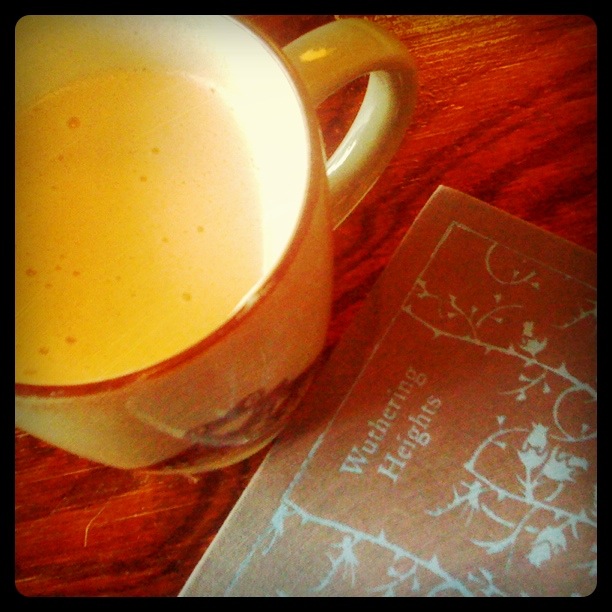
I’m almost done with A Return to Modesty by Wendy Shalit and I’m partway through The Tenant of Wildfell Hall by Anne Bronte and a re-read of Wuthering Heights (before I let myself watch the new film adaption.) On my must-reads for the year are North and South by Elizabeth Gaskell and The Brothers Karamazov.

My favorite reads of the year? Orthodoxy, The Penderwicks, and Sword of Honour.

What was on your reading list for 2012? What was your favorite read? What are you planning to read this year? I love hearing about what you’re reading, so humor me!

(Linking up with The Modern Mrs. Darcy’s Twitterature)

EmailFacebookGoogle ReaderPinterestTumblrTwitterShare

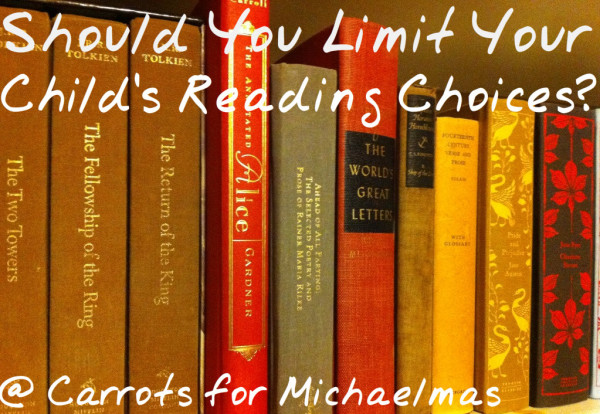
Should You Limit Your Child’s Reading Choices?
 

I am surprised by the popularity of a post I wrote a few weeks ago: “Why You Can’t Read Twilight: A Letter to My Daughter,” and I’m simply fascinated by some of comments it’s received. Some folks love it, but boy does it rub some people the wrong way!

Many commenters think the idea that I would tell my daughter at say, age 11, that she can’t read Twilight is downright loony and they refer to my daughter’s “right” to read it. Now, I aspire to fight for many rights for my daughter: the right to a loving family, the right to a happy home, the right to a good education, the right to nourishing food, etc. But I guess I just wasn’t familiar with the “right” to read bad novels.

I believe Twilight is a waste of time and poorly written.  And more importantly, it contains unhealthy views of women and relationships that I believe could be detrimental to a young mind’s developing ideas of self, love, and relationships. But I don’t think Twilight is really the issue. The real question is: Is it crazy to not let your child read certain books? Should we, as parents, limit our children’s reading choices?

Many critics of my decision to say “No” to Twilight just hated the idea that I was taking away a choice my daughter might want to make. If only I “trusted” her to make the right decisions, they lament, instead of limiting her choices!  This line of thinking surprised me because limiting choices is simply part of being a parent. Few parents I know would allow their very young children to view R rated movies, for example. As parents, we strive to offer our children good choices that are appropriate for their age and maturity level. We do not offer them choices that we are fully aware are inappropriate or may cause them harm. We might allow our child to make the choice to ride a bike, but we would not allow her to make her own decision about whether or not she wanted to ride on a busy street without a helmet at night. We do not say, “You want to go to the mall instead of school today? Great! I respect your ability to make decisions!” Sorry. As parents, we limit choices. It’s just what we do.

Perhaps a better example is how parents deal with food choices. My 3-year-old son would eat candy for every meal if I recognized his “right” to eat whatever he desired. If I acquiesced to his constant requests for sweets, with the full knowledge that I was causing him physical harm, that he would likely develop diabetes, and that he was missing out on all the nourishing foods his body needs because he was filling up with sugar, I would not be a good mother. And it’s not because I don’t “trust” him. It’s because I know that he is three and that as a young child, the allure of sweets is stronger than his nutritional knowledge and his ability to make great choices regarding food. So, what do I do? When he asks for a treat I offer him good choices: peanut butter and apples, dried fruit, etc. Things that have nutritional value, won’t harm his body, and might partly satiate his desire for a sweet treat. Through offering him these choices rather than junkfood, I am teaching him healthy eating habits he can carry with him through life. So when the day comes when he is making all of those decisions himself, he will have a developed palate for good foods and the knowledge needed to nourish his body well. Does that mean that he won’t ever make bad choices? No. He might eat Cinnamon Toast Crunch for every meal. My concern is doing the task before me well: giving him the right tools he needs to be able to make good decisions about food.

Why isn’t it the same story with books? Do we not really believe that the books we read form us into the people we are? I want to offer beautiful and good literature for my daughter’s developing mind and soul rather than presenting her with the ultimate junkfood of books. In other words, I want to help her develop a taste for good literature. Because I’ve been an 11-year-old girl and—while I’d love to pretend that I had everything figured out as a pre-teenlet’s be honest: I was still forming crucial ideas, particularly about love and relationships. Would I have had the maturity to see through the ridiculousness of Meyer’s series at that age? Doubtful. It’s written to appeal to a fantasy of immature ideas of love. It’s MADE to be enticing to preteens. It’s even enticing to some grown women. Now, does this mean that as a teenager, my daughter won’t be allowed to read it if she really wants to? No. I hope that by that age she would have fallen so in love with good literature that reading Twilight would be an unattractive option to her. But she very well might read it some day. I’m not worried about that. My job is to offer her books that will nourish her developing mind, aren’t a waste of time, and that don’t present her with terrible relationship models during her formative years. If and when she gets her hands on Twilight, she will already be well-versed in truly good literature. And whether she likes Twilight or not, she will at least see its inadequacies.

Some of the other popular arguments for why I should let my children read Twilight are interesting, as well. One argument in their favor claims that the books are entertaining. But, to say that something is entertaining is not to say that it is good or that it is bad. It merely means that it holds your attention. Most parents have some sort of guidelines about what movies their children are allowed to view…and it doesn’t have anything to do with how entertaining the film may or may not be. Others said that reading Twilight is a positive thing because it’s better than just sitting in front of the TV, not reading ever, or reading books like 50 Shades of Grey. So, reading Twilight is better than frying your brain, being illiterate, or reading the most inappropriate book for children that you can think of? Wow! Impressive. Can’t we offer our kids better options than “well, it’s not the worst thing you could do with your time”? Why settle? Another recommendation is that the Twilight series is easy and gets kids reading. Seventeen magazine is easy reading, but nobody’s vouching for it’s literary value or that it spurs young readers on to great heights of literary achievement.

I have been advised by the Twilight fans that my daughter will hate me forever and eternally resent my decision to not let her read Meyer’s literary atrocity as a pre-teen. To be honest…I’m just not really worried about it.

My job as a parent is to do what is best for my children. It would be great if, one day, my daughter were able to fully understand and appreciate every decision I make concerning her. Sure, it would be sad if my daughter resents my decisions. But those decisions are based on well-thought-out reasons and I am not going to change them to satisfy the whims of a child.

Do you think it’s appropriate to limit your child’s reading choices? Join the conversation! 

(This post is linked-up today at The Parent ‘Hood)

EmailFacebookGoogle ReaderPinterestTumblrTwitterShare

Why You Can’t Read Twilight: A Letter to My Daughter
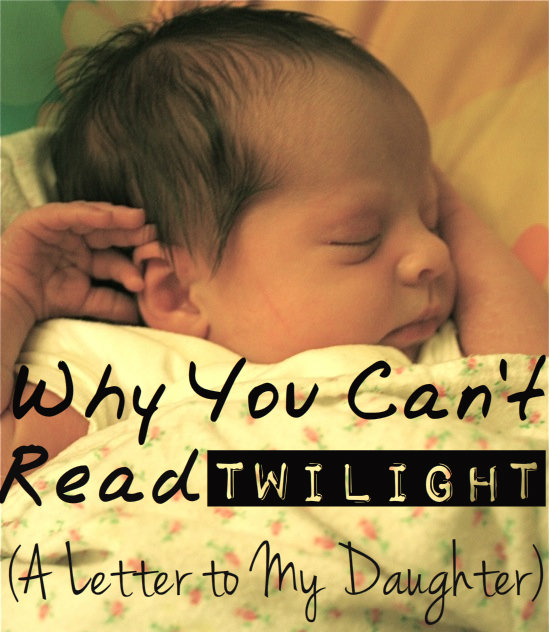
Today my baby girl cut her first tooth. I want to believe that by the time she and her little friends are old enough to read Stephenie Meyer’s Twilight series, everyone will have forgotten about that embarrassing literary atrocity. But, I’m afraid that might be wishful thinking. I want to have an answer prepared when my daughter says, “My friend Susie gets to read the Twilight books and why can’t I?!” Here it is:

Darling Girl,

I know that Susie and some of your other friends are devouring the Twilight series. They’re telling you how epic and romantic they are. My dearest, they are wrong. I have read the books in question (Ok, fine, I couldn’t make myself finish the last one with the half-vampire baby with that ridiculous name. I just couldn’t do it.). And they are nothing of the sort. If you want epic, read Lord of the Rings or Kristin Lavransdatter. If you want romance, read Miss Austen’s novels.

What’s that, my heart? You want specific reasons? Very well.

They will waste your time. In short, they’re simply mindless books. There are other books to read, my dear. Books that you will carry with you in your heart and soul till the day you die. I think far too much of you. I think far too much of your mind to let you waste it on something like Twilight.

And no, it’s not because there’s a little bit of violence, or because they’re fantasy books. There’s nothing better to help you learn what’s true than to read fantastical fairy stories. Your Daddy and I hope you read all sorts of good fantasy. We agree with Mr. Gilbert Keith Chesterton when he says:

“Fairy tales, then, are not responsible for producing in children fear…The baby has known the dragon intimately ever since he had an imagination. What the fairy tale provides for him is a St. George to kill the dragon. Exactly what the fairy tale does is this: it accustoms him for a series of clear pictures to the idea that these limitless terrors had a limit, that these shapeless enemies have enemies in the knights of God, that there is something in the universe more mystical than darkness, and stronger than strong fear.”

My dear, it’s not that I don’t want you to read about evil things like vampires. I can’t wait till you’re old enough to read George MacDonald’s Lilith. It’s my favorite vampire book. I just want you to read really splendid books about vampires, not lame ones. I want you to read writers who are master wordsmiths and who tell stories full of truth, beauty, and goodness. Needless to say, Miss Meyer is not one of them. If you don’t believe me, read this discussion that points out some of the stylistic gems she pens like this one: “I quickly rubbed my hand across my cheek, and sure enough, traitor tears were there, betraying me.” Wow. How does that even happen?

Dear girl, these books are just bad literature. You are too clever to waste your time on them. Now, we’re not expecting you to always read Dostoevsky and Dante and never read easy page-turners. Just because something is easy to read doesn’t make it bad. There are plenty of easy, fun reads that have meaningful things to say and are well-written.

The Twilight books are not in that category and Miss Meyer’s terrible writing is not the only major problem with them. The female protagonist is just about the worst role model I can imagine for you. You can read about what I think of that and what female literary characters I want you to get to know instead some other time. What I want to tell you today has to do with love. I don’t know anything about Miss Meyer’s personal life. But from what I read in Twilight, I can’t imagine that she really understands love.

You see, there’s something titled “love” in these books that isn’t anything like love at all. The boring protagonist Bella and her boyfriend who, I must add, is shockingly dull for being a 100-year-old sparkly vampire, have a relationship that is presented as an epic romance. Instead, it is a weird infatuation. Boring-gal and Old-Man-Vampire are madly attracted to each other from the moment they see each other (or in Old-Man-Vamp’s case, smell each other). He even compares the strength of his attraction to her scent to that of a pretty serious drug addiction. My dear, that’s not love. That’s hormones. Also, it’s creepy. Let’s just come right out with it: giving up your soul and abandoning your family because of your infatuation for an elderly stalker that might accidentally drink your blood is never a good choice.

Next, enduring love must have a basis of friendship. The only thing you have in common with your beloved cannot be your relationship. “We both like the other person a whole dang lot” isn’t grounds for an epic love, it’s the grounds for a bad high school break up. All Boring-Gal and Old-Man-Vamp talk about is their relationship. Yadda yadda yadda. Boring boring boring.

True love is exciting and dangerous and epic, but not because your man might accidentally kill you because he wants to drink your blood. True love is exciting and dangerous and epic because when you commit to loving someone forever, like Daddy and I have, you promise something so difficult and consuming that it is only possible by the grace of Our Lord. True love isn’t about sacrificing your humanity so that you can live with your weirdo vampire forever. True love is about filling each ordinary day with small sacrifices for your beloved. It’s about making the mundane events of life something beautiful and heroic. True love isn’t about gazing passionately into your beloved’s eyes (this may happen and that’s fine). True love is when your husband takes the toddler on a run in the jogging stroller at 6am so that you can sleep an extra 30 minutes next to your baby who nursed all night. It might sound unromantic to you now. But it won’t someday if you experience the unfathomable depth of true love. True love is so much more demanding than Miss Meyer thinks. And it is so much richer than her pathetic, weak rendering. You may not understand now, but someday, I hope you do.

That’s why you can’t read Twilight. You may envy Susie for having parents who let her read it. You may even be angry with Daddy and I. That’s ok. Our job isn’t to make you like us. Our job is to guide you to what’s true and beautiful and good. But do know, that every decision we make is because our love for you is beyond measure…and because bad literature makes us want to die. Also that.

Love,

Mama

Disclaimer: We’re not the sort of people that will be banning books from our household right and left. Rather than forbidding our kids from reading certain books, we plan to read the books our kids want to read with them so we can discuss the ideas presented and help our kids process them. By simply forbidding them to ever read certain books, we would only be making those books more enticing and we would risk our kids not truly understanding why we disagreed with the ideas presented as well as remove an opportunity for them to learn to discern good literature from bad and beautiful ideas from ugly ones. Once our kids reach an appropriate age choices about what they read will be entirely up to them. Hopefully, by that point they’ll have developed enough taste that they won’t want to read Twilight. Making decisions about when kids are ready for certain books is something only their parents can do. We won’t be allowing our kids to read Twilight when they’re preteens because so many ideas about relationships and identity are being formed at that age and we think the negative portrayals of women and twisted relationships aren’t something we want our kids to be presented with until they are older.

This post contains Amazon affiliate links.

EmailFacebookGoogle ReaderPinterestTumblrTwitterShare